
Large robber fly
Machimus maximus
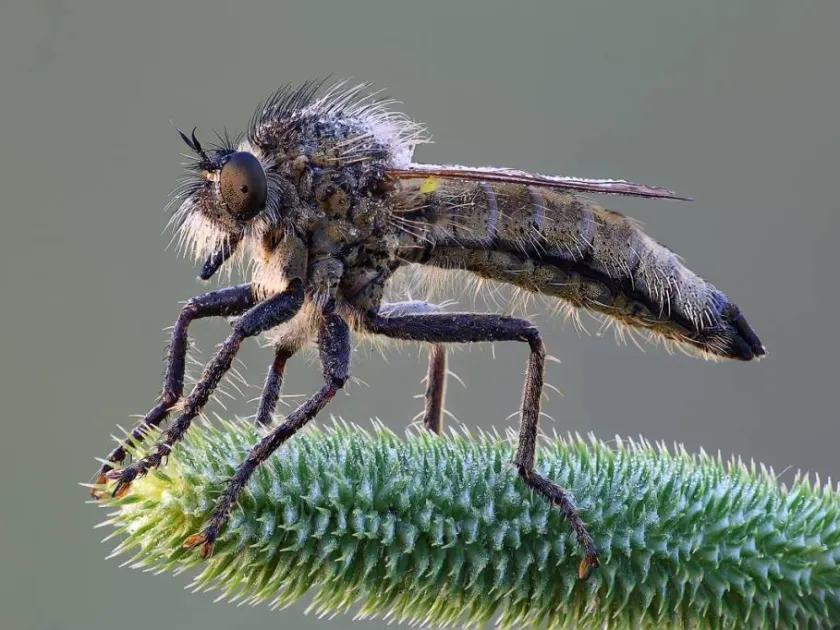
Description
How to identify
The Large robber fly (Machimus maximus) is a member of the Asilidae family, within the order Diptera, known for being specialized predators of other insects.
The adult fly has a slender, robust body, often covered with fine hairs, and is equipped with a strong, piercing proboscis designed for hunting and capturing prey.
Its eyes are large and prominent, providing the acute vision necessary to detect the movement of other flying insects while the fly is sitting in a waiting position.
The thorax is powerful, supporting strong wings that allow for rapid take-off and agile flight during aerial attacks on their prey.
Larvae are typically found in the soil, possessing a cylindrical shape and specialized mouthparts adapted for hunting small soil-dwelling invertebrates.
What it damages
The Large robber fly is not a crop pest; it does not consume any parts of plants, and it causes no damage to leaves, roots, or fruit of agricultural crops.
Instead, these flies function as effective biological control agents, preying upon various insects that are considered agricultural pests, including grasshoppers and other flies.
The predatory nature of these flies means they contribute to a balanced ecosystem by reducing the population density of harmful species in the agricultural environment.
While they may occasionally capture beneficial insects, the ecological impact of this is negligible compared to their role in reducing the overall pest pressure on fields.
Therefore, their presence should be encouraged by farmers, as they represent a natural and free method of pest management within the field landscape.
When it appears
The adult stage of the Large robber fly is most frequently observed during the warm summer months, particularly during mid-summer when activity is at its peak.
Larval development occurs underground and usually spans one or two years, during which they remain hidden from view in the soil environment.
Adults are diurnal, preferring bright and sunny weather to hunt; they are often seen perched on tall vegetation, sticks, or stones waiting for prey.
The life cycle is timed to coincide with the abundance of prey items, ensuring that the predator population thrives alongside its insect food sources.
Environmental factors like temperature play a crucial role in determining the speed of their development and the duration of their flying period each season.
Signs of infestation
The most common sign of their presence is the observation of large, active flies suddenly taking flight from vegetation when approached by humans.
Observation of a fly sitting on a perch or the top of a crop plant, scanning the surroundings, is a typical indicator of their predatory activity.
There are no visible damage symptoms on plants to report, as their biological interaction is focused entirely on the capture of other insects, not vegetation.
The presence of these insects is often considered a positive indicator of an active and healthy ecosystem within or near agricultural plots.
Because the larvae are buried in the soil, they leave no external signs of their presence, which is typical for soil-dwelling predatory species.
Control measures
Control measures against the Large robber fly are neither necessary nor recommended, as they are beneficial insects that assist in protecting crops.
Farmers should avoid indiscriminate use of broad-spectrum insecticides, which can harm these predators and disrupt natural pest regulation mechanisms.
Maintaining hedgerows, field margins, and non-crop vegetation provides essential habitats for adult robber flies to rest and hunt efficiently.
Integrated Pest Management (IPM) practices should prioritize the conservation of such predatory species to minimize the reliance on chemical interventions.
Education regarding the role of Asilidae is key, as distinguishing them from harmful species allows for the promotion of sustainable agricultural practices.
Taxonomy
- Latin name
- Machimus maximus
- Order
- Diptera (flies)
- Family
- Asilidae
- EPPO code
- MCHMMA
Discussion
No discussions yet — be the first.