
Robber flies
Dasypogon
Description
How to identify
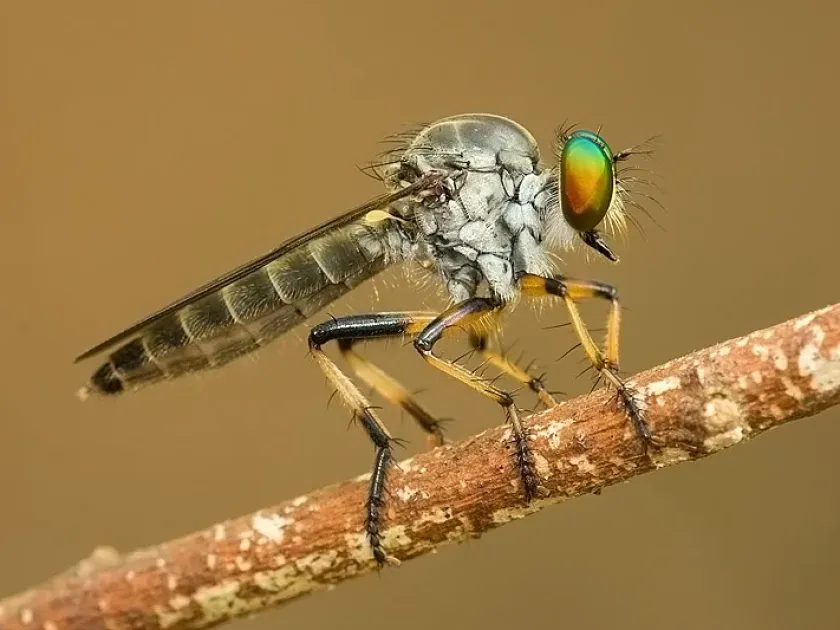
Robber flies (family Asilidae, genus Dasypogon) are large predatory insects characterized by a distinct, rugged appearance. Adults possess an elongated body covered in fine bristles and a powerful, sharp proboscis adapted for piercing the exoskeletons of their prey.
The head of the robber fly features large, prominent compound eyes that provide an excellent field of vision for aerial hunting. They frequently perch on stalks or elevated surfaces, from which they launch swift attacks on passing insects.
Their coloration ranges from grey and brown to black, providing effective camouflage in natural habitats. Adults can reach several centimeters in length, making them some of the most conspicuous members of the Diptera order.
Larvae develop in soil or decaying organic matter. They have a cylindrical, whitish body and lead a secretive lifestyle, often acting as active predators themselves, feeding on various soil-dwelling invertebrates.
It is important to emphasize that from an agronomic perspective, robber flies are considered beneficial entomophages rather than crop pests, as they actively suppress populations of other insects.
What it damages
Robber flies do not feed on plant tissues and cause no mechanical damage to crops. Their diet consists exclusively of other insects, which positions them as a natural biological regulator within the ecosystem.
Any negative impact from robber flies is indirect, specifically involving the occasional predation of beneficial pollinators, such as honey bees or wild bumblebees. This behavior may minimally affect pollination efficacy in specific flowering crops.
Because robber flies are generalist predators, they do not target specific plant species. Their presence is determined solely by the availability of a food source—other insects, which may include both major agricultural pests and non-pest species.
Agronomic assessments of this genus rely on the balance between the predation of potential phytophages and the inadvertent destruction of beneficial insects. Generally, their presence is considered neutral or beneficial for field health.
There are no recorded instances of significant economic losses caused by robber flies, and they are not listed as pests requiring active extermination in agricultural management programs.
When it appears
Adult robber flies are most active during the warmest months of the year, typically from June through August. During this period, they are highly visible in fields, meadows, and forest borders.
The biological life cycle includes egg, larval, pupal, and adult stages. A significant portion of the robber fly's life is spent in the larval stage underground, which can last for up to two years depending on the species and environmental conditions.
The flight period of these flies coincides with the peak abundance of many insect species that serve as their prey. Temperature levels are a critical factor in their metabolic rate and hunting efficiency.
After mating, females deposit eggs into the soil or plant debris, where the offspring hibernate. Consequently, their life cycle is well-adapted to the climatic conditions of their habitat.
During the evening and nighttime hours, fly activity decreases as they retreat into the vegetation to avoid cool temperatures and unfavorable conditions.
Signs of infestation
There are no direct signs of "infestation" by robber flies because they do not consume plant matter. Detecting individuals in a field simply reflects a high level of biodiversity and biological activity in the area.
The presence of a large population of robber flies may indirectly indicate a rich food source of other insects inhabiting the vegetation or the topsoil layers.
No specific plant symptoms, such as leaf lesions, necrosis, or tunneling, are caused by robber fly activity. Searching for signs of their impact is not a standard practice in agricultural pest monitoring.
Observation of their hunting behavior during the day, characterized by rapid aerial movements and maneuvers, is the primary way to identify their presence in an agricultural setting.
Entomological surveys using sweep nets can provide data on population density, but for most commercial farming operations, such information does not carry significant economic weight.
Control measures
Specialized control measures against robber flies are neither required nor recommended, given their positive ecological role. The use of insecticides specifically targeting them is counterproductive and unnecessary.
The application of broad-spectrum chemical pesticides often leads to the decline of robber fly populations, which can trigger outbreaks of other pests previously suppressed by these natural predators.
To preserve these beneficial entomophages, it is recommended to restrict the use of non-selective insecticides, especially during peak flight times for bees and other important insect pollinators.
While standard agronomic practices like soil tillage can impact larval survival, these measures are intended to manage actual crop pests, not to target robber flies.
Maintaining ecological balance and promoting biodiversity in agricultural landscapes remains the most effective strategy for managing predatory species such as the Dasypogon genus.
Taxonomy
- Latin name
- Dasypogon
- Order
- Diptera (flies)
- Family
- Asilidae
- EPPO code
- DSPGSP
Discussion
No discussions yet — be the first.