
Dioctria robber fly
Dioctria
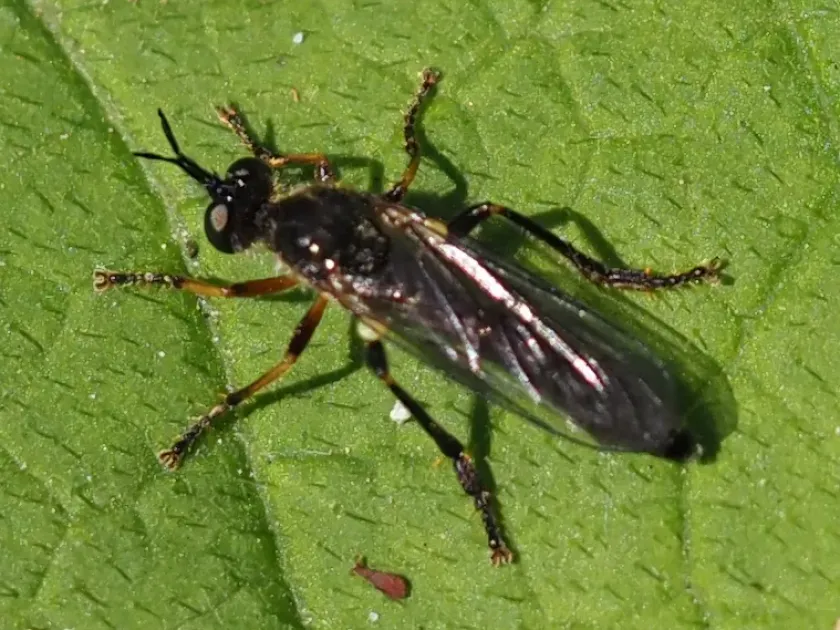
Description
How to identify
The Dioctria genus is a prominent member of the Asilidae family, known collectively as robber flies, which are highly efficient aerial predators.
These flies are easily identifiable by their slender bodies, elongated thorax, and powerful, piercing mouthparts designed for hunting and subduing prey.
They often exhibit mimicry, appearing similar to wasps or sawflies, which helps protect them from predators while they are stationed on leaves or stems.
The large, complex eyes of the Dioctria allow for exceptional visual perception, enabling them to spot small flying insects from a significant distance.
Larvae are soil-dwellers and are often creamy-white in color; they inhabit subterranean environments where they also act as predators of various soil-borne invertebrates.
What it damages
It is important to clarify that Dioctria flies are not direct consumers of plant matter and do not damage crops by feeding on leaves or roots.
The ecological impact of these flies lies in their indiscriminate predatory behavior, which can occasionally lead to the consumption of essential crop pollinators.
When robber fly populations peak in areas with high-value crops that rely on honeybees or bumblebees, the reduction in pollination efficiency may impact overall yield.
However, they also provide a significant biological control service by hunting agricultural pests, including aphids, beetles, and various caterpillars.
Therefore, they are often classified as beneficial insects rather than primary pests, unless their population becomes disproportionately high relative to their prey.
When it appears
The adult activity of Dioctria is typically concentrated during the warmer months, with peak emergence usually occurring in mid-summer, specifically June and July.
These insects prefer bright, sunny environments where they can utilize their sight to detect movement, making them highly visible during the height of the summer season.
The life cycle involves a period spent in the larval stage underground, which can last for several months before the flies undergo pupation and emerge as adults.
Activity levels are highly dependent on ambient temperature, as these flies require significant metabolic energy to sustain their high-speed flight maneuvers.
By late summer, the presence of adult flies rapidly diminishes as they complete their mating cycles and lay their eggs in the soil.
Signs of infestation
Signs of Dioctria presence include the sudden, rapid darting movements of flies between vegetation, often accompanied by a distinct buzzing sound.
One can observe them sitting motionless on fence posts, dry twigs, or the upper surfaces of leaves, waiting patiently for prey to fly within striking distance.
A high density of these flies in a specific location may correlate with a noticeable decrease in the number of visiting pollinators if the predator-prey balance is disrupted.
Empty exoskeletons of small insects may be found in areas where robber flies are active, left behind after the fly has extracted the internal fluids of its victim.
The lack of characteristic plant tissue damage, such as holes or leaf-miner tracks, helps distinguish these predatory flies from true phytophagous plant pests.
Control measures
Direct eradication of Dioctria is rarely recommended, as their predatory role in suppressing harmful insect populations is highly valuable to sustainable farming.
If management is necessary due to excessive pollinator loss, the focus should be on soft pest management strategies rather than broad-spectrum chemical insecticides.
- Preserve natural field margins to support a diverse ecosystem and balance fly populations.
- Use selective, target-specific biological controls rather than high-toxicity chemical sprays.
- Monitor population spikes to determine if intervention is actually required before acting.
- Implement mechanical barriers or deterrents if the flies specifically target essential hive sites.
Maintaining ecological health and habitat diversity remains the most effective strategy to ensure that these flies act as allies rather than local nuisances.
Taxonomy
- Latin name
- Dioctria
- Order
- Diptera (flies)
- Family
- Asilidae
- EPPO code
- DCTRSP
Discussion
No discussions yet — be the first.