
Hornet robber fly
Asilus crabroniformis
Description
How to identify
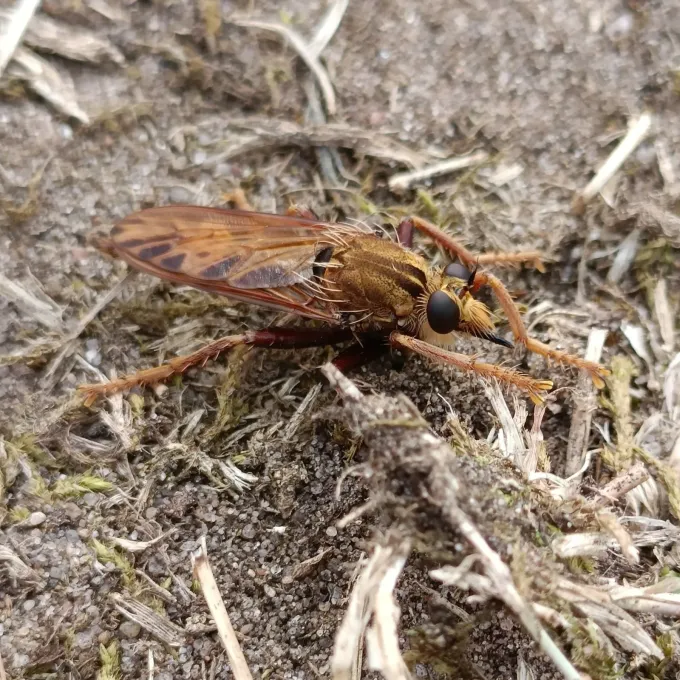
The hornet robber fly (Asilus crabroniformis) is a large predatory insect belonging to the family Asilidae, known for its mimicry of hornets. Adults grow up to 28 mm in length.
The body is covered with dense hair, and the head features a characteristic hollow between the compound eyes where the antennae are attached. They possess a powerful proboscis used to pierce the prey's cuticle.
Their coloration typically mimics yellow and brown stinging insects, which helps them avoid predation by birds, significantly increasing their survival rate in nature.
They are known for their excellent eyesight and high-speed flight, making them highly efficient predators capable of catching prey mid-air.
Larvae are cylindrical and white or yellowish, inhabiting the soil or decomposing organic matter, where they feed on other small invertebrates.
What it damages
The hornet robber fly is not considered an agricultural pest. Instead, it plays an ambiguous role in the ecosystem by predating on a wide range of flying insects.
There is minimal economic damage caused by adults, although they may occasionally prey on beneficial insects like bees, which can slightly affect pollination success.
Larvae reside in the soil and are generally harmless to plant roots, though they may incidentally disturb soil around plant bases during their pursuit of prey.
Because they act as natural controllers of many pest populations, they are generally regarded as beneficial insects within the agricultural landscape.
No systematic economic losses associated with this species have been documented, making intensive management strategies unnecessary.
When it appears
Adult robber flies are most active during late summer, typically appearing from July through September, when they hunt on sunny days.
They favor open, sun-drenched habitats, such as pastures, meadows, and forest edges, which provide optimal visibility for hunting.
The life cycle encompasses egg, larval, pupal, and adult stages, with the larval phase often lasting for one or more years in the soil.
Overwintering occurs primarily in the larval stage, deep within the soil profile, providing protection against winter temperature fluctuations.
Pupation takes place in the soil during spring or early summer, followed by the emergence of the adult fly, which then seeks a mate to begin the next cycle.
Control measures
There are no established control measures for the hornet robber fly because it is not categorized as a major agricultural pest requiring intervention.
Should their presence be undesirable, simple soil management practices like light tilling can disturb their larval development habitats.
The use of chemical insecticides should be avoided as it kills off beneficial predators and pollinators, often worsening pest problems in the long run.
Maintaining a healthy, balanced ecosystem is the best approach to ensure that predatory populations do not reach nuisance levels while providing natural pest control.
Farmers are encouraged to tolerate these insects as they contribute to the biological regulation of various insect populations within the crop environment.
Taxonomy
- Latin name
- Asilus crabroniformis
- Order
- Diptera (flies)
- Family
- Asilidae
- EPPO code
- ASILCR
Discussion
No discussions yet — be the first.