
Yellow-tailed robber fly
Andrenosoma fulvicaudum
Description
How to identify
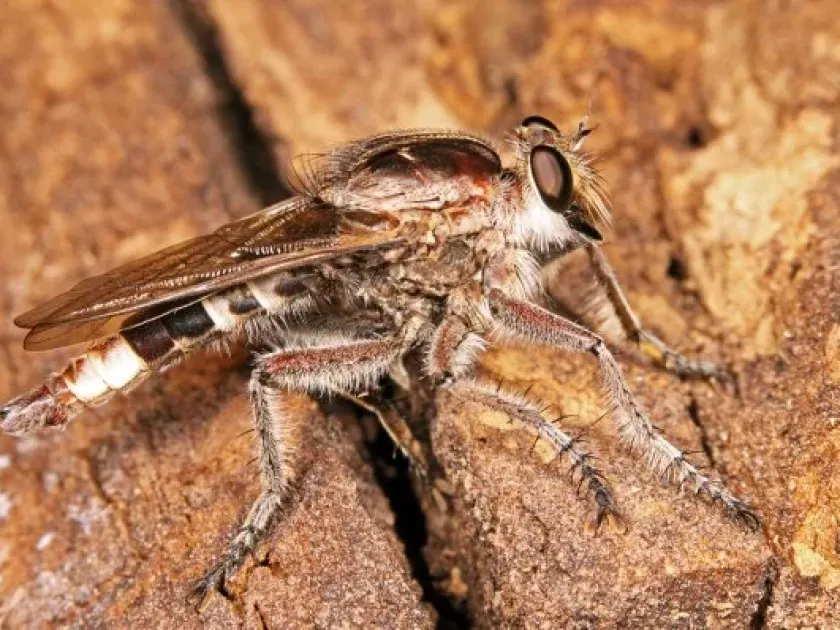
The yellow-tailed robber fly is a large predatory insect belonging to the Asilidae family. It is easily identified by the distinct yellowish or golden tuft of hair at the tip of its abdomen.
Like other robber flies, it possesses a rigid, piercing proboscis designed to catch and subdue prey in mid-air. Its body is covered in bristly hairs, providing it with a formidable appearance.
Larvae of this species are primarily soil-dwelling or found in decaying wood, where they live as cryptic predators of other small invertebrates.
The life cycle includes a complete metamorphosis (egg, larva, pupa, and adult), with the developmental duration depending heavily on environmental temperature and humidity.
Taxonomic classification places this fly within the order Diptera, representing a group of highly specialized predators that play a complex role in ecosystem dynamics.
What it damages
The yellow-tailed robber fly does not feed on plant tissues, meaning it does not cause direct physical damage to crops or agricultural produce.
However, its predatory nature can be problematic for agricultural operations as it hunts beneficial pollinators such as honeybees, bumblebees, and other insects.
In regions with intensive greenhouse or orchard agriculture, a high population of robber flies can negatively impact the pollination process, leading to reduced fruit set.
Because they are generalist predators, they may also disrupt the populations of other beneficial entomophagous insects that help in natural pest control.
Therefore, while not a crop pest in the traditional sense, this species is often viewed with caution by commercial beekeepers and greenhouse managers.
When it appears
The adult flies are most active during the warmest months of the year, typically appearing from late spring through mid-summer when insect prey is most abundant.
Their flight activity is strictly temperature-dependent; they prefer sunny, sheltered areas where they can sit and wait for passing insects to ambush.
The larvae, which reside in organic matter, have a prolonged developmental cycle that can span multiple months before they finally pupate and emerge as adults.
Mating occurs shortly after emergence, followed by the female depositing eggs in suitable nesting sites such as old stumps or dry soil layers.
By late summer, the presence of the adult yellow-tailed robber fly declines significantly as the life cycle concludes for the current generation.
Control measures
Standard chemical pest control is rarely appropriate for robber flies because they are often considered beneficial predators of other nuisance insects.
Sanitation practices, such as removing rotting timber and maintaining clean orchard grounds, serve as the primary cultural control method to reduce breeding sites.
For beekeepers, installing protective barriers around hives during the peak season can help mitigate the risk of fly predation on foraging bees.
Integrated Pest Management (IPM) strategies emphasize fostering a diverse ecosystem where natural enemies keep all predatory insect populations in check.
No specific pesticides are recommended for this species, as broad-spectrum insecticides would likely cause more harm to pollinators and the local environment than the robber flies themselves.
Taxonomy
- Latin name
- Andrenosoma fulvicaudum
- Order
- Diptera (flies)
- Family
- Asilidae
- EPPO code
- ANDNFU
Discussion
No discussions yet — be the first.