
Robber fly
Machimus
Description
How to identify
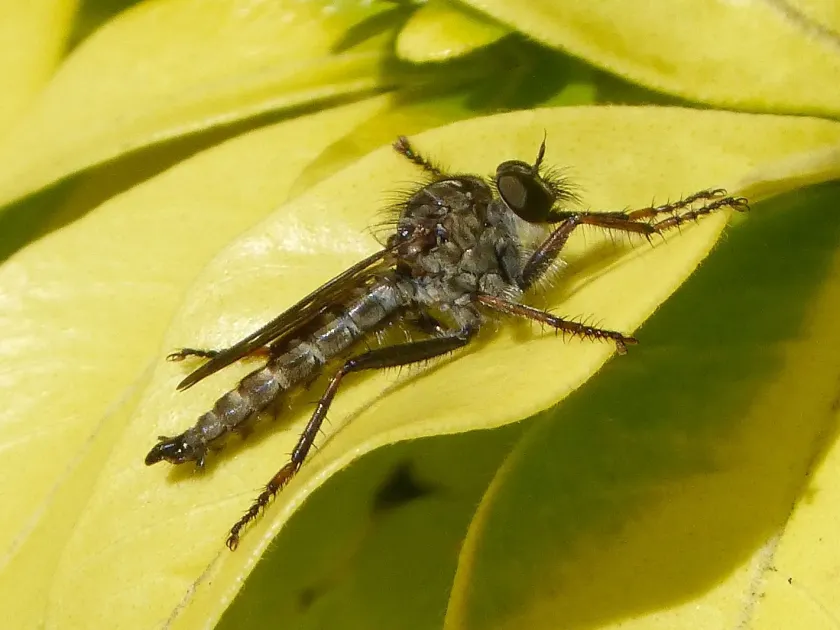
Robber flies (family Asilidae, genus Machimus) are large, powerful, and aggressive predatory insects. They are easily recognized by their bristly bodies, long legs, and a prominent "beard" of bristles known as the mystax, which protects their face while attacking prey.
These flies possess a keen sense of sight and are masters of aerial combat. They use their specialized, piercing mouthparts to inject potent neurotoxic saliva into their prey, which quickly immobilizes them before the fly consumes their body fluids.
The larvae are typically soil-dwelling, often found in decaying organic matter or loose earth. Unlike the adults, they spend most of their time hidden under the surface, where they also act as predators of other small invertebrates.
Adults exhibit distinct behavior: they wait patiently on perches like leaves or twigs, surveying the surroundings. Once a potential target flies by, they intercept it mid-air with remarkable speed and precision.
The life cycle involves complete metamorphosis: egg, larva, pupa, and adult. Their development time is often extended, taking place over several seasons in the soil, which makes stable soil conditions crucial for their population health.
What it damages
Robber flies are not plant pests. In fact, they are highly beneficial insects that play a critical role in controlling populations of various agricultural pests, such as beetles, moths, and other flies that might damage crops.
Because they are strictly predatory, they do not feed on plant tissues, nectar, or sap. Their mouthparts are strictly adapted for capturing and liquefying the insides of other insects, meaning crops are completely safe from their presence.
Their larvae are known to feed on other subterranean pests, including larvae of ground-dwelling insects that might otherwise damage root systems. This underground predatory activity further establishes the robber fly as an ally to the farmer.
While they are generalist predators, they do not discriminate much between pest and non-pest insects. However, in a balanced agricultural ecosystem, the net benefit of having these predators outweighs the occasional loss of a non-target insect.
Misidentifying them as pests can lead to unnecessary and harmful chemical treatments. Treating a field for robber flies can lead to a boom in actual pest populations, as the natural checks and balances are removed from the environment.
Control measures
No control measures are necessary for robber flies, as they do not threaten crop yield. Integrated Pest Management (IPM) strategies typically advocate for the preservation of these flies to enhance the natural biocontrol of harmful insect populations.
If their proximity to hives or specialized breeding areas is a concern, mechanical exclusion or non-toxic deterrents should be preferred over chemical sprays. Insecticides are indiscriminate and often cause more ecological harm than the predators they aim to kill.
Maintaining diverse habitats around fields and orchards helps sustain healthy populations of robber flies. Providing areas of undisturbed soil allows for the safe maturation of larvae, ensuring the continued presence of these beneficial hunters.
Reducing the reliance on broad-spectrum pesticides is the most effective way to maintain a healthy population of robber flies. Healthy soils and sustainable farming practices create an environment where these flies can thrive naturally.
Agricultural practices such as deep tilling might disrupt their larval stage, but this is usually a secondary effect rather than a targetted control measure. Farmers are encouraged to view robber flies as indicators of a healthy, productive agricultural landscape.
Taxonomy
- Latin name
- Machimus
- Order
- Diptera (flies)
- Family
- Asilidae
- EPPO code
- MCHMSP
Discussion
No discussions yet — be the first.