
Lordithon
Lordithon
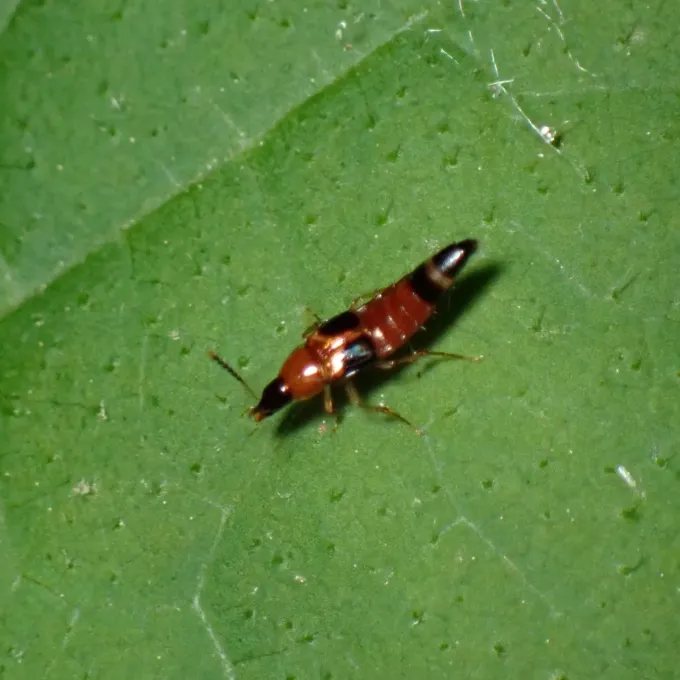
Description
How to identify
Lordithon is a genus of rove beetles belonging to the family Staphylinidae, known for their specialized association with fungi.
These beetles possess an elongated body shape, typical of the family, and exhibit agile movement when disturbed on the surface of fungi.
The taxonomic classification places them within the order Coleoptera, with many species being mycophagous or predators within fungal microhabitats.
Development involves a complete metamorphosis, where larvae are particularly specialized for feeding within the fruiting bodies of various mushrooms.
Identifying specific species often requires examination of structural morphology, as many members of this genus are similar in appearance.
What it damages
While often benign in natural forests, Lordithon can become a serious pest in commercial mushroom production facilities.
Larval feeding causes internal tunneling, which destroys the structure and texture of the mushroom caps and stalks.
The damage caused by these larvae significantly reduces the market value of the crop, making it unsuitable for commercial retail.
Furthermore, their activity can open pathways for secondary pathogens such as bacteria and common molds to enter and degrade the crop.
In facilities with poor hygiene, these beetles can rapidly multiply, resulting in significant yield losses per production cycle.
When it appears
In natural environments, Lordithon activity peaks during the primary mushroom growing seasons in late summer and autumn.
In controlled environment agriculture, such as indoor mushroom farms, they can remain active year-round if the climate remains favorable.
Temperature and humidity levels are critical factors for their reproduction, with higher humidity promoting faster population growth.
Overwintering occurs in sheltered habitats like leaf litter, bark crevices, or damp soil where temperatures remain above freezing.
Adults emerge from hibernation during the first warm spells to locate suitable hosts for egg-laying and larval development.
Signs of infestation
Tiny entry holes on the mushroom surface are the most visible indication that larvae have invaded the fruiting body.
Internal damage manifests as complex burrowing patterns, often accompanied by dark frass or debris left behind by feeding larvae.
Mushrooms infested by Lordithon may show signs of premature browning or softening, which are usually clear indicators of internal decay.
Direct sightings of the beetles on or near the mushroom blocks during routine inspections provide immediate confirmation of a pest problem.
An unusual, musty, or slightly rotten odor near the mushroom beds often suggests that beetle damage is widespread and active.
Control measures
Rigorous sanitation protocols are the first line of defense, requiring thorough cleaning and disinfection of all cultivation rooms.
Installing fine-mesh filters on all intake and exhaust ventilation points effectively prevents adult beetles from entering the growing space.
Early removal and proper disposal of all damaged or old mushroom fruiting bodies are essential to break the pest's reproductive cycle.
Biological control agents, such as specialized nematodes or bacteria, can be used to treat the substrate without harming the crop.
Post-harvest sterilization of all equipment and substrates is vital to ensure that no eggs or dormant larvae carry over into the next cycle.
Taxonomy
- Latin name
- Lordithon
- Order
- Coleoptera (beetles)
- Family
- Staphylinidae
- EPPO code
- LORDSP
Discussion
No discussions yet — be the first.