
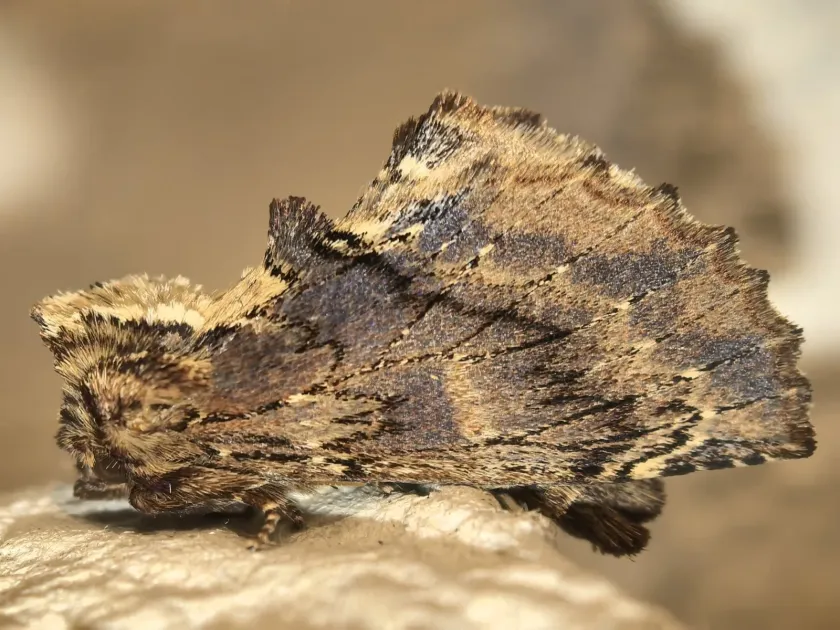
Prominent moth (genus Lophopteryx)
Lophopteryx
Description
How to identify
The genus Lophopteryx belongs to the Notodontidae family, commonly known as prominent moths. Adult moths are masters of camouflage, possessing intricate wing patterns that mimic tree bark perfectly.
Larvae are characterized by their unique body shape, often featuring tubercles or humps that provide excellent concealment against host plant foliage.
The larvae exhibit a wide range of colors, often transitioning from vibrant greens to earthy browns as they grow and consume different parts of the tree.
These moths undergo complete metamorphosis, with pupation typically occurring in the soil or protected crevices, which shields them from environmental stress.
Taxonomically, the genus is recognized by specific genitalia structures and larval morphology, which are essential for identifying the precise species within the Lophopteryx group.
What it damages
These pests primarily target deciduous tree species, showing a strong preference for oak, beech, birch, and lime trees in forest and landscape environments.
In ornamental gardening, Lophopteryx larvae can cause significant aesthetic damage by feeding on foliage, leading to sparse and unhealthy-looking canopies.
Younger larvae feed in small groups, causing localized damage, while older caterpillars are more solitary and consume entire leaf blades, leaving only the main veins.
Severe infestations can lead to premature leaf drop, which deprives the tree of its ability to store energy for the subsequent growing season.
Young saplings are particularly vulnerable, as repeated defoliation by these caterpillars can stunt their growth and increase susceptibility to secondary infections.
When it appears
Typically, these moths follow an univoltine life cycle, meaning one generation develops over the course of a single year in most temperate regions.
Adult emergence usually coincides with the spring or early summer, depending on local temperatures and day length.
Larvae are active feeders during the height of the summer months, growing rapidly until they reach the final larval instar.
As autumn approaches, the larvae drop to the ground or seek sheltered areas to pupate, preparing to overwinter in the soil.
Weather conditions during winter, especially soil moisture and temperature, are critical factors that determine the survival rate of the pupae.
Signs of infestation
The first sign of an infestation is the appearance of small, ragged holes in the foliage, particularly on young, tender leaves in the canopy.
Clusters of frass (caterpillar droppings) accumulating on leaves or the ground beneath infested branches are a clear indicator of feeding activity.
Close inspection of the undersides of leaves often reveals the presence of larvae, which prefer to rest in hidden positions during the day.
Branch thinning and irregular leaf margins are structural signs that suggest a colony of Lophopteryx larvae has been feeding in the immediate area.
Increased activity of predatory birds or wasps in the tree canopy can sometimes signal an abundant supply of caterpillars.
Control measures
Cultural control involves maintaining healthy soil and removing accumulated leaf litter, which significantly reduces the survival rate of pupating larvae.
Mechanical removal, such as picking off larvae or destroying eggs clusters, is highly effective in small-scale gardens and ornamental plantings.
Biological control methods include the application of microbial insecticides, such as Bacillus thuringiensis, which are highly specific to lepidopteran pests.
When infestation levels exceed economic thresholds, judicious use of contact insecticides may be necessary to protect the health of valuable trees.
Encouraging biodiversity by providing habitats for beneficial insects and insectivorous birds is a sustainable way to manage population spikes naturally.
Taxonomy
- Latin name
- Lophopteryx
- Order
- Lepidoptera (butterflies)
- Family
- Notodontidae
- EPPO code
- LOPPSP
Discussion
No discussions yet — be the first.