
Lonomia
Lonomia circunstans
Description
How to identify
Lonomia circunstans is a species of silkmoth within the Saturniidae family, notorious primarily for its highly venomous larval stage.
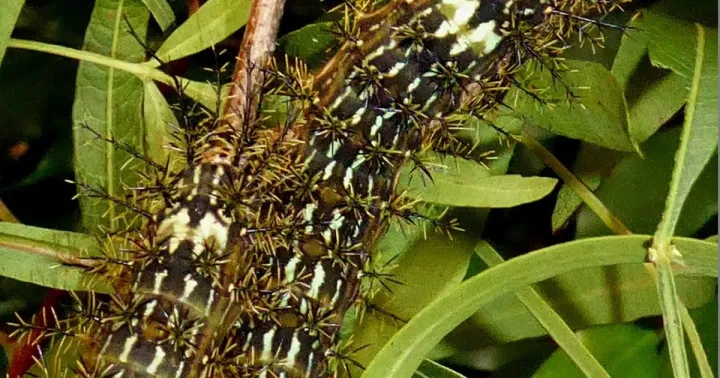
The larvae are characterized by a dense covering of branched, stinging spines that deliver toxic substances, serving as a primary defense mechanism against predators.
During the day, these caterpillars are gregarious, resting in large groups on tree trunks, where their cryptic coloration provides excellent camouflage against the bark.
Adult moths are nocturnal and feature brownish, moth-like patterns that help them blend into the forested environment, typically spanning several centimeters in wingspan.
The species is taxonomically grouped within the order Lepidoptera, specifically noted for the medical significance of its venom in South American regions.
What it damages
Lonomia larvae are significant forest pests known for causing extensive defoliation in various broad-leaved trees and shrubs.
The gregarious feeding habit of the caterpillars allows them to consume massive amounts of foliage, often leaving trees completely stripped of leaves within a short period.
Persistent infestations lead to a decline in tree health, stunted growth, and increased susceptibility to secondary environmental stressors or diseases.
Beyond the agricultural impact, the presence of these venomous caterpillars poses a direct health hazard to humans working in affected forest areas, complicating management activities.
Affected trees struggle to recover from seasonal defoliation, which can impact the overall economic productivity and ecological health of the forest stand.
Signs of infestation
One of the most obvious signs is the presence of large clusters of larvae resting on the trunks of trees, which may appear as textured patches on the bark.
Heavy defoliation in the upper canopy, where only leaf stems or skeletal vein patterns remain, clearly indicates an active infestation in the tree crowns.
The accumulation of frass (caterpillar droppings) on the ground underneath the affected tree is a reliable indicator that a colony is currently feeding above.
The existence of silk-like strands used by the caterpillars to maintain their social structures on branches or trunks serves as another clear diagnostic feature.
In high-density areas, observers may notice a distinct lack of natural predators around infested trees, as the caterpillars' stinging spines are highly effective deterrents.
Control measures
Control strategies for Lonomia must prioritize human safety due to the severe medical complications resulting from contact with the caterpillar's venomous spines.
Biological control using Bacillus thuringiensis (Bt) is often the preferred method, as it targets the larvae effectively while minimizing harm to the broader ecosystem.
Chemical applications should be carried out using professional equipment and strictly adhered to in terms of safety protocols, ensuring minimal direct human exposure.
Continuous monitoring programs are essential to detect localized population spikes early, allowing for targeted intervention before the caterpillars reach maturity.
Integrated Pest Management (IPM) practices, including the maintenance of tree health and habitat diversity, help mitigate the risk of mass outbreaks in managed forest areas.
Taxonomy
- Latin name
- Lonomia circunstans
- Order
- Lepidoptera (butterflies)
- Family
- Saturniidae
- EPPO code
- LONOCI
Discussion
No discussions yet — be the first.