

Description
How to identify
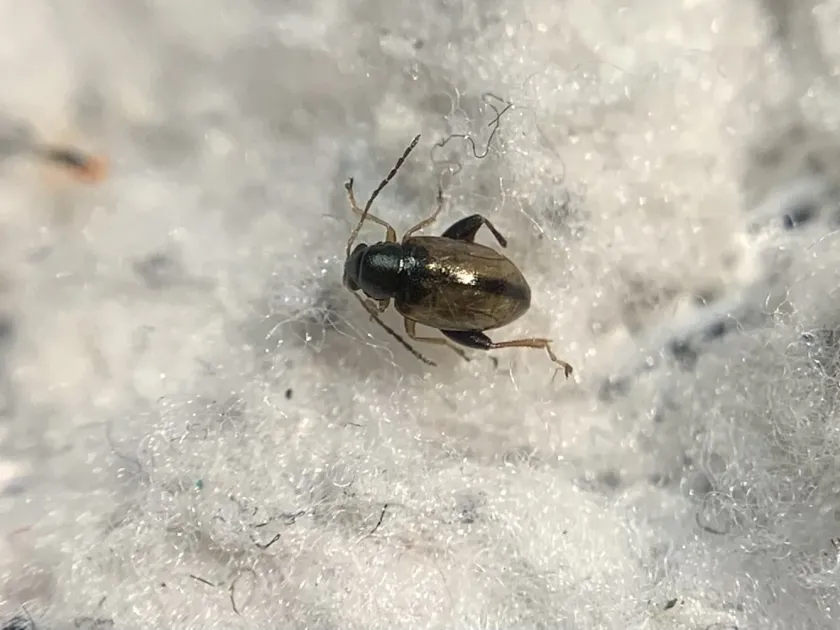
The crucifer flea beetle (Longitarsus nasturtii) is a small, jumping insect belonging to the Chrysomelidae family within the Coleoptera order. Adult beetles typically measure between 2 and 3 mm in length and possess a glossy appearance, often with metallic hues or dark patterns.
Their most recognizable feature is their enlarged hind legs, which enable them to perform sudden, powerful jumps when threatened. This evasive behavior makes them notoriously difficult to capture or control manually during field inspections.
The insect undergoes a complete metamorphosis involving four stages: egg, larva, pupa, and adult. They overwinter as adults within the soil surface, under plant debris, or in crevices, emerging in early spring as temperatures rise.
Females lay eggs in the soil near host plants. While the larvae of some species feed on roots, others may focus on subterranean plant parts, and their presence often goes unnoticed until the adults emerge to feed on foliage.
For effective monitoring, agricultural professionals often utilize yellow sticky traps. These traps are highly effective in detecting the early migration of flea beetles into fields and help determine the timing for necessary interventions.
What it damages
This pest targets all plants within the Brassicaceae family. Key affected crops include cabbage, cauliflower, radish, kale, rapeseed, mustard, and horseradish, along with various cruciferous weeds that serve as alternate hosts.
The most critical period of damage occurs during the seedling stage, specifically when cotyledons and the first true leaves are developing. During this phase, large populations can devastate entire fields within a very short timeframe.
Adult beetles feed by chewing small, circular holes into the leaves, giving them a shot-hole appearance. Severe infestations lead to total leaf skeletonization, causing the plant to wither and eventually perish, halting crop development.
Larval stages living in the soil may feed on root hairs, which reduces the plant's ability to take up water and nutrients. This damage makes the crop significantly more susceptible to drought stress and secondary pathogens.
The economic threshold for intervention varies by crop, but generally, when 3 to 5 beetles per plant are observed at the seedling stage, immediate action is required to prevent widespread crop failure and economic losses.
When it appears
Adult beetles typically appear in late spring, around April or May, once soil and air temperatures reach 10–12°C. Their activity is highly correlated with weather conditions, as they thrive in hot, dry environments.
The peak of their activity usually coincides with the emergence of spring vegetable crops. During periods of cool or rainy weather, their jumping activity decreases significantly, and they often seek shelter beneath soil clods.
Depending on the climatic zone, the beetle may complete one or two generations per season. The summer generation is particularly destructive to late-planted brassica varieties, necessitating vigilance throughout the growing cycle.
As autumn approaches and temperatures drop, adults begin their migration to overwintering sites. These locations often include field margins or areas with high levels of plant residue, highlighting the importance of thorough post-harvest field management.
Monitoring efforts should commence immediately upon sowing or transplanting. The window of vulnerability for young seedlings is short, and early detection is crucial for maintaining plant vigor and ensuring a successful harvest.
Signs of infestation
The primary indicator of a flea beetle infestation is the appearance of numerous pin-prick holes in the foliage. Upon approaching the plants, the sight of a cloud of small insects jumping away is a definitive sign of an active infestation.
Affected leaves often turn yellow and begin to curl or wilt. If the beetles attack the growing point (apical meristem), the plant may stop growing entirely, which is particularly detrimental for young transplants or direct-seeded vegetables.
Unexplained wilting during the day, even with sufficient soil moisture, may indicate root damage caused by larvae. In such cases, carefully excavating the plant to inspect the root zone is recommended to confirm the presence of the pest.
- Numerous tiny, clean-cut holes in the leaves or cotyledons.
- Visible jumping activity when foliage is disturbed.
- Stunted growth and leaf deformation.
- Premature yellowing and drying of leaf tissues.
- Reduced stand density due to the death of young seedlings.
Identifying these symptoms early allows for localized management, preventing the pest from spreading throughout the field and reducing the need for broad-spectrum insecticide applications later in the season.
Control measures
Cultural control is the first line of defense. Early planting can help seedlings reach a more robust stage before the peak beetle population emerges. Maintaining high soil moisture can also deter activity, as beetles prefer dry conditions.
Aggressive weed management is essential, as wild mustard, shepherds' purse, and other cruciferous weeds provide breeding grounds for the pest. Deep plowing post-harvest helps destroy overwintering sites for the adults.
Chemical control involves the use of systemic or contact insecticides. Applications are most effective during the early morning or late evening hours when the beetles are less mobile, ensuring better coverage and efficacy.
On a smaller scale, using floating row covers (spun-bonded fabric) serves as an effective physical barrier that prevents beetles from reaching the crop. This method is highly recommended for organic production and home gardening.
Integrated Pest Management (IPM) strategies, including the use of yellow traps and regular scouting, allow growers to make data-driven decisions. By targeting only the affected areas, growers can maintain yields while minimizing chemical use.
Content graph
Connections · Crucifer flea beetle
Most often together:
Marketplace
Products · 8


Biology
Taxonomy
- Latin name
- Longitarsus nasturtii
- Order
- Coleoptera (beetles)
- Family
- Chrysomelidae
- EPPO code
- LONINA
Community
Discussion
No discussions yet — be the first.