
Leopard slug
Limax maximus
Description
How to identify
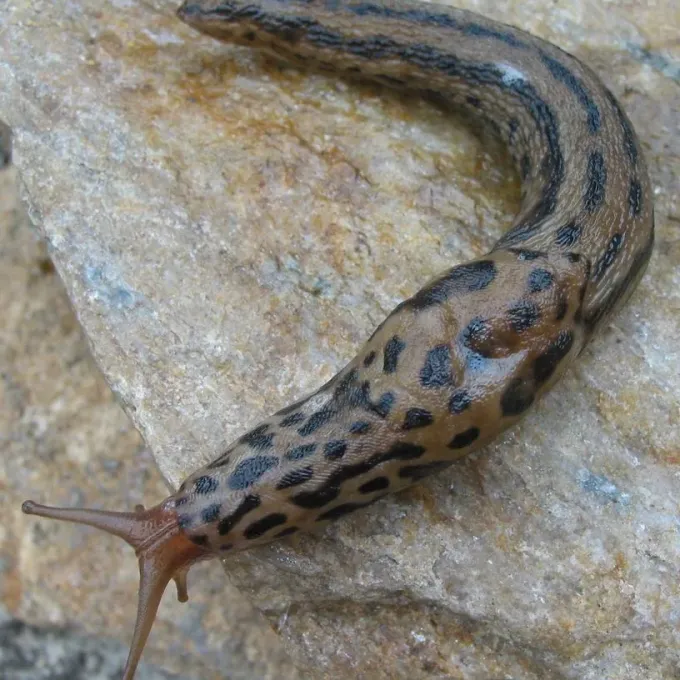
The Leopard slug (Limax maximus), also known as the great grey slug, is a large air-breathing land slug belonging to the family Limacidae. Adults typically grow to between 10 and 20 cm in length.
The body is generally light grey or brownish with distinctive black spots or stripes, which gives it its common name. The sole of the foot is usually pale or whitish in color.
They possess a specialized gland that produces a thick, clear mucus. As they move, they leave behind a characteristic silvery trail that reflects light once the water content evaporates.
The breathing pore, or pneumostome, is located on the right side of the mantle. Lacking a hard shell, they are highly flexible and can squeeze into narrow gaps, pipes, and deep soil crevices.
These slugs are hermaphrodites, meaning each individual has both male and female reproductive organs. They lay masses of eggs in dark, damp environments such as decaying organic matter.
What it damages
The Leopard slug is an omnivorous scavenger that can become a significant pest in gardens. While they often eat decaying plants, they will readily consume fresh agricultural crops.
They are known to damage a wide variety of vegetables, particularly leafy greens like lettuce, cabbage, and spinach, as well as seedlings and soft fruits such as strawberries.
In ornamental gardens, they cause aesthetic damage to hostas, lilies, and dahlias. They leave large, irregular holes in the foliage, which can devastate the appearance of the plants.
Young transplants are especially vulnerable; the slugs can sever stems at the base, leading to the total death of the young plant overnight.
Furthermore, their mucus and excrement can facilitate the spread of fungal pathogens and rot, further compromising the health and market value of the harvested produce.
When it appears
Leopard slugs are highly sensitive to desiccation and are most active during periods of high humidity and rainfall, particularly during the cool spring and autumn months.
Their activity period begins as soon as soil temperatures rise above 5°C and continues until the first heavy frosts of winter, when they retreat into deeper soil or hibernation sites.
They are primarily nocturnal. During the day, they seek out refugia—moist, shaded areas such as under logs, stones, or thick mulch—to avoid direct sunlight and dehydration.
In periods of intense summer heat, their activity levels drop significantly. They may remain dormant in the soil or protected crevices until moisture levels increase.
Reproduction typically occurs throughout the growing season, with population spikes often observed after periods of prolonged rainfall in the late summer.
Signs of infestation
The most prominent sign of a Leopard slug infestation is the presence of large, irregular, ragged holes in the leaves of host plants or vegetables.
Look for dried, shiny, silvery slime trails on surfaces such as soil, pavement, garden pots, or plant stems, which indicate the path of recent activity.
Small, dark, cylindrical fecal pellets found near damaged areas provide confirmation that slugs have been feeding in the vicinity during the previous night.
In cases of heavy infestation, you may observe the sudden wilting or complete loss of young seedlings, often accompanied by visible gnawing damage at the base of the plant.
Searching the garden with a flashlight during the night or early morning hours allows for direct observation of the slugs while they are actively foraging on foliage.
Control measures
Cultural control is the first line of defense; remove debris, boards, and overgrown weeds that provide the cool, moist hiding spots these mollusks require during the day.
Barriers can be established using abrasive materials like crushed eggshells, coarse sand, or lime, which create an uncomfortable surface for the slugs to cross.
Hand-picking slugs during the evening hours and disposing of them in soapy water is an effective and environmentally friendly method for small-scale garden management.
Biological controls such as iron phosphate baits are highly effective and considered safer than traditional metaldehyde baits, as they pose minimal risk to pets and wildlife.
If chemical baits containing metaldehyde must be used, they should be applied with extreme caution and in accordance with local regulations to prevent toxic exposure to non-target species.
Taxonomy
- Latin name
- Limax maximus
- Order
- Molluscs
- Family
- Limacidae
- EPPO code
- LIMXMA
Discussion
No discussions yet — be the first.