
Black-and-grey slug
Limax cinereoniger
Description
How to identify
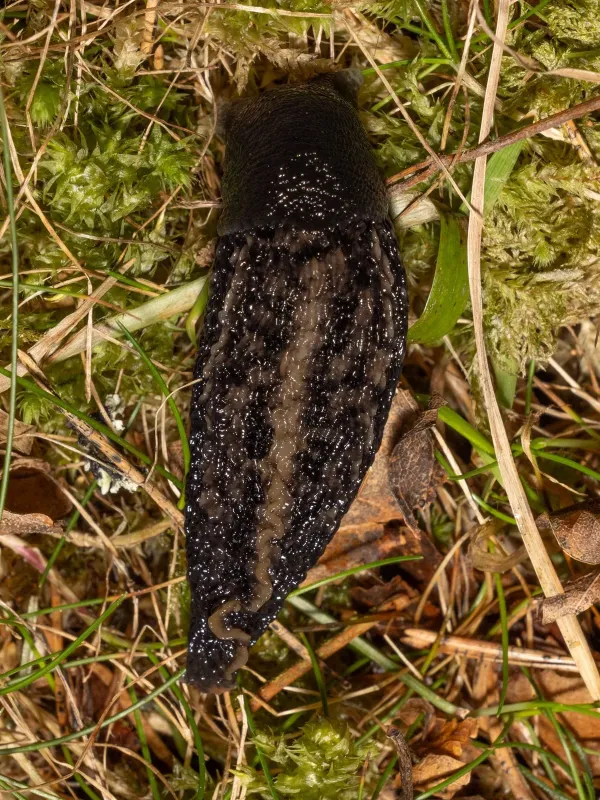
The black-and-grey slug (Limax cinereoniger) is a species of air-breathing land slug in the family Limacidae, order Stylommatophora. It is one of the largest land slugs in its range, reaching lengths of up to 20 centimeters.
The body color ranges from dark grey to nearly black, and it is usually distinguished by a prominent, light-colored, longitudinal keel and strip along the back. The sole of the foot is typically white or very light in color, which is a key diagnostic feature.
These mollusks are covered in a thick layer of mucus, which prevents desiccation and allows them to move efficiently. They are strictly nocturnal, as their soft bodies are highly sensitive to solar radiation and dry air.
The life cycle involves an egg stage followed by development into a hermaphroditic adult. They lay large clusters of eggs in moist soil crevices or under organic matter, ensuring a new generation of pests in suitable habitats.
Their activity levels are strictly dictated by environmental conditions; high humidity and cool temperatures are ideal for their reproduction and growth, making them particularly problematic during rainy seasons.
What it damages
This species is a significant polyphagous pest, meaning it feeds on a wide variety of plants. It causes substantial economic losses in vegetable gardens, ornamental flower beds, and horticultural nurseries.
Commonly attacked crops include lettuce, cabbage, strawberries, cucumbers, and potatoes. In the garden, they show a preference for hostas, marigolds, and other succulent-leaved herbaceous plants.
The damage pattern consists of large, irregular holes in the leaves. In severe infestations, the slugs may consume most of the leaf tissue, leaving only the primary veins, which causes the plant to wither and stop growing.
Root vegetables, such as carrots and beets, suffer from deep gouges and cavities created by the slugs as they feed. These open wounds quickly become contaminated with secondary rot-causing bacteria and fungi.
Beyond physical consumption of plant material, the slugs act as vectors for various plant pathogens. Their presence can trigger widespread fungal or bacterial infections throughout the crop.
Signs of infestation
The most obvious indicator of a slug infestation is the shiny, silvery trail of dried mucus left on leaves, stems, and soil surfaces. These trails are most visible in the early morning hours.
Ragged leaf edges or leaves with large holes are clear evidence of feeding activity. If a plant appears stressed or wilts prematurely without a clear cause, inspect the base and the underside of the foliage.
The slugs themselves can be found during the day under debris, boards, rocks, or deep in the mulch layer, where they hide from the heat. They prefer dark, damp environments close to their food source.
Dark, granular excrement pellets found on the leaves or the soil surface are another reliable sign of ongoing feeding. This indicates that a population has established itself in the immediate area.
Rotting fruit or vegetables resting on the ground often indicate that slugs have already bored into the tissue, leading to a rapid breakdown of the harvest quality.
Control measures
Managing the black-and-grey slug requires a multi-faceted approach involving cultural, mechanical, and targeted chemical strategies to minimize crop damage.
- Regular cultivation and weeding to destroy hiding spots and disturb egg-laying sites.
- Using barrier materials like crushed eggshells, wood ash, or diatomaceous earth around sensitive plants.
- Setting up manual traps, such as wet boards or burlap, to collect and remove slugs by hand.
- Implementing drip irrigation to keep the foliage dry, reducing the pest's preferred environment.
- Applying iron phosphate-based molluscicides, which are effective at targeting slugs while remaining safe for most garden wildlife.
Promoting a healthy ecosystem by supporting natural predators, such as hedgehogs, toads, and ground beetles, helps maintain long-term balance and keeps slug populations under control.
Taxonomy
- Latin name
- Limax cinereoniger
- Order
- Molluscs
- Family
- Limacidae
- EPPO code
- LIMXCI
Discussion
No discussions yet — be the first.