
Slug
Limax
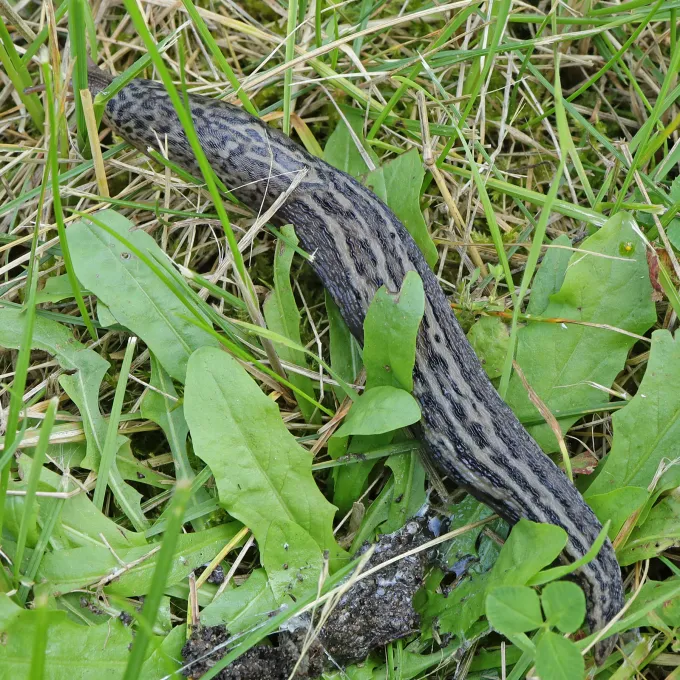
Description
How to identify
Slugs are gastropod mollusks of the order Stylommatophora. Members of the genus Limax are characterized by the lack of an external shell, an elongated body covered in mucus, and a fleshy mantle on the anterior part of their torso.
Adult specimens can reach lengths of 5 to 20 centimeters depending on the species. Their color varies widely, ranging from light gray or yellowish to dark brown or solid black.
They possess a specialized lung opening located on the right side of the mantle. On their head, they have two pairs of tentacles: the upper pair carries eyes, while the lower pair is used for smelling and touch.
Slugs are hermaphrodites, meaning each individual can produce eggs. They lay translucent, round eggs in clusters within moist soil, under rocks, or beneath rotting vegetation.
Their survival and activity levels are heavily dependent on humidity, as their soft bodies are prone to rapid dehydration when exposed to dry air or direct sunlight.
What it damages
Slugs are generalist pests that feed on a vast range of plants. They cause significant damage to vegetables, berries, and ornamental plants in both greenhouses and open fields.
Preferred crops include various types of cabbage, lettuce, mustard greens, cucumbers, and zucchini. Root vegetables such as carrots, beets, and potatoes are also frequently targeted.
Berry crops, especially strawberries, suffer greatly as slugs consume the ripening fruit, making them unmarketable and prone to secondary fungal infections.
Ornamental gardens are equally at risk, with slugs often skeletonizing the leaves of hostas, marigolds, and other plants with soft foliage.
Beyond mature foliage, they often consume germinating seeds and young seedlings, which can lead to thinning stands and potential crop failure in early development stages.
When it appears
The peak activity of slugs occurs during periods of high humidity and moderate temperatures. They are most destructive during rainy summers or when gardens are heavily irrigated in the evenings.
They overwinter primarily as eggs, though some adults may survive in sheltered locations such as deep soil, compost piles, or dense piles of garden debris.
In spring, when temperatures consistently rise above 10°C, the eggs hatch. Active feeding continues throughout the summer months as long as environmental conditions remain suitable.
The highest levels of damage are typically reported in the second half of summer and autumn, when population densities reach their maximum and weather conditions become more humid.
Slugs are nocturnal creatures. During the day, they hide in dark, damp microhabitats to avoid sunlight, emerging only under the cover of darkness to feed on available host plants.
Signs of infestation
The most common sign of a slug infestation is irregular holes in the leaves of plants. Unlike insects that leave clean cuts, slugs often consume large portions of the leaf blade, leaving behind ragged, uneven edges.
Dried, silvery slime trails are a definitive sign of slug activity. These trails can be seen on leaves, stems, pathways, and the surface of the soil around affected plants.
Affected fruits and vegetables usually show deep, scooped-out cavities. If you inspect these areas at night or early morning, you are highly likely to find the culprits actively feeding.
High population areas often feature clusters of slugs resting under boards, stones, or thick layers of mulch during the daytime hours when they are avoiding light.
The presence of dark, granular fecal pellets on the surface of leaves or nearby soil also confirms the presence of these mollusks in the garden environment.
Control measures
Effective slug management requires a multi-pronged approach that combines cultural practices, mechanical collection, and, if necessary, chemical intervention.
- Remove weeds and garden debris to eliminate hiding spots.
- Till the soil periodically to disrupt habitats and destroy egg clusters.
- Establish physical barriers such as crushed eggshells, coarse gravel, or wood ash.
- Use beer or yeast traps to attract and manually collect slugs from the area.
- Apply specialized molluscicides, such as iron phosphate baits, for targeted control.
Cultural practices are paramount: keeping garden beds tidy, ensuring good ventilation, and avoiding over-irrigation will significantly reduce the suitability of the area for slug reproduction.
Promoting a healthy garden ecosystem by encouraging natural predators like hedgehogs, frogs, toads, and ground beetles can provide biological suppression of slug populations.
When using chemical molluscicides, it is critical to follow the product label instructions precisely to ensure effectiveness while minimizing risks to non-target wildlife and domestic pets.
Taxonomy
- Latin name
- Limax
- Order
- Molluscs
- Family
- Limacidae
- EPPO code
- LIMXSP
Discussion
No discussions yet — be the first.