
Leucodonta bicoloria
Leucodonta
Description
How to identify
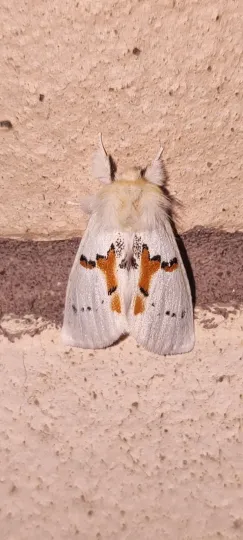
Leucodonta bicoloria, commonly known as the White-marked moth, is a member of the Notodontidae family, characterized by its distinctive appearance.
The adult moth has a wingspan of approximately 40 to 45 mm, with white wings featuring a prominent, silver-white, crescent-shaped spot.
The moth's body is densely covered with hairs, providing insulation and a camouflage effect while it rests on tree bark during the day.
The larvae, or caterpillars, are bright green with a yellow dorsal stripe and secondary lateral stripes, allowing them to blend seamlessly with the foliage.
As nocturnal creatures, they remain inactive during the daylight hours, making them difficult to detect without careful inspection of the foliage.
What it damages
The primary hosts for Leucodonta bicoloria are deciduous trees, with a strong preference for birch (Betula) and alder (Alnus) species.
Larval feeding causes significant damage to the leaf surface, ranging from small perforations to complete skeletonization, leaving only the veins behind.
Severe infestations can lead to widespread defoliation, which severely hampers the tree's ability to photosynthesize and store energy for the winter.
Weakened trees become susceptible to secondary infestations by wood-boring insects and opportunistic fungal pathogens that thrive on stressed hosts.
In nursery settings, repetitive damage can stunt growth, cause branch deformities, and potentially lead to the mortality of young saplings.
When it appears
This species typically undergoes one generation per year, although warmer climates may allow for a partial or complete second generation.
Adult moths emerge in late spring to early summer, usually between May and June, for mating and egg-laying on the host trees.
The eggs hatch after about two weeks, releasing small larvae that immediately begin feeding on the underside of the leaves.
The peak feeding period for the caterpillars occurs throughout July and August, during which they grow rapidly in preparation for pupation.
By autumn, the larvae descend to the ground to form a tough, silk-lined cocoon in the leaf litter or soil, where they overwinter as pupae.
Signs of infestation
One of the first signs of infestation is the appearance of irregularly shaped holes and missing leaf margins in the upper canopy of birch or alder trees.
Accumulation of larval frass (droppings) on the lower leaves or on the ground beneath the tree canopy is a clear indicator of active feeding activity.
Direct observation of the green caterpillars on the leaves confirms the presence of the pest, especially when they display their typical defensive postures.
Premature leaf drop in late summer serves as a diagnostic sign that the foliage has been significantly compromised by the pest.
Thinning of the tree crown compared to neighboring trees is a classic symptom of an established and damaging Leucodonta bicoloria population.
Control measures
Manual removal of caterpillars is a practical approach for small gardens or isolated young trees where the infestation is localized.
Biological control methods, such as applying Bacillus thuringiensis, effectively target the larvae while minimizing impact on non-target species.
In cases of high population density, systemic or contact insecticides may be necessary, provided they are applied in accordance with regional environmental regulations.
Enhancing habitat diversity to encourage natural predators, such as birds, spiders, and parasitic wasps, is essential for long-term population suppression.
Cultivation of the soil under the tree canopy in late autumn disrupts the pupation sites and reduces the number of moths emerging the following year.
Taxonomy
- Latin name
- Leucodonta
- Order
- Lepidoptera (butterflies)
- Family
- Notodontidae
- EPPO code
- LEUDSP
Discussion
No discussions yet — be the first.