
Tropical checkered skipper
Lerodea tripunctata
Description
How to identify
The tropical checkered skipper (Lerodea tripunctata) is a butterfly species belonging to the family Hesperiidae. It is widely recognized as an agricultural pest in various warm-climate regions.
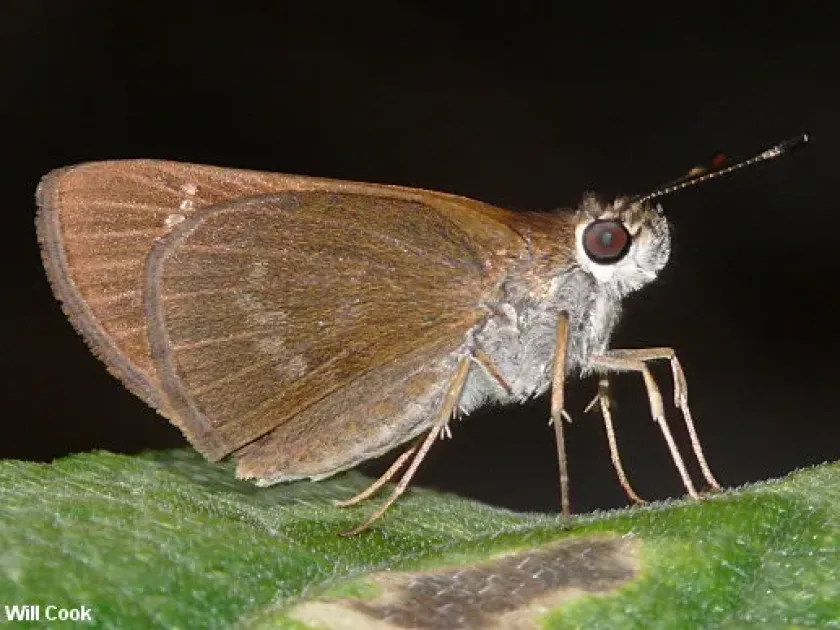
Adults are small, with a wingspan of approximately 25–30 mm. The wings display a dark brown or grayish-brown base color with distinct light, translucent spots, providing a unique "checkered" appearance.
The larvae, or caterpillars, are typically green with a darker longitudinal stripe, allowing them to blend into the leaves of host grasses. They possess a prominent head capsule characteristic of the family.
Pupation occurs within shelters created by folding the leaf of the host plant. The pupa is secured with silk, protecting the developing insect from environmental stressors and predators.
The development time from egg to adult is highly dependent on ambient temperature, allowing for multiple generations per year in tropical and subtropical agroecosystems.
What it damages
This species primarily targets plants within the Poaceae family. Rice (Oryza sativa) is the most significant crop impacted by this butterfly species globally.
Besides rice, the skipper feeds on various wild grasses, which often serve as primary breeding sites that facilitate the migration of larvae to cultivated crop fields.
Damage is exclusively caused by the larval stage, which feeds on the leaf tissue. Larvae chew holes in the leaf blades or consume entire edges, significantly reducing the green surface area.
Severe infestations reduce the plant's photosynthetic capacity, which leads to stunted growth, delayed maturation, and a direct decrease in grain yield quality and quantity.
In high-density populations, the continuous feeding activity can cause the leaves to dry out completely, which severely stresses the entire crop plant.
Signs of infestation
A classic sign of infestation is the presence of "rolled leaves" on rice or host grasses. The larvae fold the leaves using silk threads to create a protected microenvironment.
Visual indicators include irregular ragged edges on leaves and small round holes chewed into the middle of the leaf tissue by the developing caterpillars.
Frass (larval excrement) is often visible near the leaf rolls, indicating active feeding. The presence of silk webbing within the folds is a definitive diagnostic sign of skipper larvae.
Adult butterflies can be seen fluttering in a low, jerky flight pattern across fields. They are most active during the warmest hours of the day in sunny conditions.
Leaf yellowing and necrosis around the edges where feeding has occurred indicate prolonged damage, signaling that the pest population has reached a critical level.
Control measures
Integrated Pest Management (IPM) is the most effective approach for managing the tropical checkered skipper, combining cultural, chemical, and biological strategies.
Sanitation of the field margins is essential; removing weeds and wild grasses prevents the buildup of the population before they migrate onto the main crop.
Chemical control involving synthetic insecticides should be timed to target early-instar larvae. Proper application ensures the chemical penetrates the leaf-rolled shelters.
Biological control agents, such as parasitoid wasps or predators, play a role in natural regulation; preserving these beneficial insects is vital for long-term field management.
Monitoring the field through visual scouting and using pheromone or light traps (if applicable) helps determine the timing for intervention to avoid unnecessary pesticide use.
Taxonomy
- Latin name
- Lerodea tripunctata
- Order
- Lepidoptera (butterflies)
- Family
- Hesperiidae
- EPPO code
- LEROTR
Discussion
No discussions yet — be the first.