
Eufala skipper
Lerodea eufala
Description
How to identify
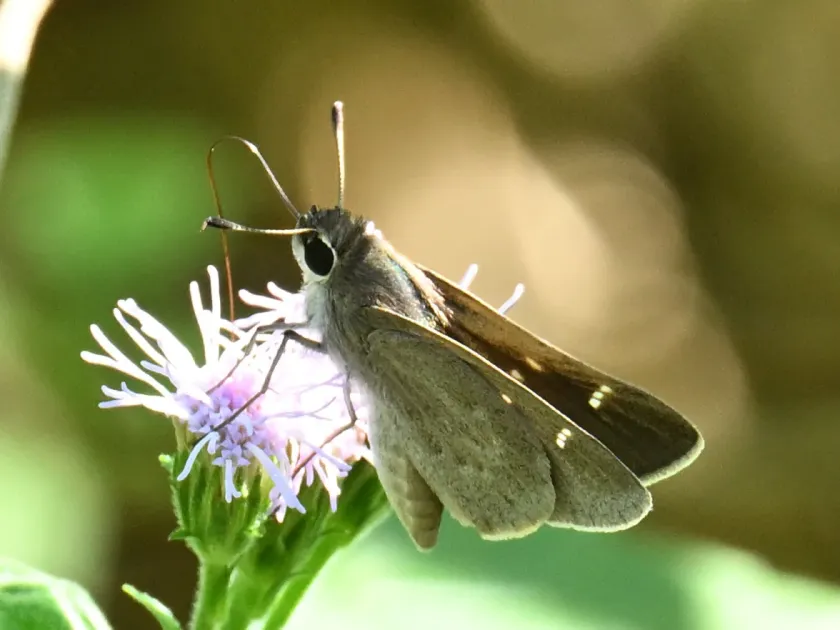
The Eufala skipper (Lerodea eufala) is a butterfly belonging to the Hesperiidae family. Adult moths have a wingspan of approximately 2.5–3 cm and display a dark brown to grayish-brown coloration with distinctive white markings on the forewings.
The larvae (caterpillars) possess pale green bodies with a dark dorsal line and light-colored lateral stripes. Their heads are usually brown, which helps in distinguishing them from other similar larvae in field conditions.
The insect follows a complete metamorphosis life cycle: egg, larva, pupa, and adult. In tropical and subtropical regions, the pest can undergo several overlapping generations throughout the growing season.
Eggs are typically laid singly on either the upper or lower surfaces of host plant leaves. The pupal stage occurs within protective shelters created by folding or rolling leaves and securing them with silk webbing.
These skippers prefer open, sunny environments. They are frequently observed in fields adjacent to wild grasses, which serve as alternative hosts during off-seasons or early stages of development.
What it damages
The larvae primarily feed on plants within the Poaceae family. Significant agricultural damage is reported in crops such as corn (maize), rice, sorghum, and sugarcane, where the pest can be highly destructive.
Caterpillars feed on the leaf blades, creating irregular notches or completely consuming the tissue. This feeding behavior reduces the photosynthetic capacity of the plant significantly.
Young plants are particularly vulnerable. Damage to the whorl or growing point can cause stunted growth, plant deformation, or even total plant death if the infestation occurs at an early growth stage.
Besides direct leaf consumption, the presence of these larvae creates open wounds on the plants. This often leads to secondary infections by pathogens, which further compounds the loss of yield.
High infestation levels in dense crop stands can cause localized patches of destruction, necessitating immediate intervention to prevent the spread of the population across the entire field.
Signs of infestation
The most reliable sign of a Eufala skipper infestation is the presence of leaves that have been folded or rolled and glued together with silk. Inside these shelters, one can find the larvae.
Feeding damage is characterized by uneven, jagged leaf margins. Small, dark frass pellets are often found near these feeding sites, serving as a clear indicator of active larval presence.
Yellowing or wilting of the top leaves is a common symptom in young crops. This indicates that the caterpillar is feeding near the plant's growing point, which is a critical area for development.
Reduced plant population density in affected areas is a sign of long-term infestation. Farmers should look for missing or stunted plants during routine field scouting.
The sighting of adult skippers fluttering in short, jerky flights over the canopy is a warning sign that egg-laying is occurring and larvae will soon emerge to feed.
Control measures
Regular field scouting is the primary strategy for effective management. It is crucial to monitor crops from emergence to identify early signs of larval shelters.
Cultural control methods include maintaining fields free of grassy weeds, as these serve as refuge habitats for the pest. Post-harvest tillage can also help reduce the pupal population in the soil.
Biological control involves encouraging natural predators and parasitoids that exist in the ecosystem. Keeping hedgerows and beneficial insect habitats near fields can help regulate pest numbers naturally.
Chemical control should be implemented only when the pest density exceeds economic thresholds. Use of selective insecticides that minimize impact on beneficial organisms is recommended.
- Implement proper crop rotation to break the life cycle.
- Use certified seeds and consider seed treatments if necessary.
- Apply insecticides in the early stages of larval development for best results.
Taxonomy
- Latin name
- Lerodea eufala
- Order
- Lepidoptera (butterflies)
- Family
- Hesperiidae
- EPPO code
- LEROEU
Discussion
No discussions yet — be the first.