
Leptodelphax
Leptodelphax
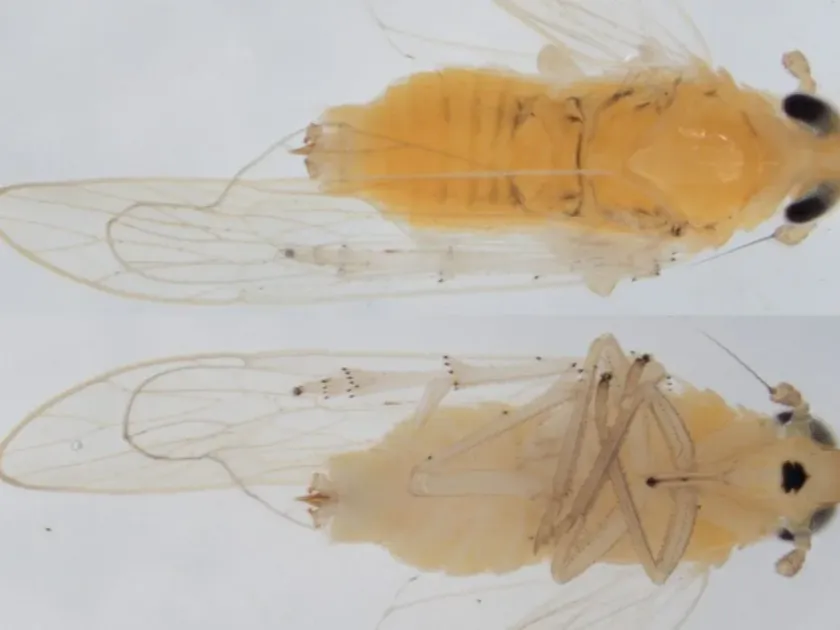
Description
How to identify
Leptodelphax is a genus within the order Hemiptera and the family Delphacidae, commonly known as planthoppers. These are small insects characterized by a distinct keel on the head, which is a key identification feature for this group.
Adult insects are highly mobile and capable of jumping. Their coloration varies from light yellow to brownish, which provides effective camouflage against various host plants in the field.
The wings of Leptodelphax often exhibit a transparent structure with clear venation patterns. Many species display wing polymorphism, where some individuals have shortened wings, limiting their ability for long-distance flight.
Nymphs resemble adults but are smaller and lack fully developed wings. Their development proceeds through several instars, gradually acquiring adult morphological characteristics as they mature.
Agronomists typically use sweep nets or direct visual inspection of the underside of leaves to identify these pests in agricultural settings, as they tend to cluster in shaded areas during the day.
What it damages
The primary hosts of Leptodelphax are cereal crops, including wheat, barley, oats, and maize. The pest also frequently colonizes wild grasses, which act as reservoirs for maintaining the pest population throughout the year.
The insects feed by piercing plant tissues with their needle-like mouthparts to extract sap. This feeding process interferes with plant metabolism and significantly impairs photosynthesis.
Beyond the direct mechanical damage to tissues, Leptodelphax species are known vectors for various phytopathogenic viruses and mycoplasma-like organisms that cause severe cereal diseases.
Damage is most severe during dry summers when plants are already stressed by water deficiency. Heavy infestations can lead to significant yield losses and a reduction in overall grain quality.
Damage is observed in both spring and winter crops, particularly during the tillering and stem elongation stages, when the plants have the most active sap flow.
When it appears
These pests predominantly overwinter as nymphs in the soil or within plant debris, and also within the root zones of perennial grasses.
In spring, as temperatures stabilize, nymphs resume feeding and develop into adults. The first peak of adult activity typically occurs in late spring or early summer.
During the growing season, Leptodelphax can produce multiple generations, with the frequency largely dependent on regional climatic conditions and accumulated temperature units.
The highest population density is observed in mid-summer. Hot weather accelerates nymphal development, leading to rapid increases in the number of individuals across fields.
In autumn, as average temperatures drop, the insects migrate to overwintering sites. A noticeable migration often occurs from harvested fields to young winter crop seedlings.
Signs of infestation
The first sign of infestation is the appearance of small whitish or yellowish spots on leaves, which eventually coalesce, causing the leaf blades to yellow and wither.
Heavy infestations leave plants looking stunted, with significantly slowed growth and stem malformations. Affected crops often appear patchy when viewed across the field.
Presence of Leptodelphax is marked by specific honeydew excretions, which foster the growth of sooty mold, appearing as a dark, dusty layer on the leaf surfaces.
During morning inspections, a characteristic jumping or flying reaction when stems are disturbed serves as a clear behavioral indicator of the pest's presence.
Indirect symptoms include signs of viral infections transmitted by the planthoppers, such as mosaic patterns, dwarfism, or excessive, irregular tillering.
Control measures
Agronomic measures include timely weed control, as weeds serve as alternative hosts, and practicing crop rotation to avoid continuous cereal cultivation in the same area.
Effective management practices include stubble cultivation and deep autumn plowing, which help destroy nymphs living in the upper soil layers or on crop residues.
Chemical control is implemented when thresholds of economic injury are exceeded. Systemic and contact insecticides are generally effective against these sap-sucking insects.
- Monitoring population density using yellow sticky traps.
- Adjusting sowing dates to avoid peak flight periods.
- Utilizing biological products based on entomopathogenic fungi.
When selecting pesticides, it is crucial to consider the impact on natural enemies (entomophagous insects) and minimize broad-spectrum applications during the peak activity of beneficial species.
Taxonomy
- Latin name
- Leptodelphax
- Order
- Hemiptera (bugs, aphids, leafhoppers)
- Family
- Delphacidae
- EPPO code
- LPDHSP
Discussion
No discussions yet — be the first.