
Lathrobium
Lathrobium
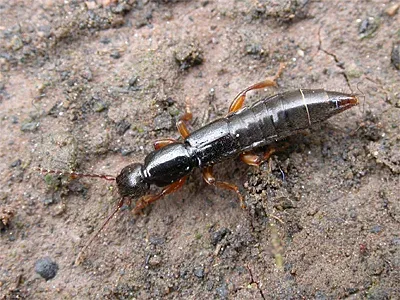
Description
How to identify
The genus Lathrobium belongs to the family Staphylinidae, known as rove beetles, within the order Coleoptera. These beetles are easily recognized by their elongated, narrow, and somewhat cylindrical bodies.
Adults typically possess shortened elytra that leave several abdominal segments exposed, though they remain capable of movement within the soil profile.
Their coloration is generally dark brown or black, sometimes exhibiting a subtle metallic or dull luster. Most species range in size from 5 to 12 mm.
They possess a powerful chewing mouthpart, which is highly specialized for feeding on organic matter, though some species may supplement their diet with plant tissues.
The larvae are slender and active, typically inhabiting the soil surface or leaf litter where they search for food in the upper layers of the substrate.
What it damages
While many Lathrobium species act as predators of smaller soil invertebrates, some are known to cause damage to vegetable crops during the early seedling stage.
The primary concern involves damage to the delicate roots and hypocotyls of young plants, which can lead to weakened stands and localized stunted growth.
When environmental conditions favor high populations, such as in heavily mulched or damp soils, their feeding can lead to significant crop loss in susceptible fields.
The feeding injuries often create entry points for secondary infections by soil-borne pathogens, leading to root rot and eventual collapse of the seedlings.
The economic impact is most pronounced in early-season planting when young seedlings are struggling to establish their primary root system in cold or wet soil.
When it appears
Lathrobium activity is strictly governed by soil moisture levels and temperature patterns throughout the spring and early summer growing months.
The peak of their activity usually occurs in early spring, following the thaw, when soils are damp and provide optimal conditions for movement on the surface.
As temperatures rise in mid-summer, these beetles tend to migrate deeper into the soil profile to avoid desiccation, becoming less visible and less harmful.
Autumn activity may increase again as soil moisture improves, although this is generally less damaging to established crops compared to the spring emergence.
Climate factors such as heavy rainfall during the planting season can significantly exacerbate the risk of infestation by these soil-dwelling insects.
Signs of infestation
A major symptom of Lathrobium damage is the sudden wilting of seedlings, often appearing as patches of dying or stunted plants within a row.
A closer inspection of the base of the stems will reveal superficial grazing, shallow pits, or ring-like lesions caused by the beetles' mandibles.
Presence of secondary fungal rot around the root collar area is a strong indicator that mechanical damage has occurred, facilitating the entry of pathogens.
Direct observation can be made by gently sifting through the topsoil or checking under crop debris early in the morning when the insects are most active.
- Wilting of young seedlings in high-moisture patches.
- Visible gnawing marks or pits on the lower stem and root tissue.
- Secondary rot infection surrounding the primary feeding site.
- Observation of dark-bodied, long beetles in the surface soil.
Control measures
Effective management begins with good agricultural practices, specifically managing soil moisture to ensure the upper layers do not remain excessively damp for prolonged periods.
Tillage practices, including fall plowing, are highly effective in disrupting the life cycle by bringing overwintering beetles to the surface where they perish.
Sanitation is essential; removing crop residues and managing weeds minimizes the availability of refuge and food sources for the beetle population.
In cases of severe outbreaks, application of registered soil-applied insecticides during the planting phase can protect vulnerable seedlings from primary infestation.
Crop rotation remains a fundamental strategy to prevent the accumulation of soil-dwelling pests and break the cycle of infestation in frequently planted fields.
Taxonomy
- Latin name
- Lathrobium
- Order
- Coleoptera (beetles)
- Family
- Staphylinidae
- EPPO code
- LATOSP
Discussion
No discussions yet — be the first.