
Larra
Larra
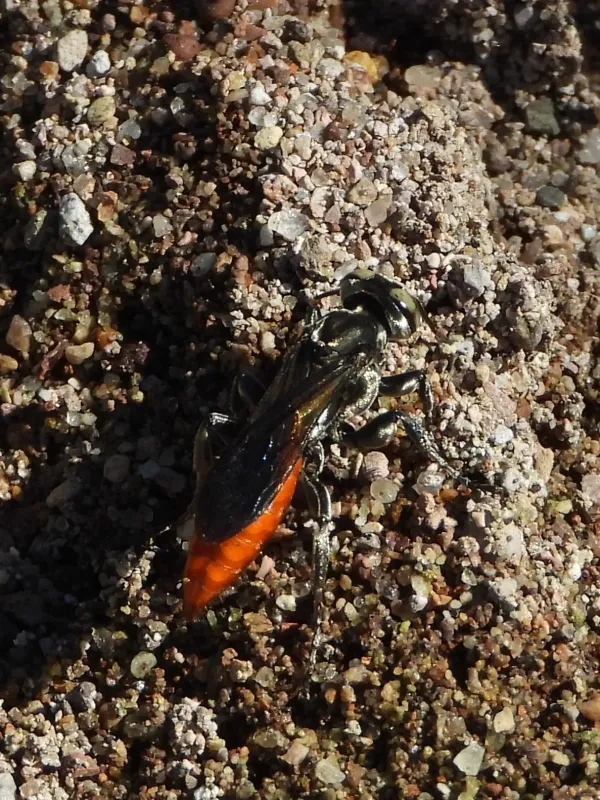
Description
How to identify
The genus Larra belongs to the family Crabronidae, commonly known as sand wasps or digger wasps. They are highly specialized predators that contribute significantly to the natural suppression of soil pests.
Adult specimens typically exhibit a dark coloration, sometimes with metallic reflections or reddish abdominal segments, which helps in identifying them in the field.
These wasps possess powerful mouthparts and sharp sensory organs, which are crucial for detecting and paralyzing their specific hosts buried deep within the soil.
Systematically, they are classified within the order Hymenoptera. Their behavior is largely solitary, with females investing significant energy in locating subterranean prey.
They are frequently found in sandy or loose soil environments where their hosts, the mole crickets, are most abundant.
What it damages
It is critical to note that Larra wasps are not pests. They do not damage leaves, roots, stems, or fruits of agricultural crops.
Instead, they are specialized entomophagous insects that target mole crickets (Gryllotalpidae). These crickets are known to cause severe damage to seedlings and root systems.
By parasitizing mole crickets, these wasps provide a vital ecological service, effectively reducing the pest population without any human intervention.
Their presence is highly desirable in any farming operation, as it serves as a form of natural biological control against aggressive subterranean pests.
Therefore, they should be regarded as beneficial insects that contribute to the overall resilience of the agro-ecosystem.
When it appears
The activity of Larra wasps is closely tied to the peak activity of their hosts and the seasonal warming of the soil.
Adults are most frequently observed from late spring through late summer, corresponding with the time when mole crickets are most active near the soil surface.
The larval development cycle is temperature-dependent, usually occurring while the ground remains warm enough to support high metabolic rates.
Females are particularly industrious on sunny days, searching for burrows and monitoring the vibrations caused by their prey.
Overwintering typically occurs in the pupal stage, buried safely within the host's tunnel or specialized underground chambers.
Signs of infestation
A primary sign of Larra presence is a noticeable decline in mole cricket activity in areas where high infestation was previously recorded.
Visual observation of wasps patrolling the soil surface, specifically near cricket burrow exits, is a strong indicator of their hunting activity.
Another sign is the preservation of crop root systems that would otherwise be destroyed by the pest, demonstrating the effectiveness of the wasp as a control agent.
There are no signs of plant damage caused by the wasps themselves, which differentiates them from herbivorous insect pests.
Farmers can monitor their population by observing small, characteristic excavations or disturbed soil patches near cricket tunnels.
Control measures
No protective measures are needed against Larra wasps, as they are essential beneficial insects that support sustainable agriculture.
To encourage their presence, farmers should limit the use of non-selective broad-spectrum insecticides that could accidentally kill these predators.
Maintaining floral borders with nectar-rich plants provides the necessary carbohydrates for adult wasps, helping to sustain their local populations.
Conservation tillage practices help maintain the integrity of their subterranean nesting sites, ensuring higher survival rates for the next generation.
Integrating biological pest control into farm management is the best way to utilize these wasps to keep subterranean pest populations in check.
Taxonomy
- Latin name
- Larra
- Order
- Hymenoptera
- Family
- Crabronidae
- EPPO code
- LARRSP
Discussion
No discussions yet — be the first.