
Smaller brown planthopper
Laodelphax striatellus
Description
How to identify
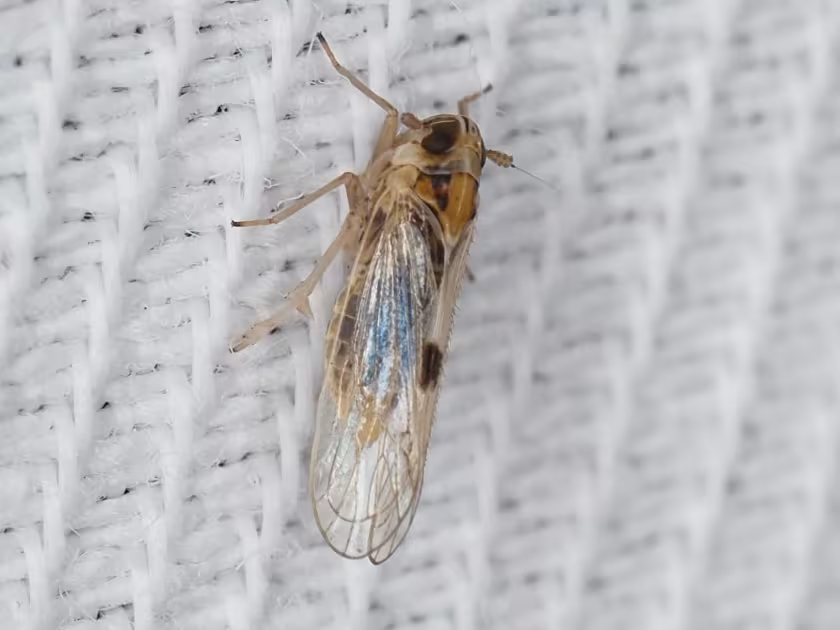
The smaller brown planthopper (Laodelphax striatellus) belongs to the order Hemiptera and the family Delphacidae. Adult insects are typically 3–4 mm long, with colors ranging from pale brown to dark blackish-brown.
These insects are highly mobile, possessing wings that allow for significant migration distances. They are equipped with piercing-sucking mouthparts, which are perfectly adapted for feeding on plant sap.
Nymphs are smaller versions of the adults but lack functional wings. Their coloring is often lighter, helping them blend into the stems of host plants where they usually reside.
The species undergoes incomplete metamorphosis, consisting of egg, nymph, and adult stages. This reproductive strategy allows them to build up large populations in a relatively short time frame.
Field identification is often based on the sudden jumping movement of insects when the host plant is disturbed, making them recognizable to experienced agronomists and scouts.
What it damages
The smaller brown planthopper primarily attacks cereal crops, including rice, wheat, barley, oats, and millet. It is considered one of the most significant pests in rice-growing regions.
Direct damage occurs as the insects feed on plant sap, which causes the plants to lose vigor and eventually wilt. This reduces the overall photosynthetic capacity of the crops.
The most critical impact is the transmission of various plant viruses. These pathogens, such as rice stripe virus, can cause total crop failure and severe economic losses.
Infected plants often show stunted growth, distorted stems, and yellowing foliage. These symptoms are often more pronounced than the direct damage caused by feeding alone.
Yield quality is severely degraded, and in heavy infestations, the grains may fail to fill properly, making the harvest unusable for commercial purposes or seed saving.
When it appears
The pest typically overwinters as nymphs in various stages of development. They seek shelter in crop residues, stubble, or near the roots of perennial grasses.
As temperatures rise in the spring, usually during April or May, nymphs emerge and resume feeding on young grain seedlings, marking the start of the primary infestation phase.
The insect is multivoltine, meaning it produces several generations throughout the growing season. The development speed is highly dependent on ambient temperature and humidity levels.
Population peaks usually occur in the summer, when environmental conditions are optimal for rapid multiplication and migration between fields of various cereal crops.
During autumn, as temperatures decline, the insects migrate toward their overwintering sites, and the population density begins to decrease until the following spring.
Signs of infestation
The presence of yellowed or chlorotic patches within a field is a primary indicator. Affected plants look sickly, lose their vibrant green color, and may start to curl.
The accumulation of honeydew on stems and leaves is a strong sign of planthopper activity. This sticky substance promotes the growth of sooty mold, which covers the leaf surface.
Stunted growth, known as dwarfing, is a hallmark of viral diseases transmitted by this vector. Infected plants will appear significantly shorter than healthy ones in the same field.
Scouting involves checking the basal parts of the stems where planthoppers aggregate. Their presence is easily confirmed by observing them jumping upon physical contact with the crop.
Presence of weeds like wild grasses around the field perimeter can also signal a high risk, as these serve as alternative hosts before the main crop is established.
Control measures
Cultural control strategies include plowing down stubble after harvest to destroy overwintering sites. This is a critical step in reducing the initial population for the next season.
Maintaining a weed-free field margin is essential, as many grasses act as secondary hosts or virus reservoirs. Proper crop rotation also helps break the pest's cycle.
Chemical control utilizing systemic insecticides is common when economic thresholds are met. Applications must be timed precisely to coincide with peak nymphal activity.
The use of resistant crop varieties is highly encouraged. Breeding programs focusing on virus-resistant strains have become a cornerstone of long-term pest management.
Implementing a rigorous monitoring program using light traps or yellow sticky traps enables growers to make data-driven decisions, minimizing the need for unnecessary chemical sprays.
Taxonomy
- Latin name
- Laodelphax striatellus
- Order
- Hemiptera (bugs, aphids, leafhoppers)
- Family
- Delphacidae
- EPPO code
- CALGMA
Discussion
No discussions yet — be the first.