
New Zealand flatworm
Kontikia andersoni
Description
How to identify
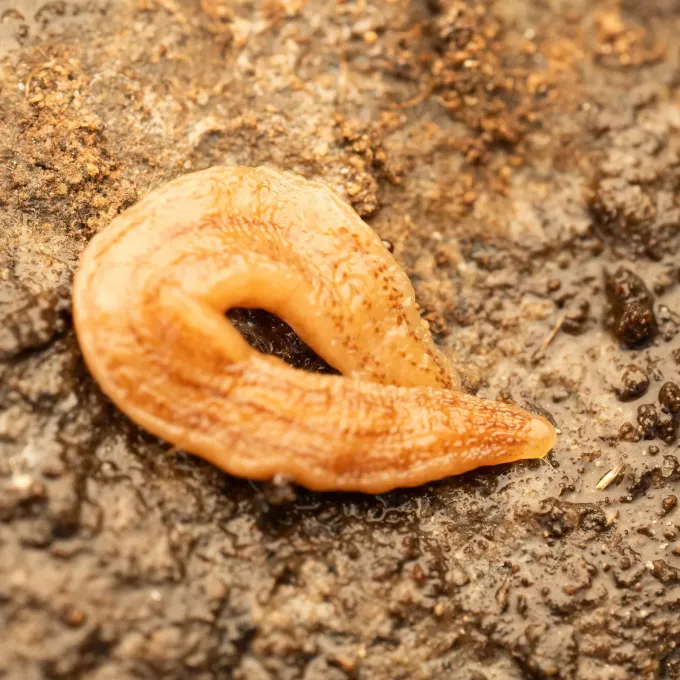
The New Zealand flatworm (Kontikia andersoni) is a carnivorous flatworm species that has become a concern for gardeners and nursery growers worldwide. Adult specimens typically measure between 3 and 5 cm in length.
The body of the flatworm is elongated and ribbon-like, lacking any appendages or hard covering. It is characterized by its brownish olive color with faint longitudinal stripes along the dorsal side.
These creatures have specialized sensory organs located at the anterior end, which help them detect light, humidity, and chemical signals from their prey. They glide over surfaces using muscular waves and a layer of secreted slime.
A key biological feature of Kontikia andersoni is its ability to reproduce both sexually and through fragmentation. If an individual is cut, each piece has the potential to regenerate into a fully functional organism.
Due to their soft bodies, they are extremely sensitive to dehydration. This keeps them restricted to damp environments, such as beneath soil surface cover, stones, or pots.
What it damages
The primary damage caused by this flatworm is the destruction of earthworm populations. As specialized predators, they feed almost exclusively on the earthworms that provide essential soil aeration.
By eliminating earthworms, the flatworm disrupts the soil structure. Without the tunneling activity of worms, the soil becomes compacted, restricting water infiltration and oxygen supply to plant roots.
In greenhouses and nursery settings, the presence of these flatworms can lead to the total collapse of the soil's biological fertility. This results in stunted growth and weakened plant immunity against diseases.
While the flatworms do not directly consume plant tissues, the indirect damage to the root zone environment is significant. This often leads to poor nutrient uptake and overall decline in plant vigor.
In high-density cultivation areas, once Kontikia andersoni becomes established, it can spread quickly between pots and growing containers, causing widespread ecosystem degradation.
When it appears
The activity of these flatworms is strictly governed by soil moisture and temperature levels. They thrive in damp, temperate climates and avoid direct exposure to dry or hot conditions.
Spring and autumn are peak seasons for their activity, as these times provide the optimal balance of moisture and warmth for hunting. They often move to the soil surface during cool, damp nights.
In hot, dry summer weather, flatworms retreat deep into the soil or find refuge under dense organic matter. This behavioral adaptation allows them to survive environmental stressors.
In controlled environments like greenhouses, activity can remain high throughout the year. Stable microclimates eliminate seasonal dormancy, posing a threat to crops during any month.
Visibility increases significantly after heavy watering or rain events. During such times, flatworms are frequently spotted on sidewalks, greenhouse benches, or drainage trays.
Signs of infestation
The most reliable sign of a flatworm infestation is a marked decrease in the number of earthworms found when digging into the garden or potting soil.
Physical inspection often reveals the pests hidden beneath debris, pots, or stones. You may also see characteristic shiny slime trails left behind as they traverse surfaces.
If you notice a lack of organic debris decomposition in your soil, it may indicate a loss of soil-dwelling invertebrates, including earthworms, due to flatworm predation.
In potted plants, check the drainage holes. The flatworms often hide in the moist, dark space between the bottom of the pot and the greenhouse surface.
A general decline in plant health, accompanied by persistent soil compaction, should prompt a search for these predators, especially in imported soil or new greenhouse additions.
Control measures
Effective management focuses on limiting the spread and physically removing the pest. Chemical control is rarely feasible or recommended due to the risk to beneficial soil organisms.
- Always quarantine new plants before introducing them to your greenhouse or garden collection.
- Use sterile potting mixes to ensure that flatworms are not brought into your growing area.
- Manually capture and destroy flatworms when spotted, ensuring they are not left to regenerate.
Maintain clean gardening practices by removing unnecessary debris, boards, or stones from the soil surface where these predators typically congregate.
Improve greenhouse hygiene by keeping benches clean and dry. Reducing excessive surface moisture helps make the environment less favorable for the survival of Kontikia andersoni.
Taxonomy
- Latin name
- Kontikia andersoni
- Family
- Geoplanidae
- EPPO code
- KONTAN
Discussion
No discussions yet — be the first.