
Inopus
Inopus
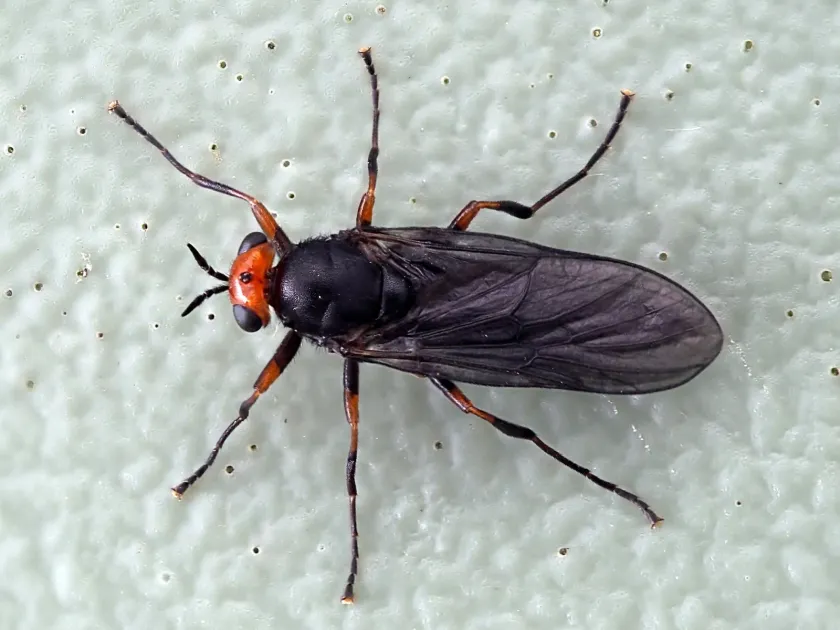
Description
How to identify
Inopus is a genus of flies belonging to the family Stratiomyidae (soldier flies) in the order Diptera. The most significant species is Inopus rubriceps, often referred to as the sugarcane fly.
Adult flies are small, dark-colored insects that do not feed and have a very short lifespan, dedicating their existence primarily to mating and egg-laying.
The larval stage is the most destructive phase. These larvae are characterized by a flattened, tough, and segmented body structure that allows them to thrive in various soil conditions.
Taxonomically, they are categorized within the Stratiomyidae family, requiring precise identification methods during field surveys to distinguish them from other soil-dwelling larvae.
Development involves complete metamorphosis, where larvae progress through several instars before pupating in the soil, emerging later as winged adults.
##damage##Inopus primarily attacks grass species, including cereals like wheat, barley, and oats, as well as sugarcane plantations and permanent pastures or lawns.
The larvae feed on the root systems of plants, specifically targeting root hairs and lateral roots, which disrupts the plant's ability to uptake water and nutrients.
In pastures, severe infestations lead to the formation of bare patches and the thinning of the stand, allowing weeds to outcompete desired forage crops.
Seedlings are particularly vulnerable; a high density of larvae can destroy entire patches of new crops shortly after emergence, leading to significant yield losses.
The cumulative damage often results in stunted growth, yellowing foliage, and a general decline in the plant's health, which is frequently misdiagnosed as nutrient deficiency.
When it appears
Adult fly emergence typically occurs during the warmer months, often in late spring, which serves as the trigger for the life cycle's reproductive phase.
The seasonal activity of the larvae coincides with the active growing season of the host plants, providing them with a steady food source in the root zone.
Eggs are laid in moist soil or at the base of plants, where humidity levels are optimal for larval development and initial survival.
Overwintering occurs primarily in the larval stage deep within the soil profile, providing protection against extreme temperatures and environmental fluctuations.
Pupation takes place in the soil, after which the adults emerge to the surface, creating a distinct seasonal pattern that farmers can use for timing their interventions.
Signs of infestation
The initial signs of an Inopus infestation are often subtle, presenting as uneven growth or localized yellowing of the crop, which may look like water stress.
In pasture and lawn settings, the appearance of expanding dead patches or "thinned-out" zones is a classic indicator that soil-dwelling larvae are feeding.
Upon closer inspection of the root zone, one can identify the presence of the larvae, which are distinct for their flattened, rigid, and segmented bodies.
Failure of a crop to respond to standard fertilization or irrigation practices is another strong hint that the root system is under attack by pests.
Regular soil sampling and careful examination of roots are the most reliable methods to confirm the presence of these pests before they reach economic threshold levels.
Control measures
Crop rotation is the most effective cultural control method, as it breaks the pest's life cycle by replacing preferred host grasses with non-host crops.
Deep plowing and mechanical soil cultivation can disrupt the larval environment, exposing them to desiccation and natural predators like birds.
Chemical control involving soil-incorporated insecticides may be used, though its success depends on reaching the target larvae deep in the soil profile.
Biological control agents, such as entomopathogenic nematodes or specific fungal pathogens, offer an environmentally friendly alternative for managing larvae in the soil.
Effective monitoring using light traps for adults helps track population trends, allowing producers to apply management strategies at the most susceptible stages of the pest's life cycle.
Taxonomy
- Latin name
- Inopus
- Order
- Diptera (flies)
- Family
- Stratiomyidae
- EPPO code
- INOPSP
Discussion
No discussions yet — be the first.