
Baltimore oriole
Icterus galbula
Description
How to identify
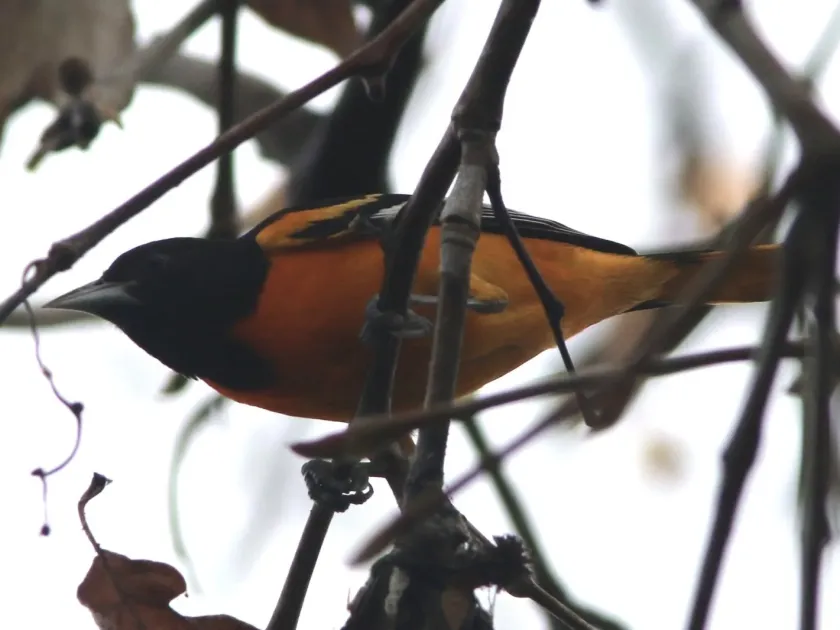
The Baltimore oriole (Icterus galbula) is a member of the blackbird family, Icteridae. Males are characterized by vibrant orange and black plumage, while females display a more subdued yellow-brown coloration.
These migratory birds are native to North America. Their sharp, slender beaks are evolved for both foraging for insects and piercing the skins of fruits, which classifies them as potential agricultural pests.
They are known for their sophisticated nest-building skills, creating long, woven pouches hanging from high tree branches. This makes their nesting sites inaccessible to many predators.
The birds are highly adaptable and often move into orchards or fruit-producing regions if their natural food supply is insufficient or if the crops provide an easy energy source.
Their melodic song and bright colors make them easily recognizable, but their feeding habits during the summer months pose a distinct challenge for fruit growers.
What it damages
Baltimore orioles cause primary damage by feeding on ripening fruit. They are particularly attracted to soft-skinned berries and drupes, including cherries, raspberries, and grapes.
When feeding, they pierce the skin of the fruit, causing the interior to rot. This not only results in direct loss of produce but also invites secondary infections and pests like wasps and vinegar flies.
In addition to fruit consumption, they can damage emerging buds and young shoots while foraging for insects, which can indirectly stunt the growth of fruit-bearing branches.
For commercial growers, a significant presence of these birds during the harvest window can lead to substantial economic losses and a decrease in the overall quality of the yield.
While they do consume some harmful insects, the extent of damage to high-value fruit crops during the summer usually outweighs the benefits of their biological control of insects.
When it appears
The seasonal activity of Baltimore orioles is driven by their breeding and migration cycles. They arrive at their nesting grounds during late spring to begin raising their young.
The period of highest risk for orchards occurs in mid-to-late summer, specifically during June and July, when cherries and other small fruits reach their peak ripeness.
During these weeks, the birds require high levels of sugar to sustain their energy needs, leading them to aggressively forage in available orchards and fruit gardens.
By late summer and early autumn, as the birds prepare for their migration southward, their focus shifts, but early-season harvest protection remains essential for fruit producers.
Monitoring bird population density during the initial ripening stage is vital to determine the intensity of defensive measures required to save the crop.
Signs of infestation
Signs of infestation include fruits with small, jagged puncture marks where the pulp has been scooped out, often with the remains left hanging on the branches.
The presence of damaged fruit typically attracts secondary pests, such as swarms of wasps or ants, which congregate around the open wounds of the berries or drupes.
Hanging woven nests near the orchard perimeter are strong indicators that a family of orioles is established in the area and will actively utilize the fruit for food.
Frequent bird vocalizations and sightings of bright orange plumage in the orchard canopy are clear indicators that the birds are present and feeding on the crop.
- Pierced fruit with partially consumed pulp.
- Increased wasp activity on ripening trees.
- Bird droppings on foliage and fruit clusters.
Control measures
The most effective method for protecting fruit trees is the use of anti-bird netting, which provides a physical barrier and completely excludes the birds from the harvest.
Bioacoustic deterrents, such as recording the distress calls of predatory birds, can be highly effective in making the orchard environment appear hostile to orioles.
Visual deterrents like reflective tape or hawk decoys can provide short-term relief, though they must be moved frequently to prevent the birds from becoming accustomed to them.
Prompt harvesting is a crucial management practice; picking fruit immediately upon reaching technical maturity minimizes the window of opportunity for bird damage.
Some growers find success in planting "sacrifice" trees or shrubs with non-commercial fruit varieties around the orchard edge to lure birds away from the main harvest.
Taxonomy
- Latin name
- Icterus galbula
- Family
- Icteridae
- EPPO code
- ICTEGA
Discussion
No discussions yet — be the first.