
Hylesia
Hylesia
Description
How to identify
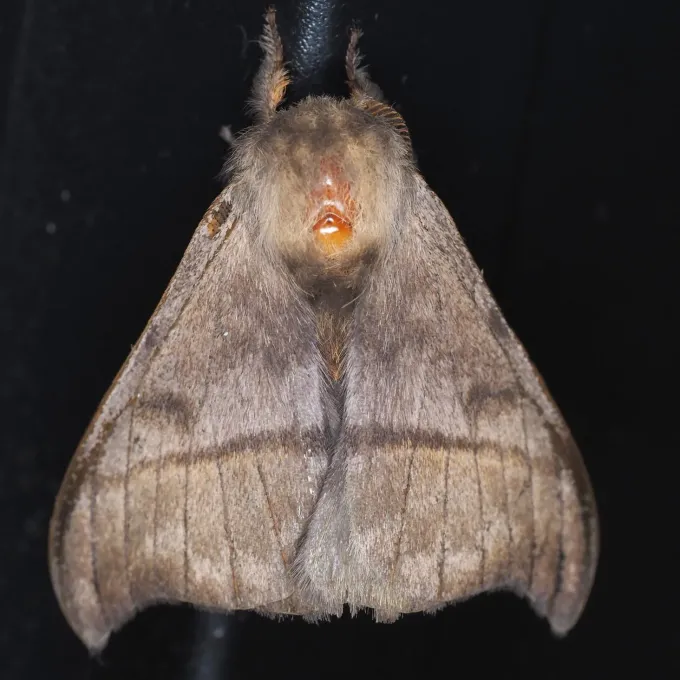
The genus Hylesia belongs to the family Saturniidae, order Lepidoptera. These are medium-sized nocturnal moths, often characterized by dark-colored wings.
Adult moths have a robust body covered with dense hairs. Females of certain species in this genus possess specialized abdominal glands that release urticating (stinging) hairs.
Hylesia caterpillars typically display dense setae (hairs). These hairs contain toxins capable of causing severe dermatitis and allergic reactions in humans and animals upon contact.
The insect undergoes complete metamorphosis: egg, larva (caterpillar), pupa, and adult. Pupae often form cocoons protected by the toxic hairs shed by the caterpillars.
Identification of specific species is challenging due to the external similarity of many members, which is why agronomists often use pheromone traps to monitor population levels.
What it damages
Hylesia caterpillars are polyphagous and can damage a wide range of woody plants and shrubs. Both forest stands and fruit-bearing crops are affected in their distribution area.
Larvae feed openly in groups. Mass outbreaks of this pest lead to complete defoliation of trees, which critically weakens their health and reduces their immunity to diseases.
The damage results in reduced photosynthetic activity, slowed biomass growth, and lower yields in orchards. Severely weakened trees often become targets for secondary pests.
A unique impact is the medical risk: during mass moth flights or caterpillar movement, toxic hairs can become airborne, causing widespread allergic responses among field workers.
Economic losses include not only crop reduction but also the cost of halting field operations during peak activity periods to ensure personnel safety.
When it appears
The phenology of Hylesia depends heavily on regional climatic conditions. Typically, egg clusters overwinter on tree bark or in leaf litter.
Larval emergence coincides with the start of the growing season when fresh foliage appears. This is the most active feeding phase, lasting several weeks.
Pupation occurs in late spring or early summer. Adult flight periods are mostly nocturnal, making them difficult to detect during daylight hours.
In tropical and subtropical regions, development cycles may overlap, leading to multiple generations per year, which complicates outbreak forecasting.
Monitoring for the first generation begins in early spring using light traps, as adults are highly attracted to artificial light sources at night.
Signs of infestation
The first sign of infestation is the appearance of skeletonized or completely consumed leaves, especially in the upper canopy and outer branches.
The presence of caterpillar frass, appearing as small dark pellets under tree crowns, indicates active feeding by the pest in the upper strata.
Detection of dense nests or clusters of hairy caterpillars on trunks and branches confirms the presence of an infestation hotspot in the field.
A specific symptom is skin irritation (itching or rashes) reported by workers during pruning or harvesting, indicating contact with the insect's toxic hairs.
- Leaf damage progressing from the edges toward the center.
- Presence of silken nests in branch forks.
- Large numbers of dead moths found near night lights.
Control measures
Preventive measures include maintaining high biological diversity in agroecosystems to attract natural enemies, such as entomophages and insectivorous birds.
For small infestations, manual removal and destruction of egg clusters or caterpillar nests are effective, provided that workers wear thick gloves and protective gear.
In commercial orchards, biological preparations based on Bacillus thuringiensis are effective, targeting early-instar larvae without harming beneficial insects.
Chemical control with broad-spectrum insecticides is justified only when the economic threshold is exceeded and should be applied during early larval development.
It is crucial to restrict personnel access to areas with mass Hylesia outbreaks and to promptly clear the area of plant debris where pupae may overwinter.
Taxonomy
- Latin name
- Hylesia
- Order
- Lepidoptera (butterflies)
- Family
- Saturniidae
- EPPO code
- HYLSSP
Discussion
No discussions yet — be the first.