
Bat hawk moth
Hyles vespertilio
Description
How to identify
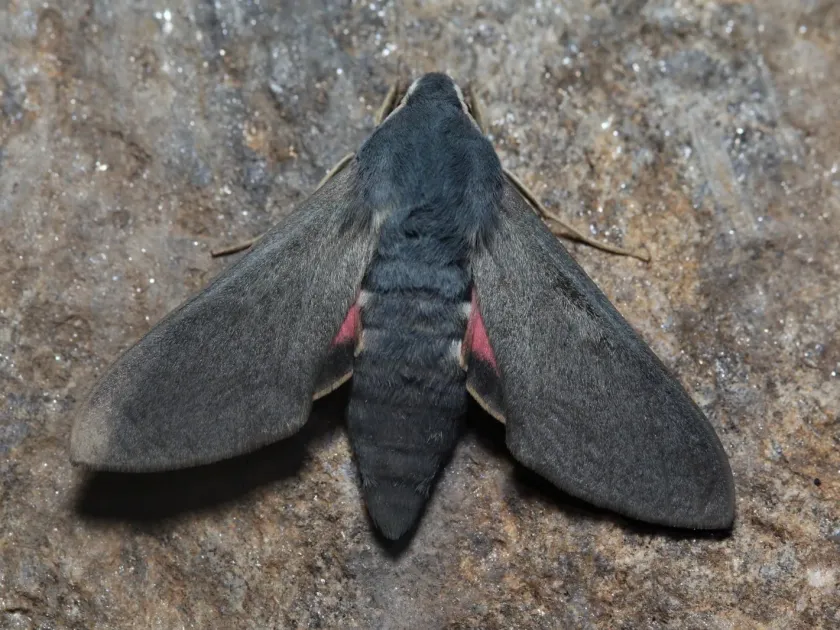
The Bat hawk moth (Hyles vespertilio) is a species of moth belonging to the family Sphingidae. It is known for its twilight activity and distinct appearance, where its wing patterns resemble the leather-like structure of bat wings.
Adult moths possess a robust body and elongated wings, typical of the Sphingidae family, enabling them to be strong and rapid fliers during their active hours in the evening.
The larvae, or caterpillars, are characterized by a prominent horn located on the posterior end of the abdomen, a key diagnostic feature for identifying members of this family.
The pupae are typically found in the soil or leaf litter, protected by a hard, dark-colored casing that allows them to overwinter safely in temperate climates.
The complete life cycle consists of four distinct stages: egg, larva, pupa, and adult. The number of generations per year often depends on regional temperatures and seasonal warmth.
What it damages
While the primary host plants for Hyles vespertilio are members of the Epilobium genus, larvae can occasionally feed on other vegetation if natural hosts are limited.
Larvae cause damage by consuming leaf tissue, leading to irregular holes, skeletonization, or complete defoliation, which severely hampers the plant's ability to undergo photosynthesis.
Heavy infestations reduce the overall vigor and health of plants, making them more susceptible to subsequent stressors such as drought or secondary fungal infections.
The most severe damage occurs during the later larval stages, where the caterpillars consume large quantities of foliage to support their rapid growth and eventual pupation.
For ornamental or agricultural plants, this loss of leaf area can result in diminished aesthetic value and stunted overall growth patterns during the remainder of the season.
When it appears
Adult moth flight typically occurs during the summer months, with peak activity observed between June and August, facilitating mating and subsequent egg-laying processes.
Larval activity, which constitutes the damaging phase, is most prevalent in mid-to-late summer, coinciding with the peak vegetative growth of many host plants.
Regular field scouting is recommended during this window to detect the early stages of infestation before the caterpillars reach their most destructive size.
By autumn, the caterpillars complete their development and descend into the soil to pupate, marking the end of the active feeding season for the year.
The precise timing of emergence can fluctuate based on spring temperatures, which influence how quickly the overwintering pupae develop into active adults.
Signs of infestation
Visible signs of an infestation include irregularly chewed leaf margins and missing tissue, which often indicates the presence of large lepidopteran larvae.
The presence of frass (caterpillar droppings) on the leaves or directly beneath the host plant is a reliable indicator that larvae are feeding in the immediate vicinity.
Caterpillars can often be found by carefully inspecting the undersides of leaves or along the primary stems, where they remain cryptic during daylight hours.
If the infestation is significant, the plant may show signs of stress, including premature leaf drop or a noticeable reduction in the development of new terminal shoots.
- Ragged leaf edges or missing leaf tissue.
- Accumulation of frass on the soil surface.
- Direct observation of larvae with the characteristic posterior horn.
- Slowed shoot growth or general plant decline.
Control measures
Cultural control measures, such as autumn soil cultivation or tilling, are effective in disturbing the soil, which can destroy overwintering pupae and reduce future populations.
Hand-picking caterpillars is a highly effective and environmentally friendly control method for small-scale gardens or low-density infestations.
Biological insecticides, specifically those containing Bacillus thuringiensis, offer a targeted approach that kills young larvae while preserving beneficial insect populations.
In cases of severe economic or aesthetic damage, chemical insecticides may be employed, provided they are applied according to the manufacturer's label instructions.
Promoting a healthy environment for natural predators, such as insectivorous birds and parasitic wasps, helps maintain the moth population below the economic threshold.
Taxonomy
- Latin name
- Hyles vespertilio
- Order
- Lepidoptera (butterflies)
- Family
- Sphingidae
- EPPO code
- HYLXVE
Discussion
No discussions yet — be the first.