
Sea buckthorn hawkmoth
Hyles hippophaes
Description
How to identify
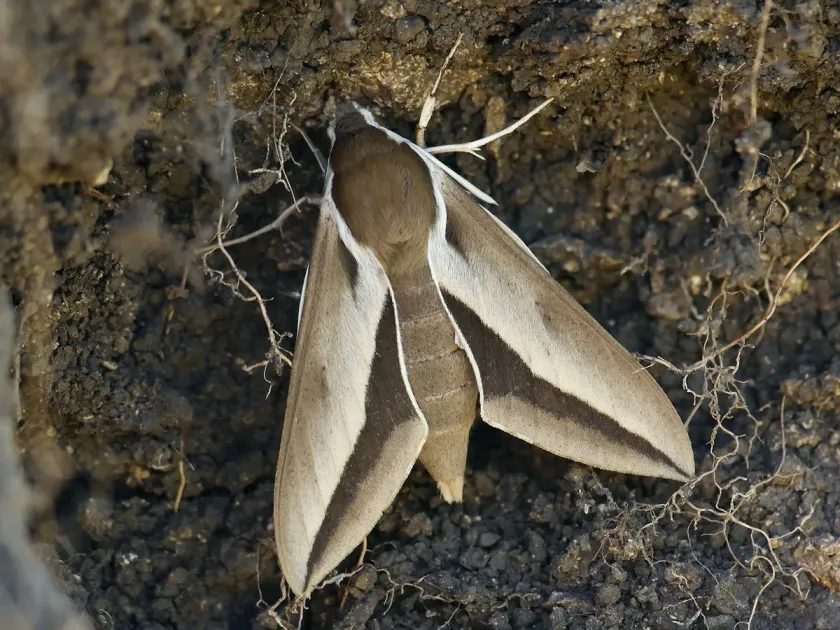
The Sea buckthorn hawkmoth (Hyles hippophaes) is a member of the Sphingidae family. The adult moth is a large insect with a robust body and narrow wings, having a wingspan ranging from 60 to 80 mm.
The forewings are grayish-brown with a distinct pale diagonal band, while the hindwings feature a vibrant pinkish-red color with a prominent black border. This coloration provides excellent camouflage against tree bark when the moth is resting.
The larvae, or caterpillars, can grow up to 80 mm in length. They typically exhibit shades of green or brown, allowing them to blend seamlessly with the foliage of their host plant. A defining feature is the prominent "horn" on the rear end of the body.
Pupation occurs in the upper layers of the soil or beneath leaf litter. The pupae are brown, cylindrical, and spend the winter in a loose silk cocoon, waiting for favorable temperatures in the spring to emerge as adults.
The life cycle follows complete metamorphosis: egg, larva, pupa, and adult. Depending on the geographical region, there may be one or two generations per year, significantly impacting the population dynamics in a specific orchard.
What it damages
The Sea buckthorn (Hippophae rhamnoides) is the primary host plant for this species. The caterpillars have a voracious appetite, consuming large amounts of leaf tissue throughout their growth stages.
The primary damage occurs during the larval stage. When the infestation is severe, caterpillars can strip entire branches of foliage, which drastically reduces the plant's ability to photosynthesize and store energy for the following season.
Young shrubs are particularly vulnerable to this pest, as defoliation can lead to stunted growth or even the death of young shoots. This hinders the plant's structural development and long-term vitality.
In large-scale plantations, the impact of this pest can lead to substantial yield losses. The loss of leaf mass directly correlates with lower fruit production, as the plant lacks the necessary resources to develop healthy berries.
Moreover, the stress caused by heavy feeding makes the bushes more susceptible to secondary infections, such as fungal pathogens, which can exacerbate the decline in health and productivity of the infested plants.
When it appears
The flight period for the adults typically begins in late spring, around May or June. During this time, mating occurs, and females lay eggs individually or in small clusters on the underside of host plant leaves.
The active feeding phase of the caterpillars occurs throughout the summer months, from June to August. This is the period when farmers and gardeners should be most vigilant in monitoring their crops for signs of infestation.
By late summer or early autumn, the mature caterpillars descend to the ground to pupate. They overwinter in the pupal stage, buried in the soil or under debris, emerging the following year when conditions allow.
In some warmer climates, a second generation may occur. While these caterpillars are often less numerous than the first batch, they still pose a risk to the late-summer foliage of the buckthorn bushes.
Environmental factors, such as temperature fluctuations and rainfall, play a key role in the timing of the life cycle. Warmer seasons often lead to a more rapid development cycle and higher pest pressure in the garden.
Signs of infestation
The first indicator of an infestation is the appearance of ragged leaf edges. Unlike some pests that leave skeletons, these caterpillars often consume the entire leaf, leaving only the main veins or bare stems behind.
The accumulation of frass (caterpillar droppings) under the bushes is a clear sign that the pests are feeding in the canopy. Dark, solid pellets on the ground indicate active larvae higher up in the shrub.
Direct observation of the canopy is necessary. Because of their cryptic coloration, the caterpillars can be hard to spot. Look for larvae along the midribs of leaves or resting along the twigs during the morning hours.
Severe defoliation or premature yellowing of leaves in mid-summer is another indicator of infestation. If the bush appears thinner than usual, it is a sign that the leaf canopy has been compromised.
Any visible deformation of new growth or stunted shoot development should be investigated. If you suspect an issue, check the canopy thoroughly, especially on the younger, more tender shoots where the larvae prefer to feed.
Control measures
Managing the Sea buckthorn hawkmoth requires a strategic, integrated approach. Early detection and consistent monitoring are the most effective ways to prevent large-scale damage in the orchard.
- Hand-picking caterpillars from the bushes during the early morning or late evening when they are more active.
- Cultivating the soil in autumn and spring around the base of the bushes to expose and destroy overwintering pupae.
- Utilizing biological control agents such as Bacillus thuringiensis, which are highly specific to lepidopteran larvae.
- Applying systemic insecticides only when the damage threshold is exceeded, ensuring proper timing to minimize harm to beneficial insects.
- Maintaining garden hygiene by removing weeds and ensuring the bushes are well-watered and fertilized to resist stress.
When using chemical products, always follow the safety instructions regarding the pre-harvest interval. Safety for the environment and the operator should remain the top priority during all stages of pest management.
For large areas, it is recommended to test treatments on a small subset of plants first. This helps determine the effectiveness of the treatment and ensures that the application does not cause unwanted phytotoxicity on the buckthorn foliage.
Taxonomy
- Latin name
- Hyles hippophaes
- Order
- Lepidoptera (butterflies)
- Family
- Sphingidae
- EPPO code
- HYLXHI
Discussion
No discussions yet — be the first.