
Hawaiian sphinx moth
Hyles calida
Description
How to identify
The Hawaiian sphinx moth (Hyles calida) belongs to the Sphingidae family, order Lepidoptera, and is endemic to the Hawaiian Islands.
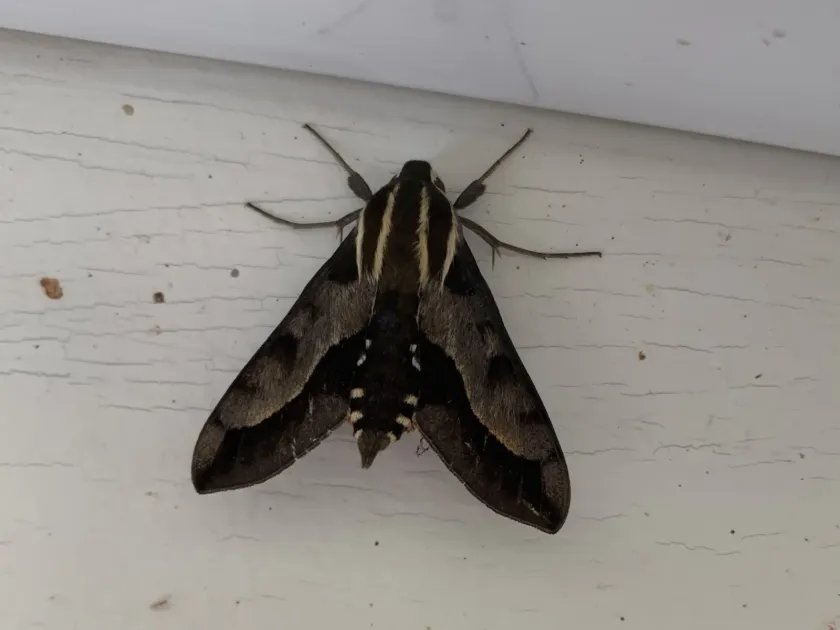
Adult moths are characterized by a streamlined body and narrow wings, which allow for rapid, acrobatic flight patterns typical of hawk moths.
Their coloration is generally cryptic, featuring shades of grey and brown to blend in with tree bark and foliage, providing excellent camouflage.
The larvae, or caterpillars, are the most recognizable stage to growers, featuring a distinct caudal horn on the posterior end of their bodies.
While an integral part of the local ecosystem, the larvae can behave as significant defoliators when their populations reach high densities.
What it damages
The caterpillars feed on the leaves of various indigenous and introduced plants, including important agricultural crops like coffee bushes.
They are known for their voracious appetite, capable of causing rapid defoliation of host plants if left unchecked for an extended period.
Feeding damage is not restricted to foliage; young, tender shoots are also frequently consumed, leading to stunted plant growth.
The loss of photosynthetic area severely stresses the plant, resulting in reduced vitality and lower overall crop yields.
In cases of heavy infestation, young plants may be entirely stripped of their leaves, leading to irreversible physiological damage and death.
When it appears
The life cycle of the Hawaiian sphinx moth is influenced by the temperate and stable climatic conditions of the Hawaiian Islands.
Active breeding and development usually correlate with periods of moderate to high rainfall, which support the growth of primary food plants.
Adults are primarily nocturnal or crepuscular, engaging in feeding and mating flights during low-light hours throughout the year.
Given the lack of a traditional winter season, multiple generations can occur annually, depending on local microclimates and food availability.
Growers should maintain year-round vigilance, as the lack of a strict dormant period allows for continuous pest pressure in warmer regions.
Signs of infestation
The most common diagnostic sign of infestation is irregular, coarse feeding damage along the margins of the leaves.
The presence of large amounts of frass (caterpillar droppings) on the ground or on foliage is a clear indicator of larval activity.
Caterpillars can often be located by carefully examining the undersides of leaves or along the main stems of the host plant during the day.
Wilted or chlorotic leaves often appear near areas of active feeding, as the plant struggles to recover from tissue loss.
Signs of successful larval molting, such as cast-off exuviae (old skins), are also indicators of a thriving pest population.
Control measures
Mechanical control via hand-picking caterpillars is highly effective for small-scale operations, especially during early morning hours.
Biological control methods, such as the application of microbial insecticides containing Bacillus thuringiensis, are effective against young larvae.
Promoting a healthy environment for natural predators, such as native birds and parasitic wasps, helps maintain population balance.
Cultural practices, including the removal of alternate weed hosts from the surrounding area, can significantly reduce the moth's reproductive success.
Chemical intervention should be considered a last resort, utilizing selective insecticides to minimize impact on beneficial insects and pollinators.
Taxonomy
- Latin name
- Hyles calida
- Order
- Lepidoptera (butterflies)
- Family
- Sphingidae
- EPPO code
- HYLXCA
Discussion
No discussions yet — be the first.