
Fiery skipper
Hylephila phyleus
Description
How to identify
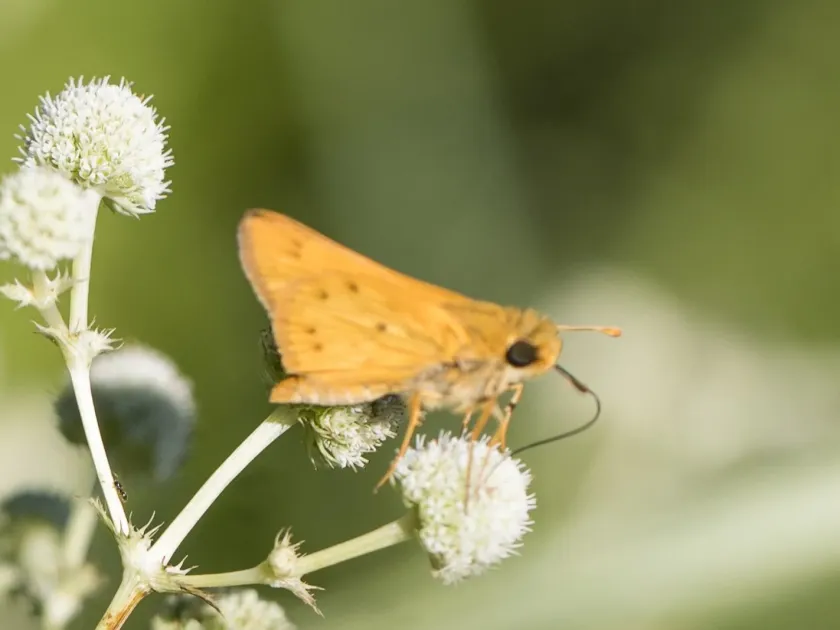
The Fiery Skipper (Hylephila phyleus) is a butterfly species belonging to the family Hesperiidae. Adult butterflies are small with a wingspan of approximately 2.5–3 cm, characterized by distinct orange and brown patterns on their wings.
The larvae, or caterpillars, have cylindrical bodies with a grayish-green to brown appearance, often featuring a darker line along the back. They possess a prominent, dark-colored head capsule that helps distinguish them from other lawn caterpillars.
The life cycle undergoes complete metamorphosis, consisting of egg, larval, pupal, and adult stages. Depending on the local climate, multiple generations can occur within a single year.
Female butterflies lay eggs singly on the undersides of leaves or on the blades of host grasses. The incubation period of the eggs is highly sensitive to ambient temperature.
Adults are diurnal and feed on nectar, but the larvae are strictly herbivorous and pose a threat to agricultural and ornamental turf areas.
What it damages
The primary food sources for the Fiery Skipper larvae are various grass species, including Kentucky bluegrass, bermudagrass, and fescue, commonly found in residential and sports turf.
Larvae feed on grass blades, creating jagged edges and irregular patches in the lawn. If left unmanaged, these feeding patterns can lead to significant thinning of the turf.
Heavy infestations result in large, irregular brown or dead patches that compromise the aesthetic quality of lawns, golf courses, and commercial landscaping.
Beyond lawn damage, larvae may occasionally feed on forage grasses, potentially impacting the yield and quality of pasture areas.
The damage is most severe during periods of drought or high heat, as the stressed plants struggle to recover from the loss of leaf area caused by the caterpillars.
When it appears
Activity typically begins in late spring as temperatures rise and host grasses enter their active growth phase.
Adults are most frequently observed throughout the summer months, actively mating and laying eggs to produce successive generations.
Larval activity peaks during mid-summer, coinciding with the most intense feeding behavior and visible damage to lawns and turfgrass.
In warmer climates, the development is continuous throughout the year, while in northern regions, the population is restricted by winter dormancy.
The species survives the winter by entering a dormant state, primarily as larvae or pupae, tucked away in the root zone or organic thatch layer.
Signs of infestation
The initial signs of infestation include small, irregular areas of the lawn where the grass appears closely clipped or chewed.
Close inspection of the turf surface often reveals small, silk-lined shelters or "tubes" that the caterpillars weave to protect themselves from predators.
The presence of fine, dark granular excrement (frass) within the thatch layer is a definitive indicator of caterpillar activity.
As the infestation progresses, small damaged spots coalesce, leading to larger areas of yellowed or necrotic turf that fail to green up after watering.
Using a simple soap-water drench test on the suspected area will often force caterpillars to the surface, making them easily visible for identification.
Control measures
Proper cultural practices, such as maintaining optimal mowing heights, adequate irrigation, and balanced fertilization, are the first line of defense against skipper damage.
Biological control using formulations containing Bacillus thuringiensis (Bt) is highly effective against young larvae and minimizes impact on beneficial insects.
In cases of severe outbreaks, chemical control with registered insecticides can be applied; however, timing is critical, as larger larvae are more resistant to treatment.
Regular thatch management through dethatching and core aeration is vital to remove the organic material that provides harbor and winter shelter for the larvae.
Monitoring the lawn for adult butterfly activity provides an early warning to implement control measures before the next generation of larvae begins feeding.
Taxonomy
- Latin name
- Hylephila phyleus
- Order
- Lepidoptera (butterflies)
- Family
- Hesperiidae
- EPPO code
- HYLHPH
Discussion
No discussions yet — be the first.