
Chinese water deer
Hydropotes inermis
Description
How to identify
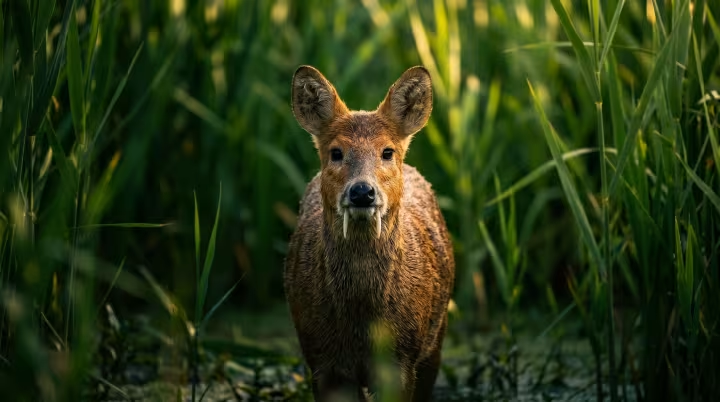
The Chinese water deer is a small species of deer recognized by the absence of antlers. Instead, males possess elongated upper canine teeth, earning them the common nickname vampire deer.
Adult individuals typically weigh up to 14 kilograms and stand approximately 55 centimeters at the shoulder. Their fur is golden-brown in color, providing excellent camouflage in tall grass and wetlands.
This species is highly elusive and primarily nocturnal or crepuscular. They are excellent swimmers and frequently inhabit riverbanks and lowland areas near agricultural fields.
The population exhibits high reproductive potential, with females capable of giving birth to up to four fawns at a time, leading to rapid colonization of suitable habitats.
Because of their territorial nature, males often create territorial markings by rubbing their canines against saplings and bushes, causing physical damage to young vegetation.
What it damages
The Chinese water deer causes significant economic damage to cereal crops, especially during the early growth stages, by consuming young wheat and barley sprouts.
Vegetable crops such as cabbages, legumes, and various greens are highly attractive to them, often resulting in the total destruction of specific plots if left unprotected.
In orchards, these deer pose a threat to young trees. They feed on the bark of saplings, which disrupts nutrient transport and can lead to the stunting or death of the young plant.
Mechanical damage is also significant. Trampling caused by herds moving across a field compacts the soil and breaks the stems of maturing plants, reducing harvest quality.
Repeated foraging in the same area can lead to severe thinning of crops, requiring replanting or resulting in significant financial losses for the farm owner.
When it appears
In spring, young cereal crops become a primary food source for water deer, necessitating early monitoring by agronomists to protect the upcoming harvest.
Summer is characterized by increased pressure on vegetable fields, where the deer take advantage of lush, nutrient-rich growth during the warmer months.
During the autumn, deer often target newly planted winter crops, which provide necessary sustenance before the harsher winter conditions arrive.
Winter foraging often brings the animals closer to human dwellings, where they may damage stored animal fodder or feed on the bark of woody perennials.
Activity is highest during dawn and dusk. These transition times are critical for visual surveys to determine the presence of deer in the agricultural area.
Signs of infestation
The most reliable sign of a Chinese water deer presence is their distinctive, narrow hoof prints found in soft or moist soil across the field.
The presence of droppings, which appear as small, dark, granular pellets, is a clear indicator that the animals are regularly visiting the site.
Foraging signs are easily identified by ragged, torn edges on stems and leaves, which differ significantly from the clean cuts left by insect pests or mechanical tools.
Bark stripped from the lower trunks of young trees (usually under 50 cm high) is a tell-tale sign that water deer have been active in the orchard.
Well-defined narrow paths or game trails through dense crops indicate regular movement patterns between bedding sites in forests and foraging areas in fields.
Control measures
Installing physical wire fencing at least 1.5 meters high is the most effective long-term strategy for keeping Chinese water deer out of agricultural lands.
Acoustic and motion-activated light repellents can be used to disturb the animals during their nocturnal foraging, encouraging them to seek food elsewhere.
The application of olfactory repellents—substances that emit odors the deer find offensive—can provide a temporary barrier for high-value vegetable plots.
Strategic management of field borders, such as clearing brush and maintaining wide buffer zones, can make the area less appealing for deer seeking cover.
Collaboration with local wildlife management agencies is recommended to monitor population density and implement legal strategies to mitigate damage in high-risk zones.
Taxonomy
- Latin name
- Hydropotes inermis
- Family
- Cervidae
- EPPO code
- HPTSIN
Discussion
No discussions yet — be the first.