
Chinese water deer
Hydropotes
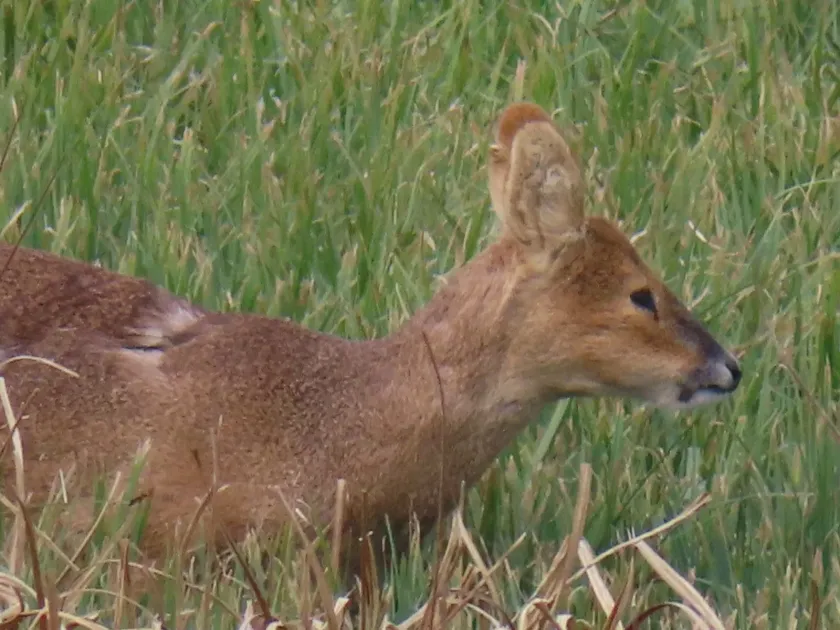
Description
How to identify
The Chinese water deer (Hydropotes inermis) is a small deer species belonging to the family Cervidae. Notably, the males lack antlers but possess long, protruding canine teeth, which they use for defense and competition.
Adults typically stand about 50 to 55 centimeters tall and weigh up to 15 kilograms. Their coat is typically a yellowish-brown color, providing effective camouflage in tall grass and swampy habitats.
These deer are solitary and highly territorial creatures. They are excellent swimmers, allowing them to traverse rivers and marshes to occupy new areas of land, often encroaching upon agricultural fields.
Unlike many other deer species, they show a preference for wetlands, reed beds, and tall grassy areas near water sources, which often leads them into proximity with irrigated farmland.
The species has been introduced in various parts of the world, where the absence of natural predators can lead to rapid population growth and increased agricultural pressure.
What it damages
Chinese water deer primarily cause damage by grazing on young crops, including winter cereals, legumes, and vegetable seedlings. They prefer tender, nutrient-rich plant tissue during their early growth stages.
Trampling is a significant factor in their destructiveness. As they move through fields in search of food, they crush a substantial amount of crops, often causing more economic loss than the amount actually consumed.
In nurseries and orchards, these deer cause severe damage by stripping the bark from young trees. This can lead to stunted growth or the total death of the plants, particularly during winter months.
They can also damage irrigation pipes and plastic netting while attempting to gain access to enclosed fields, necessitating frequent repairs and increasing production costs.
High densities of these deer in an area can lead to significant yield reductions, making them a problematic pest for intensive farming operations located near their natural habitats.
When it appears
Spring is the peak period for damage as young, palatable crop shoots emerge, attracting deer from their shelter. This is when the most intense grazing activity occurs.
Summer grazing continues to be an issue, especially during droughts, when water deer seek out succulent crops and irrigated areas to satisfy both food and water requirements.
Autumn brings an increase in feeding activity as the deer prepare for winter, often targeting the remaining late-season vegetable crops and emerging winter wheat.
Winter months see a shift in diet to woody vegetation, leading to increased bark-stripping activity in young orchards and forested agricultural borders.
Consistent monitoring throughout the seasons is essential to identify shifts in deer behavior and implement timely protective measures before crop losses escalate.
Signs of infestation
Identification of the species starts with finding distinct hoof prints along field edges and near muddy banks of nearby waterways. They also create well-defined trails through tall vegetation.
Damaged plants often show a characteristic slanted bite mark at the top, a result of the deer lacking upper incisors and tearing rather than cutting the stems.
The presence of droppings concentrated in specific areas of the field or at the transition points between cover and crops is a strong indicator of frequent use.
Bark damage on young trees within reach (roughly 60-80 cm from the ground) is a tell-tale sign of deer presence in orchards or tree nurseries.
Broken fencing or shredded mesh along the perimeter of the property provides physical evidence of deer intrusions, signaling the need for stronger defensive barriers.
Control measures
The most effective strategy is the installation of high-tensile mesh fencing at least 1.8 to 2 meters high to physically prevent access to sensitive areas.
Acoustic and visual deterrents, such as motion-activated lights or sound-based repellers, can be deployed to startle the deer and keep them away from fields.
Applying chemical repellents to the crop borders can make the foliage unpalatable to deer, discouraging them from feeding on treated plants.
Planting hedgerows of unpalatable or thorny plants around the field perimeter can create a natural barrier that makes entering the area less appealing.
In regions where the population is out of control, management plans should involve local wildlife authorities to determine appropriate population control measures.
Taxonomy
- Latin name
- Hydropotes
- Family
- Cervidae
- EPPO code
- HPTSSP
Discussion
No discussions yet — be the first.