
Micans horse-fly
Hybomitra micans
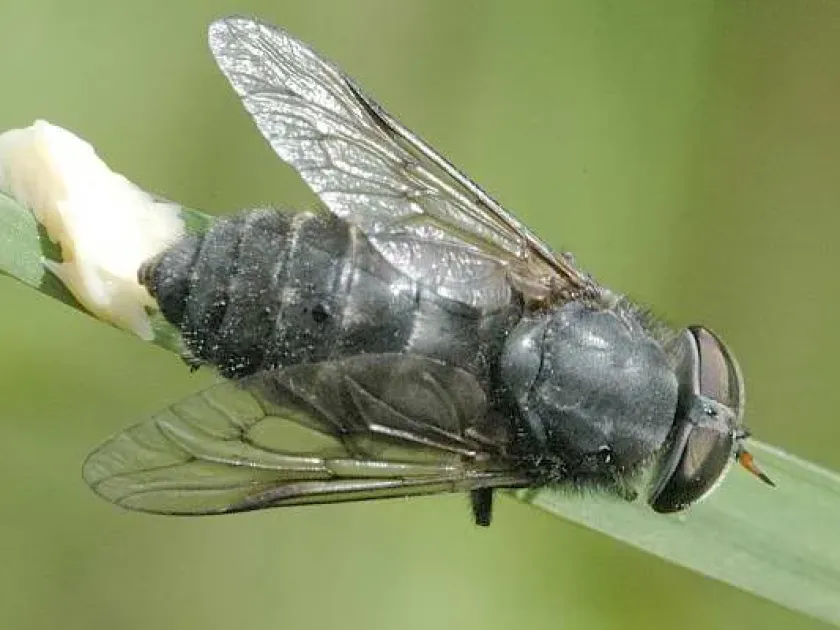
Description
How to identify
Hybomitra micans is a species of horse-fly belonging to the family Tabanidae, order Diptera. These insects are characterized by their medium-to-large size and a distinct metallic sheen on their bodies, often accompanied by colorful, iridescent eyes.
The mouthparts of the females are highly specialized for piercing skin and feeding on blood, while males feed primarily on plant nectar and pollen. They are strong fliers and are highly active during warm, sunny weather.
The life cycle of the horse-fly involves four stages: egg, larva, pupa, and adult. Eggs are laid in masses on vegetation, typically near bodies of water or wet soil where the larvae can find suitable prey.
Larvae are aquatic or semi-aquatic predators that feed on smaller invertebrates in the substrate. Depending on the species and environmental conditions, the larval stage may persist for one or more years.
Adult Hybomitra micans are visual hunters, often attracted to movement, heat, and carbon dioxide produced by large mammals, including cattle, horses, and deer.
What it damages
The primary economic impact of Hybomitra micans is its persistent biting of livestock. These bites are extremely painful and cause significant distress to grazing animals, leading to behavioral changes.
Constant disturbance prevents animals from feeding normally, resulting in reduced weight gain in calves and decreased milk production in dairy herds. The energy expenditure spent on defensive behavior is substantial.
Bites often leave behind painful, swollen welts that are prone to secondary infections. Furthermore, the saliva injected during feeding can trigger local allergic reactions or inflammation in sensitive animals.
Beyond the direct irritation, these horse-flies serve as mechanical vectors for various pathogens, including bacteria and viruses that cause diseases such as tularemia, anthrax, and infectious anemia.
The presence of large populations of these flies can render pasturelands unusable during peak daylight hours, forcing farmers to adjust grazing schedules or provide costly stable management.
When it appears
Adult activity of Hybomitra micans typically occurs from June through August. Their peak activity corresponds with high temperatures and sunny days, which are optimal for their flight and hunting behavior.
On overcast or cool days, their activity decreases significantly, as they rely on heat to maintain the metabolic rate necessary for their flight patterns.
Signs of infestation
Signs of infestation include livestock congregating near water or in deep shade, frequent tail flicking, stomping, and attempts to rub against structures to dislodge the flies. Bloody lesions on the legs and back are classic symptoms.
Control measures
Control measures include the use of animal-safe insecticides, such as pour-on treatments, insecticide-impregnated ear tags, and protective mesh covers or fly sheets for horses and cattle.
Trapping systems, such as blue-colored visual traps or heat-baited devices, can be used to monitor and reduce local fly populations. Managing the environment by clearing unnecessary damp vegetation can also limit breeding sites.
Taxonomy
- Latin name
- Hybomitra micans
- Order
- Diptera (flies)
- Family
- Tabanidae
- EPPO code
- HYBOMI
Discussion
No discussions yet — be the first.