
Ceanothus silkmoth
Hyalophora euryalus
Description
How to identify
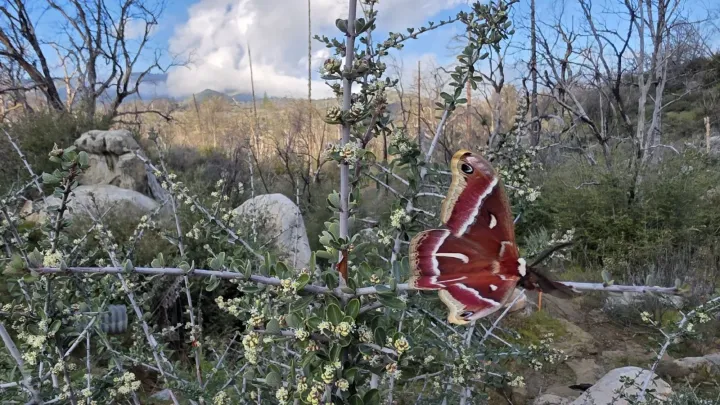
The Ceanothus silkmoth (Hyalophora euryalus) is a member of the Saturniidae family, known as the giant silk moths. It is one of the largest and most visually striking moths found in Western North America, recognized by its impressive wingspan.
Adult moths feature a reddish-brown body with detailed wing patterns, often displaying eyespots that serve as a defense mechanism against predators. The wings are large, typically spanning up to 10-12 centimeters in width.
The larval stage, the caterpillar, is substantial and undergoes several molts. As they mature, they display bright, colorful tubercles or bumps along their body, which make them quite distinct from other garden caterpillars.
Pupation occurs within a tough, silk-based cocoon. These cocoons are typically spun on the branches of the host plant, where the insect remains protected throughout the winter months in a state of diapause.
While these moths are not considered severe agricultural pests, their size and voracious appetite as larvae can cause localized damage to ornamental trees and shrubs if left unmanaged.
What it damages
The primary hosts for the Ceanothus silkmoth include various species within the Rosaceae family. Common targets include cherry, plum, apple, and, as the name implies, plants in the Ceanothus genus.
Caterpillars feed aggressively on foliage. Early instars may skeletonize leaves, while larger caterpillars can consume entire leaves, leaving only the stalks, which drastically reduces the photosynthetic capacity of the plant.
Damage is usually limited to individual plants rather than entire orchards. However, the cumulative effect of several caterpillars on a young or stressed shrub can result in significant defoliation and diminished aesthetic value.
Stressed trees may show stunted growth and decreased vigor. In a nursery or garden setting, such damage is undesirable as it affects the commercial appeal and health of the ornamental stock.
Although rare in large-scale agriculture, the moth's presence in high density can necessitate intervention to prevent long-term damage to the plant's health and structural integrity.
When it appears
The lifecycle of the Ceanothus silkmoth is synchronized with the local growing season. Adult moths typically emerge in late spring or early summer to mate and lay eggs on suitable host plants.
Larval development takes place during the summer months. This is when caterpillars are most active and responsible for the majority of the foliage consumption observed by gardeners and horticulturists.
By autumn, the caterpillars reach their final size and begin spinning their cocoons. This process is crucial for their survival, as the cocoon provides the necessary shelter for the pupa to endure harsh winter conditions.
During the winter, the insects remain dormant inside their cocoons. This strategy allows the species to successfully survive in varying climate zones across North America until the weather warms up again.
New adults emerge the following spring, completing the annual cycle. Monitoring for cocoons during winter pruning can help identify potentially infested trees before the next growing season begins.
Signs of infestation
The most immediate sign of infestation is missing or skeletonized leaves in the upper canopy. Closer inspection will often reveal dark frass (droppings) on the leaves and soil beneath the infested branches.
Caterpillars themselves are often visible due to their large size and distinct appearance. They may be found clinging to stems or the undersides of leaves, blending in with the foliage despite their bright markings.
The presence of cocoons attached to twigs is a clear indicator of past or ongoing activity. These cocoons are durable and can remain on the tree for extended periods, serving as a sign for future vigilance.
Trees exhibiting patches of sparse foliage or irregular leaf loss should be carefully examined. If you notice a single branch looking unusually bare compared to the rest of the tree, it is a primary spot to check.
- Skeletonized or partially eaten leaf tissue.
- Large, colorful caterpillars with distinctive bumps.
- Sturdy, silk cocoons firmly attached to twigs or branches.
- Presence of larval frass on foliage beneath the canopy.
Control measures
Hand-picking is the most effective and eco-friendly method for controlling these moths in private gardens. Because the larvae are large and relatively slow, they can be easily removed and disposed of.
Winter pruning provides an excellent opportunity to locate and remove cocoons. By inspecting dormant branches, gardeners can eliminate the next generation before the larvae emerge in the spring.
For more severe outbreaks, biological control agents such as Bacillus thuringiensis (Bt) can be used. These bacterial products target caterpillars specifically and minimize harm to beneficial garden insects.
Maintaining plant health through proper irrigation and balanced fertilization helps trees recover quickly from defoliation. A vigorous plant is naturally more resilient to various pest pressures.
Promoting a healthy garden ecosystem that includes native birds and predatory insects will help keep the Ceanothus silkmoth population at manageable levels without the need for chemical intervention.
Taxonomy
- Latin name
- Hyalophora euryalus
- Order
- Lepidoptera (butterflies)
- Family
- Saturniidae
- EPPO code
- HYAOEU
Discussion
No discussions yet — be the first.