
Hyalophora cecropia
Hyalophora cecropia
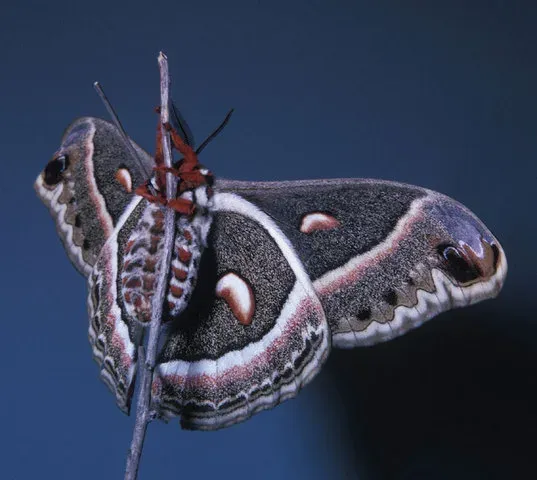
Description
How to identify
Hyalophora cecropia, commonly known as the cecropia moth, is the largest native moth species in North America. While adults are visually impressive, the larval stage is the primary concern for agricultural and ornamental plants.
The life cycle involves complete metamorphosis, moving through the stages of egg, larva, pupa, and adult. The caterpillars grow quite large, reaching lengths of up to 12 centimeters as they prepare for pupation.
Larvae are easily identified by their bright green color and the presence of prominent, colorful tubercles (knobs) in yellow, red, or blue hues. These tubercles provide a distinct appearance that differentiates them from other caterpillars.
The species produces one generation per year. Winter is spent in the pupal stage, encased within a tough, spindle-shaped silken cocoon that is firmly attached to the branches of the host tree.
Adult moths emerge in late spring or early summer to mate. The female lays small clusters of eggs on the leaves of host plants, which hatch into hungry larvae shortly after.
What it damages
The cecropia moth is a polyphagous insect, meaning it feeds on a wide range of host plants. Preferred species include maple, birch, cherry, apple, plum, willow, and ash trees.
Larvae consume large volumes of foliage, especially during their final instars. A small group of these caterpillars can quickly defoliate branches, putting significant stress on the affected host plant.
Damage typically manifests as ragged leaf edges or total removal of leaf tissue, leaving only the primary veins. In severe cases, this defoliation can lead to stunted growth in young trees and decreased vigor.
While large-scale outbreaks are relatively rare, the presence of these larvae in orchards or nurseries can be problematic. The aesthetic damage is particularly concerning for ornamental trees and landscaped properties.
Repeated defoliation by such large insects reduces the plant's energy reserves. This weakens the tree, potentially making it more susceptible to environmental stressors, such as drought or secondary fungal infections.
Signs of infestation
The most immediate sign of an infestation is the presence of large, skeletonized leaves. Because larvae often feed in groups during early stages, you may notice concentrated damage on specific branches.
Large quantities of frass (caterpillar droppings) accumulating on the ground or on lower leaves are a clear indicator of feeding activity in the upper canopy. Regular observation of the ground area is a useful diagnostic tool.
During the dormant season, the silken cocoons are the most visible evidence of the pest. These durable structures remain attached to branches long after the leaves have fallen, making winter scouting highly effective.
- Brightly colored, large caterpillars with distinct multi-colored knobs.
- Extensive defoliation or jagged feeding patterns on leaves.
- Tough, greyish-brown silken cocoons securely fastened to stems or twigs.
Consistent monitoring during the growing season is vital. Inspect the underside of leaves for clusters of eggs or young, dark-colored larvae to intervene before they reach their most destructive size.
Control measures
Hand-picking is the most practical and environmentally friendly method for controlling small populations. Because of their size and bright colors, the caterpillars are easily spotted and removed by hand.
Removing cocoons during the dormant winter period is highly effective at reducing the population for the following year. Simply prune the infested twigs and destroy the cocoons manually.
For larger infestations, biological insecticides containing Bacillus thuringiensis (Bt) are highly effective. These products specifically target caterpillars and have minimal impact on beneficial insects and predators.
Chemical control should be reserved for severe outbreaks where tree survival is at risk. Always choose insecticides that are selective and safe for pollinators, applying them only when absolutely necessary.
Promoting overall tree health through proper fertilization, irrigation, and pruning helps plants tolerate minor defoliation. A healthy tree can naturally recover from damage much faster than an stressed one.
Taxonomy
- Latin name
- Hyalophora cecropia
- Order
- Lepidoptera (butterflies)
- Family
- Saturniidae
- EPPO code
- HYAOCE
Discussion
No discussions yet — be the first.