
Hyalesthes luteipes
Hyalesthes luteipes
Description
How to identify
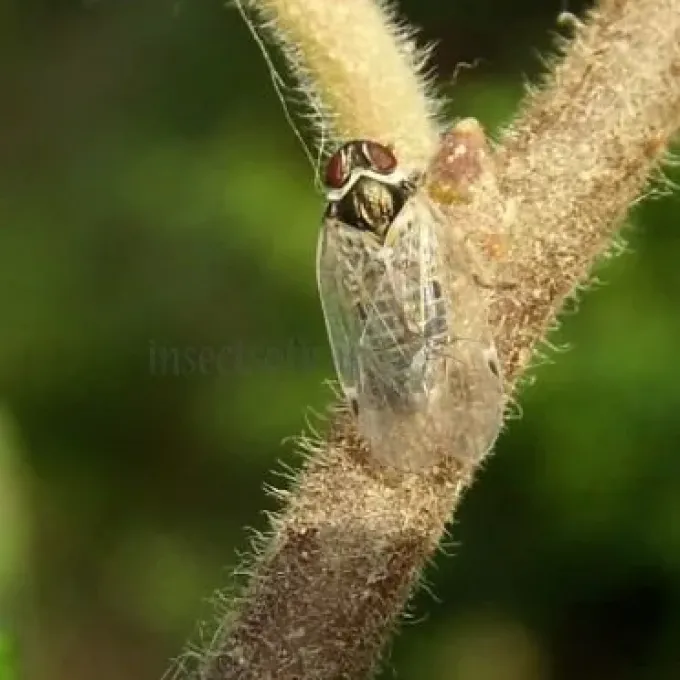
Hyalesthes luteipes is a small insect species belonging to the order Hemiptera and the family Cixiidae, commonly known as planthoppers.
Adults typically measure around 5–6 mm in length and possess transparent wings with a distinct venation pattern that aids in their identification.
The body color of the adults ranges from yellowish-brown to dark brown, providing excellent camouflage against the stems of host plants and weeds.
The nymphs of this species are soil-dwelling organisms that spend the majority of their development stage around the root systems of their host plants.
As a highly specialized vector, this insect requires specific environmental conditions, including moisture in the soil, to successfully complete its life cycle.
What it damages
The primary concern regarding Hyalesthes luteipes is its role as the main vector of phytoplasma diseases, most notably the potato stolbur.
The insect injects phytoplasmas into the host plant while feeding, leading to systemic infections that cannot be cured once the symptoms manifest.
Crops heavily impacted by this pest include tomatoes, peppers, eggplants, and potatoes, all of which suffer from significant yield losses and quality degradation.
Besides cultivated crops, the pest utilizes various wild plants, particularly the field bindweed (Convolvulus arvensis), as reservoirs for both the pest and the disease.
Even small populations can cause widespread damage because a very brief feeding period is sufficient to transmit the lethal pathogen to healthy plants.
When it appears
The emergence of adult Hyalesthes luteipes usually begins in late spring, aligning with the rise in temperatures and the onset of the active growing season.
Adult activity peaks during the early summer months, characterized by the mass migration of the insects from weed reservoirs to vulnerable vegetable fields.
Nymphal development occurs steadily in the soil throughout the season, with emergence timed to coincide with the availability of suitable host plant tissues.
Climatic factors, such as dry and hot weather, significantly influence the movement of the insects, often leading to increased disease outbreaks in nearby fields.
By late summer and early autumn, the population activity starts to decline, and the insects transition into overwintering stages to survive the cold season.
Signs of infestation
Early symptoms of infection appear as chlorosis on the leaves, which gradually turn yellow, red, or purple due to the accumulation of anthocyanins.
Affected plants often exhibit severe stunting, with shortened internodes resulting in a dense, rosette-like appearance of the top leaves.
Flower deformation is a hallmark sign, where blooms become small, greenish, or misshapen, failing to produce viable fruit or setting very few.
Leaves often curl and take on a boat-like shape, becoming brittle and showing signs of premature senescence as the phytoplasma disrupts nutrient transport.
- Yellowing of leaf veins.
- Severe plant dwarfing.
- Greenish or deformed flowers.
- Reduced fruit set and size.
Control measures
Effective management begins with strict weed control, specifically targeting the removal of field bindweed to eliminate the insect's primary reservoir.
Implementing crop rotation practices helps break the pest's life cycle by ensuring that host plants are not continuously available in the same field.
The application of systemic insecticides is recommended during the peak flight of adults to prevent the initial infection of the crop.
Soil management techniques, such as deep plowing, can help destroy nymphal populations located in the root zones of infested weeds before the new season.
Using certified, disease-free planting material and resistant cultivars is the most sustainable approach to mitigating the threat posed by this vector.
Taxonomy
- Latin name
- Hyalesthes luteipes
- Order
- Hemiptera (bugs, aphids, leafhoppers)
- Family
- Cixiidae
- EPPO code
- HYARLU
Discussion
No discussions yet — be the first.