
Hippotion rosetta
Hippotion rosetta
Description
How to identify
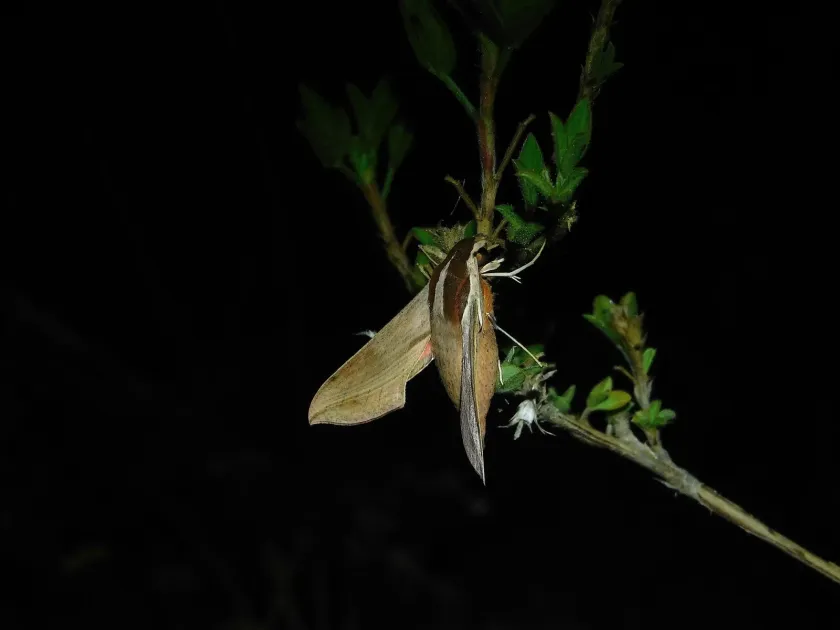
Hippotion rosetta is a moth species belonging to the family Sphingidae, commonly known as hawkmoths. Like other members of this family, it features a streamlined, fusiform body designed for high-speed flight.
Adult moths have a wingspan typically ranging from 60 to 70 mm. Their forewings display a complex pattern of brownish-grey shades, featuring a distinctive "rosette" mark from which the species derives its name.
The larval stage, or caterpillar, undergoes several instars, significantly increasing in size and changing its appearance. Mature larvae often possess false "eyes" or patterns on their segments as a defense mechanism.
Pupation usually occurs in the soil or among leaf litter. The pupa is typically reddish-brown, providing a camouflage that helps the insect survive the resting stage until the adult moth emerges.
As a nocturnal insect, the adult moth is rarely seen during the day. They prefer to stay hidden under leaves, where their cryptic coloration makes them nearly invisible to predators and human observers.
What it damages
The larvae are specialized feeders, primarily targeting plants within the Balsaminaceae family, particularly the common ornamental balsam (Impatiens).
In addition to balsam, these caterpillars have been reported feeding on various plants from the Araceae, Vitaceae, and Rubiaceae families, showing a certain degree of dietary flexibility across different regions.
Physical damage is caused solely by the caterpillars. Adults, while capable of pollination, feed on flower nectar and do not pose a threat to the vegetative parts of the plants.
When present in large numbers, the larvae are capable of rapid defoliation, consuming entire leaves and leaving behind only the stems and major veins, which significantly impacts the host's vitality.
Severe infestations weaken the plant's immune system, making it more susceptible to secondary environmental stresses or opportunistic fungal and bacterial diseases that thrive on damaged plant tissues.
When it appears
The life cycle of Hippotion rosetta is heavily dependent on ambient temperature and humidity. In tropical or subtropical regions, breeding can occur throughout the year without a distinct winter break.
Eggs are laid individually on the underside of leaves, a strategic choice that provides protection against direct sunlight and potential predators lurking in the garden environment.
Upon hatching, the caterpillars immediately begin feeding. The larval stage duration varies based on the nutritional quality of the host plant and the prevailing temperature, usually lasting about 3 to 5 weeks.
Adult activity peaks during dusk and throughout the night. This is the optimal time for mating and egg-laying, and consequently, the time when light-based intervention methods are most effective.
The species survives colder periods as a pupa buried in the substrate. Increased spring temperatures trigger the emergence of adults, beginning a new cycle of infestation for the upcoming season.
Signs of infestation
The first signs of an infestation are often irregular holes in the leaf blades. As caterpillars grow, they consume more leaf area, leading to jagged edges and skeletal-looking leaves.
Frass (caterpillar droppings) is a key indicator of their presence. These small, dark pellets often accumulate on the soil surface under the plant or directly on the leaves below the feeding site.
Direct inspection of the undersides of the leaves during the day will often reveal the presence of caterpillars, which are typically inactive and resting during these hours.
Wilting, poor flowering, and a general decline in the plant's health are indirect signs that the plant has been under sustained feeding pressure for an extended period.
- Jagged or missing leaf tissues.
- Accumulation of frass beneath the plants.
- Presence of caterpillars resting on leaf undersides.
- Reduced vigor and stunted growth of the host plant.
- Yellowing of leaves caused by excessive loss of photosynthetic area.
Control measures
Manual removal of caterpillars is a highly effective control measure for small gardens. Regular inspections during the early evening will help identify and remove larvae before significant damage occurs.
Biological controls, specifically products containing Bacillus thuringiensis, are highly effective against lepidopteran larvae while remaining safe for beneficial garden insects and pollinators.
For large-scale infestations, systemic or contact insecticides registered for ornamental plants may be necessary. Always follow the application rates specified on the product label.
Cultural practices such as removing fallen leaves and turning over the topsoil in the late autumn can expose pupae to winter temperatures or predators, reducing the overwintering population.
Light traps can be utilized during the night to capture adult moths, thereby reducing the number of eggs laid in the area and preventing a population surge in the next generation.
Taxonomy
- Latin name
- Hippotion rosetta
- Order
- Lepidoptera (butterflies)
- Family
- Sphingidae
- EPPO code
- HIPTRO
Discussion
No discussions yet — be the first.