
Hippotion eson
Hippotion eson
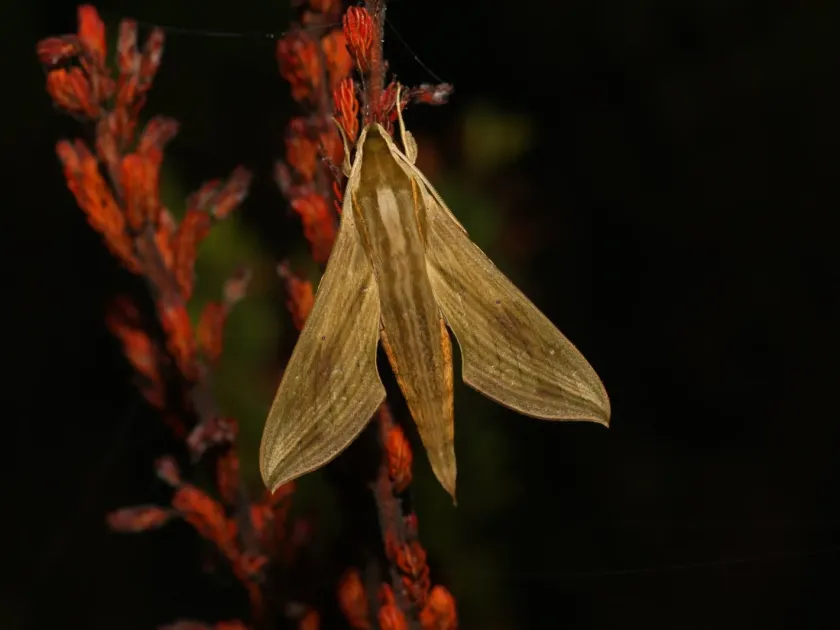
Description
How to identify
Hippotion eson is a moth species belonging to the family Sphingidae, commonly known as hawkmoths. These insects are characterized by a streamlined body and powerful, narrow wings.
The larvae, or caterpillars, are large and possess a distinctive horn on the posterior segment, which is a hallmark feature of the Sphingidae family.
The coloration of the larvae typically ranges between green and brown, providing them with excellent camouflage against the foliage of their host plants.
Adult moths are skilled flyers and can hover in front of flowers, similar to hummingbirds, while feeding on nectar with their long proboscis.
Understanding the life cycle of this insect is crucial, as the pest passes through complete metamorphosis, including egg, larva, pupa, and adult stages.
What it damages
The primary damage is caused by the larval stage, which feeds voraciously on the leaves of various ornamental and garden plants.
Heavy infestations can lead to significant defoliation, which severely reduces the plant's ability to photosynthesize and store energy for growth.
In addition to leaf consumption, damage to terminal buds can affect the overall branching structure and ornamental value of plants.
If left unchecked, high populations can cause stunted growth or even the death of younger, less established plants in a garden setting.
The physiological stress caused by the feeding larvae can also leave plants more susceptible to secondary pathogens and environmental stress.
When it appears
Adult moth activity is concentrated in the warmer months when temperatures allow for optimal flight and reproductive behavior.
The species may produce multiple generations within a single season, depending on the climatic zone and temperature stability.
Caterpillar activity is most intense during the peak growing season, synchronized with the flushing of new foliage on host plants.
Overwintering typically occurs in the pupal stage, with the insects remaining protected in the soil or under layers of leaf litter.
Spring emergence is timed with the availability of suitable host plants, ensuring that larvae have an immediate food source upon hatching.
Signs of infestation
The presence of frass (caterpillar droppings) on the ground or leaves is one of the most reliable indicators of an active infestation.
Observing irregularly shaped holes or missing sections of leaf tissue confirms that leaf-chewing insects are present.
Inspecting the underside of leaves or stems during dusk often reveals the presence of large, well-hidden caterpillars.
A noticeable reduction in the plant's overall density or growth rate compared to similar, unaffected plants is a secondary sign of damage.
Identifying the specific horn-like appendage on the caterpillar's rear end is the most effective way to confirm this particular species.
Control measures
Manual removal of caterpillars is a highly effective, non-chemical approach for small-scale gardens or early-stage infestations.
Biological control agents, such as formulations of Bacillus thuringiensis, provide targeted control without harming beneficial pollinators.
Sanitation practices, including the removal of weeds and debris, help limit alternative food sources and pupation sites for the pest.
If chemical intervention becomes necessary, use selective insecticides that minimize the impact on non-target beneficial insect populations.
Tilling the soil around host plants in late autumn disrupts the overwintering pupae, significantly reducing the population for the next season.
Taxonomy
- Latin name
- Hippotion eson
- Order
- Lepidoptera (butterflies)
- Family
- Sphingidae
- EPPO code
- HIPTES
Discussion
No discussions yet — be the first.