
Silver-striped hawk-moth
Hippotion celerio
Description
How to identify
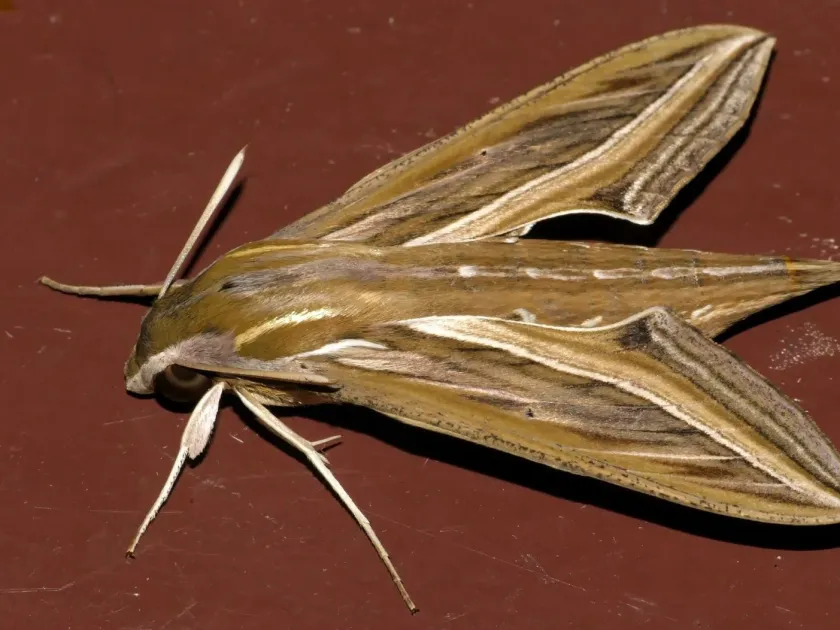
The Silver-striped hawk-moth (Hippotion celerio) belongs to the Sphingidae family. The adult moth has a streamlined, aerodynamic body with a wingspan of up to 80 mm, featuring olive-brown colors and distinct silvery longitudinal stripes.
The larvae, or caterpillars, are large, reaching 80 mm in length. They exhibit color polymorphism, ranging from bright green to brown, which allows them to blend in perfectly with the foliage of their host plants.
A distinctive feature of the larva is the horn-like appendage on the posterior segment. When threatened, the caterpillar often assumes a characteristic sphinx-like posture to deter predators by showing its eyespots.
The pupa is elongated and brown, typically overwintering in the soil or beneath leaf litter. In warmer regions, the moth can complete multiple generations within a single growing season.
Adult moths are nocturnal and strong migratory fliers, capable of traveling long distances to locate suitable breeding grounds and host plants for their offspring.
What it damages
The primary host plants for Hippotion celerio larvae include various species within the Vitaceae family, most notably cultivated and wild grapevines. Occasionally, they may feed on other plants like Balsaminaceae.
In vineyards, the caterpillars feed voraciously on the foliage. Heavy infestations can lead to significant defoliation, which hampers the vine's ability to photosynthesize and store energy for the coming winter.
While the focus of damage is on leaves, larvae can also attack young, tender shoots and sometimes flower clusters. This can affect the overall health and vigor of the vine, potentially reducing yield.
Nurseries and young vineyards are the most vulnerable to damage. Intense feeding by a large population of larvae can severely stunt the growth of young vines, delaying their maturation.
Damage is typically localized but can be severe in individual plants. Because the moths are migratory, infestations are often sporadic and highly dependent on seasonal weather conditions.
When it appears
The flight period of adult moths begins in late spring and continues throughout the summer months. The exact timing depends on the regional climate and the accumulation of heat units.
Egg-laying usually occurs throughout June and July. The female moth deposits eggs individually on the underside of host plant leaves, making them quite difficult to spot during routine inspections.
Larval activity peaks in mid-to-late summer, specifically July and August, when the caterpillars are in their rapid growth phase and require large amounts of food to complete their development.
Pupation typically takes place at the end of the summer. The pupae burrow into the top layer of soil or remain in protected areas under vegetation to endure the winter months.
In temperate climates, the life cycle may take nearly two months, while in warmer tropical or subtropical zones, multiple generations can overlap, leading to a more prolonged period of potential damage.
Signs of infestation
One of the earliest signs of infestation is the presence of large, dark droppings, known as frass, appearing on the leaves below the area where the caterpillar is actively feeding.
The leaves show clear signs of edge-feeding. In severe cases, the caterpillar consumes the entire leaf blade, leaving only the primary veins, which is a hallmark of many sphinx moth larvae.
Detecting the larvae during the day is difficult due to their excellent camouflage. The best time to survey for caterpillars is during the twilight or night hours when they are most active.
Twisted or deformed leaves and partially eaten shoots are indicators that larvae have been present on the vine. Careful inspection of the foliage structure is necessary to confirm their presence.
Since female moths may lay multiple eggs in a specific area, larvae are often found in clusters or small groups within the same section of the vineyard, making monitoring localized and targeted.
Control measures
Manual collection of larvae is the most effective and eco-friendly control method for home gardens and small vineyard plots. Regular scouting is key to preventing major outbreaks.
- Cultivating the soil deeply in late autumn to expose and destroy overwintering pupae.
- Using biological controls, such as Bacillus thuringiensis, which target larvae without harming beneficial insects.
- Maintaining clean vineyard rows by removing weeds that may harbor the pest.
- Applying selective systemic insecticides only if the population exceeds economic injury thresholds.
- Encouraging natural predators, including parasitic wasps and predatory birds, which help keep the moth population in check.
Taxonomy
- Latin name
- Hippotion celerio
- Order
- Lepidoptera (butterflies)
- Family
- Sphingidae
- EPPO code
- HIPTCE
Discussion
No discussions yet — be the first.