
Hidari
Hidari
Description
How to identify
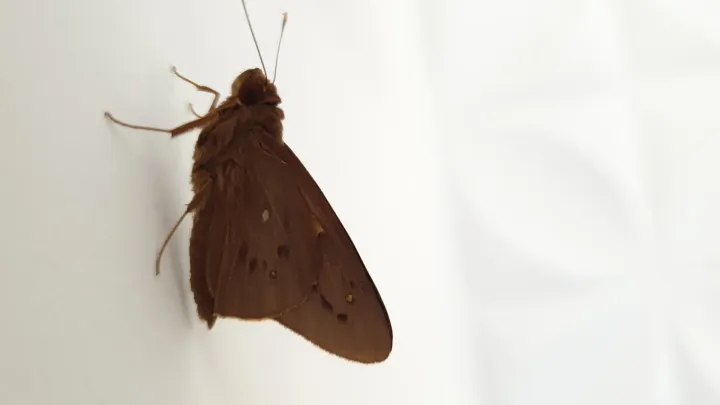
The pest Hidari irava belongs to the Hesperiidae family, commonly known as skippers. This insect is characterized by a robust, thick body and a wingspan reaching 45–55 mm, with wing colors ranging from dark brown to brownish-black, often marked with distinctive pale spots.
The larvae, or caterpillars, pass through several developmental stages. Initially, they exhibit a yellowish-green coloration that darkens as they mature. A large head is a prominent morphological feature of these caterpillars, typical of the skipper family.
The life cycle follows a complete metamorphosis: egg, larva, pupa, and adult. These insects are primarily diurnal, preferring warm and sunny environments for mating and oviposition on the foliage of host plants.
Biological development is highly dependent on environmental conditions, particularly temperature and humidity. In tropical and subtropical regions, multiple generations can occur within a single growing season.
Identifying the pest early is crucial for effective management, as the cryptic lifestyle of the larvae can often mask their presence until significant damage has already occurred.
What it damages
The primary host plant for Hidari irava is rice (Oryza sativa). In major rice-producing regions, this insect is recognized as a significant threat capable of causing substantial yield losses if not controlled.
In addition to rice, the pest can inhabit various wild grasses surrounding agricultural fields, which serve as reservoirs that support the population during off-seasons or between cropping cycles.
The damage is caused by the caterpillars, which feed aggressively on the leaf tissues. By consuming large portions of the leaf, they significantly impair the plant's photosynthetic capacity.
Young rice plants in the tillering stage are particularly susceptible. Severe defoliation at this developmental phase can result in stunted growth and a considerable reduction in grain quality and overall productivity.
Furthermore, larval feeding creates injuries that act as entry points for secondary bacterial or fungal infections, exacerbating the health decline of the crop.
Signs of infestation
The most characteristic sign of a Hidari infestation is the presence of rolled or folded leaves. The caterpillars use silk to bind the leaf edges together, forming a protective shelter where they feed and hide from predators.
Inside these rolled leaves, one can often find the larvae or their characteristic fecal pellets, which serve as a clear diagnostic indicator of their presence within the canopy.
Leaves affected by the pest appear ragged, with irregular edges or chewed areas. In cases of high population density, entire sections of the field may show signs of extensive defoliation and chlorosis.
Adult butterflies can be observed flying over the fields during sunny hours, which often indicates the initiation of egg-laying activities and the potential for a new generation of larvae.
Infestations typically start at the field edges or near water sources, making these areas priority zones for regular scouting and monitoring efforts.
Control measures
Managing Hidari irava requires an Integrated Pest Management (IPM) approach. A key component is the implementation of good agricultural practices, such as removing surrounding grassy weeds that act as alternative hosts.
Biological control methods, such as encouraging the population of natural predators and parasitoids (e.g., certain wasps), are effective in naturally suppressing the pest population without harming the ecosystem.
When the economic threshold is exceeded, chemical control via insecticides is necessary. It is recommended to use selective products specifically effective against Lepidoptera to minimize the impact on beneficial insect populations.
To prevent the development of insecticide resistance, farmers should practice rotational use of chemicals with different modes of action, ensuring long-term efficacy of control measures.
Regular field monitoring, including visual inspections and the use of pheromone or light traps, is essential for timing interventions accurately and protecting the crop yield efficiently.
Taxonomy
- Latin name
- Hidari
- Order
- Lepidoptera (butterflies)
- Family
- Hesperiidae
- EPPO code
- HIDASP
Discussion
No discussions yet — be the first.