
Woodland skipper
Heteropterus
Description
How to identify
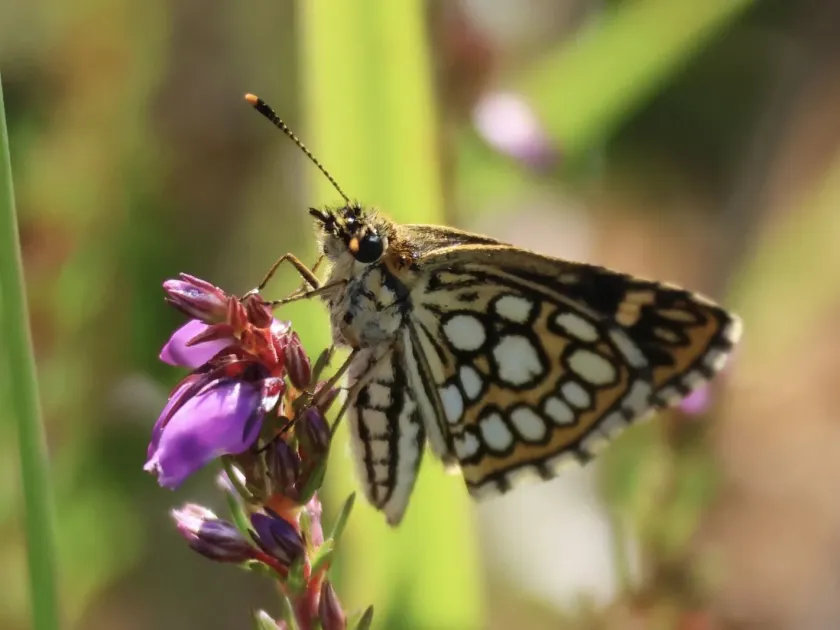
The woodland skipper (Heteropterus morpheus) is a diurnal butterfly belonging to the family Hesperiidae in the order Lepidoptera. Adult individuals have a wingspan of approximately 30–35 mm, characterized by distinctive yellowish-white spots on the undersides of the hindwings, bordered by dark edges.
The body of the adult is stout and hairy, featuring relatively large heads and thickened antennae, which is the primary trait of its family. The upper surface of the wings is dark brown with golden spots, providing an excellent camouflage mechanism in wild grasslands and forest fringes.
The larvae are spindle-shaped and light green, with a dark longitudinal stripe along the dorsal side. These caterpillars are quite agile and spend most of their time hidden within rolled leaves of host plants, which protects them from predators and environmental stressors.
The life cycle is univoltine, meaning there is one generation per year. Larvae of late instars overwinter inside silken nests made from rolled leaves, which ensures their survival throughout the cold season even in fluctuating winter temperatures.
This species thrives in humid habitats, including forest edges, marshes, and damp meadows. While not a major migratory pest, their populations can occasionally reach significant levels, leading them to spread into adjacent agricultural fields containing grasses.
What it damages
The primary host plants for woodland skipper larvae are wild grasses, including species such as Calamagrostis (reed grass) and Elymus (wild rye). When these weeds are present along field margins, the larvae can migrate to cereal crops or forage grasses.
The damage is caused by the larvae's chewing mouthparts, which feed on leaf blades. This consumption reduces the photosynthetic area of the leaves, resulting in stunted growth and weakened plant development in the infested areas.
Significant economic impact is usually localized at the field edges near forests or wetlands. Feeding damage creates entry points for various fungal and bacterial pathogens, which can exacerbate the impact on the overall crop health and quality.
In cases of severe infestation, the loss of leaf tissue can lead to decreased yield in grain crops or reduced nutrient value in forage grasses. Plants under stress are less capable of recovering from the feeding damage, especially during hot or dry summer periods.
Though not a primary threat to large-scale agriculture, woodland skippers represent an opportunistic pest that can damage field perimeters. Monitoring these areas is essential for preventing the spread of larvae into the central parts of the field.
Signs of infestation
The most prominent sign of infestation is the presence of leaves rolled into cylinders or cones, secured by silk threads. These structures serve as shelters for the caterpillars, and finding them is a clear indication of their presence.
Visual evidence includes uneven, ragged leaf edges where larvae have been feeding. Additionally, the presence of frass (caterpillar excrement) on the leaves or the ground beneath the rolled shelters confirms an active pest population.
Adult butterflies can be observed during June and July, exhibiting a characteristic hopping, irregular flight pattern over humid vegetation. Their presence is a warning sign that egg-laying is occurring in the vicinity.
Regular inspection of field edges, particularly where wild grasses are abundant, allows for early detection of larvae before they migrate further into the crop. Early identification allows for targeted management before the population multiplies.
Monitor the fields closely after prolonged damp weather, as high humidity significantly improves the survival rate of young larvae. Identifying these signs early enables farmers to take proactive, low-impact measures to protect their crops.
Control measures
The most effective management strategy is the control of grassy weeds along field borders and road verges. By eliminating the primary hosts like wild rye or reed grass, the attractiveness of the area to woodland skippers is significantly reduced.
Mechanical control, such as timely mowing of perimeter vegetation, is highly effective for destroying larvae before they mature into adults. This simple practice disrupts their life cycle and prevents the need for chemical intervention.
Biological control methods, particularly the use of products based on Bacillus thuringiensis, are highly effective against Lepidoptera larvae. These biological agents are safe for beneficial insects and can be used to manage infestations at a local level.
Chemical insecticides should be reserved for cases where economic thresholds are exceeded and crop damage is severe. Applications must strictly follow label instructions to minimize collateral damage to non-target pollinators and beneficial insects.
Maintaining crop diversity and implementing sustainable weed management practices are key to keeping woodland skipper populations under control. Healthy crop stands with minimal weed interference are naturally less prone to significant damage from this species.
Taxonomy
- Latin name
- Heteropterus
- Order
- Lepidoptera (butterflies)
- Family
- Hesperiidae
- EPPO code
- HTERSP
Discussion
No discussions yet — be the first.