
Description
How to identify
The soybean cyst nematode (Heterodera glycines) is a microscopic soil-borne parasite belonging to the phylum Nematoda, order Tylenchida, and family Heteroderidae.
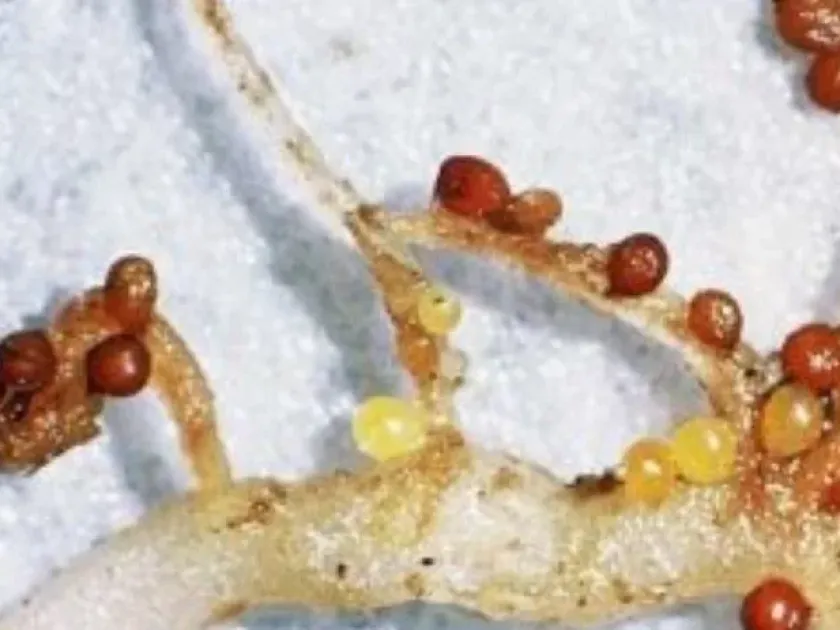
It is uniquely identified by the formation of cysts, which are the hardened, dead bodies of adult females that protect hundreds of eggs, allowing them to survive in the soil for several years.
The life cycle involves several stages: egg, four juvenile stages (J1-J4), and the adult stage. The J2 stage is the infective form that actively seeks soybean roots.
Males are vermiform (worm-shaped) and mobile, while females become sedentary after penetration, feeding within the vascular tissue of the plant roots.
Detection is often conducted through soil sampling and laboratory extraction, as visual inspection in the field is rarely sufficient for precise quantification of the population.
What it damages
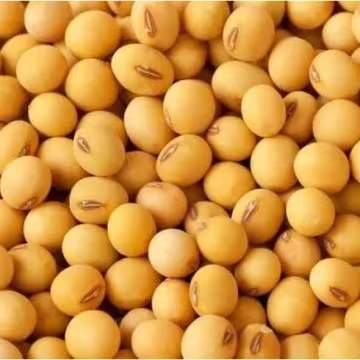
The primary host is soybean (Glycine max). Other potential hosts include various legumes like snap beans, dry beans, and certain weeds like purple deadnettle.
The nematodes induce the formation of specialized feeding sites called syncytia within the roots, which deprive the plant of nutrients and photosynthates intended for growth and seed production.
Infected plants suffer from stunted root growth and reduced capacity to uptake water, leading to severe yield losses in both drought and nutrient-rich conditions.
SCN also facilitates colonization by other soil-borne pathogens like Fusarium and Phytophthora, causing synergistic damage that is harder to treat than a single infection.
Yield reduction is the most significant economic impact, often occurring without obvious symptoms on the foliage until the nematode population reaches high levels.
When it appears
Nematode activity begins in the spring when soil temperatures reach the appropriate threshold, triggering the hatching of juveniles from the protective cysts.
The life cycle can complete in as little as 24 to 30 days under favorable conditions, allowing for multiple generations during a single growing season.
Mid-summer represents the peak of nematode activity, as the environmental conditions are optimal for the rapid colonization of soybean root systems.
As the season ends, females die and transition into the cyst stage, which is resistant to desiccation, extreme cold, and lack of host availability.
The spatial expansion of the infestation is usually driven by human activity, such as moving soil with farm equipment or runoff water during heavy rains.
Signs of infestation
Plants often exhibit patches of chlorosis, stunting, and premature wilting, which may be mistaken for nutrient deficiencies like iron or nitrogen deficiency.
Uneven crop canopy height is a common field sign, with smaller plants appearing in irregularly shaped areas rather than distinct patterns.
Roots of infested plants often appear smaller and brown compared to healthy specimens, with fewer lateral roots and visible cysts on the outer surface.
The presence of tiny, white-to-yellowish cysts on the roots during mid-season is a definitive diagnostic feature of SCN infestation.
Over time, the affected areas grow in size, and yield potential in these specific zones drops drastically, often rendering those parts of the field unproductive.
Control measures
Integrated Pest Management (IPM) is essential; it includes the use of resistant soybean cultivars that prevent nematode reproduction as the primary line of defense.
Crop rotation with non-host crops like corn or wheat is highly recommended to deplete the soil's nematode population over time.
Sanitation practices are crucial to stop the spread; equipment must be cleaned thoroughly after working in infested fields before entering clean areas.
Biological control agents, such as specific soil-inhabiting fungi or bacteria, can be used to suppress nematode development and improve plant health.
- Use SCN-resistant soybean varieties.
- Rotate with non-host crops annually.
- Practice thorough field equipment sanitation.
- Monitor soil populations via lab sampling.
- Maintain optimal soil fertility and moisture levels.
Content graph
Connections · Soybean cyst nematode
Most often together:
Marketplace
Products · 1
Biology
Taxonomy
- Latin name
- Heterodera glycines
- Order
- Nematodes
- Family
- Heteroderidae
- EPPO code
- HETDGL
Community
Discussion
No discussions yet — be the first.