
Heterocampa umbrata
Heterocampa umbrata
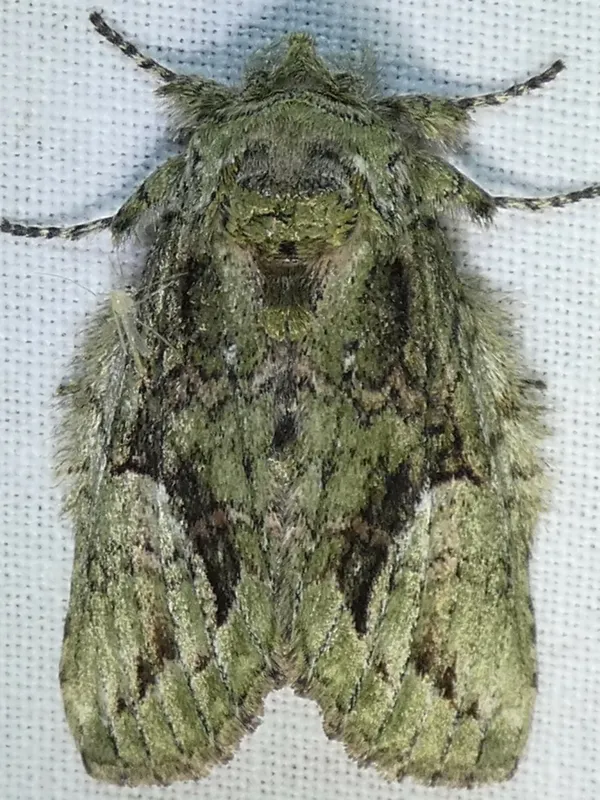
Description
How to identify
Heterocampa umbrata is a moth species belonging to the family Notodontidae, commonly known as the prominents. These moths are characterized by their nocturnal habits and excellent camouflage abilities.
The adult moth features cryptic coloration, typically blending with tree bark shades, which serves as protection against predators during the daytime resting phase.
The larvae, or caterpillars, are distinguished by their complex body shape, often possessing tubercles or specific patterns that mimic foliage or woody parts of the host plant.
The life cycle involves complete metamorphosis, including egg, larva (caterpillar), pupa, and adult stages, with the pupal stage typically occurring in soil or leaf litter.
This species is well-adapted to the temperate climate of North America, where it occupies deciduous forest habitats, influencing the health of host trees through its feeding behavior.
##damage##The primary host plants for Heterocampa umbrata are various deciduous tree species, with a particular preference for oaks (Quercus) and hornbeam.
The larvae are the destructive stage of the life cycle, feeding voraciously on the leaf blades of the host trees, leading to significant defoliation during peak activity periods.
By consuming large portions of the leaf surface, the caterpillars reduce the tree's photosynthetic capacity, which can lead to weakened growth and reduced resilience to environmental stress.
In ornamental or landscape settings, the aesthetic value of trees is severely compromised by the irregular and ragged edges of the leaves caused by larval feeding.
Repeated yearly infestations can stress adult trees, making them more susceptible to subsequent attacks by secondary pests and opportunistic plant diseases.
##season##The flight period of adult moths generally occurs during the summer months, following the emergence from overwintering pupae as temperatures rise.
Larvae are typically active throughout the summer, with the most intensive feeding occurring during the mid-summer months when they undergo rapid larval development.
As the season progresses toward autumn, the fully grown caterpillars descend to the soil or leaf litter to construct cocoons and undergo pupation.
The pupal stage is the overwintering form, designed to withstand the cold temperatures of the dormant season until the following spring cycles.
Depending on the latitude, the species may complete one or more generations, with warmer climates potentially supporting multiple cycles of development per year.
##signs##One of the most noticeable signs of an infestation is the presence of skeletonized leaves or large, irregular holes appearing in the tree canopy mid-summer.
The accumulation of frass (caterpillar droppings) on leaves below the canopy or on the ground at the base of the tree is a strong indicator of active larval feeding.
Observation of the caterpillars themselves is a key sign, although they are notoriously difficult to spot due to their mimicry of branches and leaf parts.
Small strands of silk webbing may be present between leaves, which the caterpillars use for locomotion or for securing their position during feeding.
Increased activity of birds or parasitic insects within a specific tree canopy can sometimes indicate the presence of a localized population of caterpillars.
##control##Biological control methods are often the first line of defense, focusing on promoting natural enemies like insectivorous birds, parasitic wasps, and predatory beetles.
In cases where chemical intervention is necessary, the use of biological insecticides containing Bacillus thuringiensis is highly effective and target-specific for caterpillars.
Cultural practices, such as removing leaf litter and shallow cultivation of the soil under the tree canopy in the autumn, can help reduce the overwintering pupal population.
Regular monitoring of trees during the early summer allows for early detection, enabling manual removal of larvae from young or small-scale ornamental trees.
- Monitor adult moth populations using light traps.
- Maintain tree health through proper watering and fertilization.
- Utilize systemic insecticides only when necessary and in accordance with local regulations.
Taxonomy
- Latin name
- Heterocampa umbrata
- Order
- Lepidoptera (butterflies)
- Family
- Notodontidae
- EPPO code
- HETCUM
Discussion
No discussions yet — be the first.