
Variable oakleaf caterpillar
Heterocampa manteo
Description
How to identify
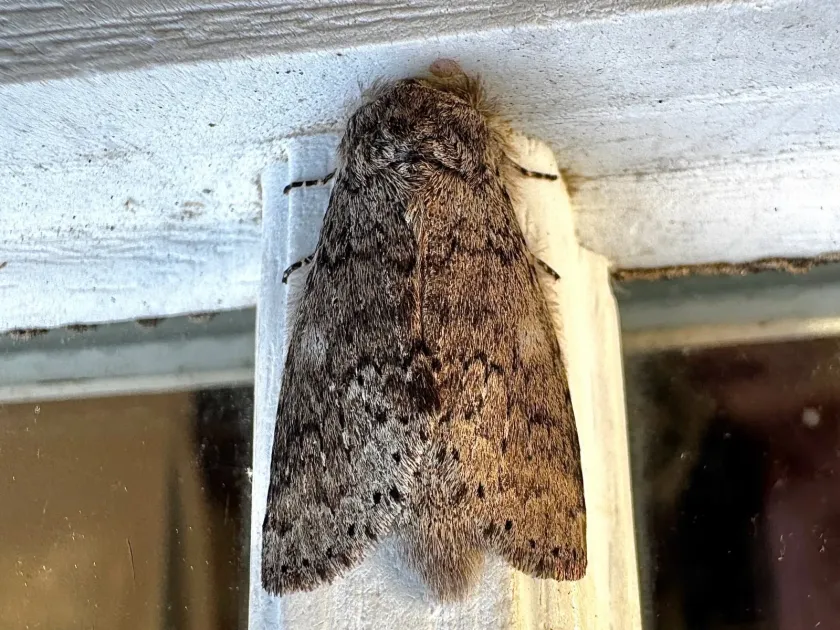
The Variable oakleaf caterpillar Heterocampa manteo is a moth species belonging to the Notodontidae family. Adult moths possess mottled gray and brown wings that provide excellent camouflage against tree bark, making them difficult to spot during daylight hours.
The larvae are known for their distinct appearance, which varies significantly during development. They typically feature a green body with lateral lines and may exhibit reddish or yellowish markings on the dorsal side.
The head capsule of the mature larva is often bright orange or red with dark markings. These caterpillars grow to approximately 40-50 mm in length before reaching the pupal stage.
Pupation occurs in the soil or leaf litter, where the insect remains dormant through the winter. This stage is crucial for the survival of the population and is highly dependent on environmental conditions.
The species usually completes one generation per year, though in warmer southern climates, secondary generations can occasionally occur under favorable conditions.
What it damages
The primary host plants for this species are various oak species Quercus. However, during outbreaks, larvae may migrate to other hardwoods such as basswood, hickory, and fruit trees.
Young larvae feed by skeletonizing leaves, leaving behind the midribs and larger veins. As they mature, they consume the entire leaf lamina, which drastically reduces the photosynthetic surface area.
Severe infestations can lead to total defoliation of the canopy. This phenomenon deprives the tree of essential nutrients, weakening its overall health and vitality.
Repeated yearly defoliations often lead to dieback of the crown, increased susceptibility to secondary pests like wood-boring beetles, and vulnerability to fungal infections.
Economically, the impact is seen in reduced timber volume, loss of aesthetic value in urban landscapes, and compromised resilience of forest ecosystems against environmental stress.
When it appears
Adult moths typically emerge in late spring or early summer. Following mating, females lay eggs on the undersides of host leaves, ensuring that hatching larvae have immediate access to food.
Active larval feeding occurs throughout the summer, peaking in mid-to-late summer. This is when damage becomes most pronounced and visible to observers.
By early autumn, the mature caterpillars descend from the host trees to burrow into the ground. They form pupae within the soil or litter layer to overwinter until the following spring.
Weather patterns significantly influence the success of the species. Warm, dry summers often lead to larger outbreaks, while cool and wet summers can promote natural pathogen spread among larvae.
Understanding the life cycle timing is vital for timing insecticide applications, as younger instars are far more susceptible to control measures than older ones.
Signs of infestation
Early warning signs include the appearance of "windows" or skeletonized spots on the leaves, indicating the presence of young larvae.
Significant accumulation of frass (caterpillar excrement) on the forest floor is a reliable indicator of high population density in the upper canopy.
Premature leaf drop or the browning of the canopy in August is a classic symptom of significant defoliation caused by Heterocampa manteo.
The sight of the caterpillars themselves, or their tendency to drop on silk threads when the tree is disturbed, confirms the presence of an active infestation.
Visual inspection of the tree canopy revealing substantial leaf loss during the height of the growing season is the most definitive sign of damage.
Control measures
Biological control using Bacillus thuringiensis (Bt) is highly recommended for managing populations in forest and parkland settings, as it targets the larvae while sparing beneficial insects.
Monitoring adult moth populations via light traps or pheromone traps allows for the prediction of potential outbreaks and helps determine the optimal window for intervention.
Chemical control with insecticides is generally reserved for high-value urban trees or nurseries where the aesthetic or economic damage threshold has been exceeded.
Encouraging natural predators, such as birds, parasitic wasps, and flies, helps maintain a balance that prevents populations from reaching catastrophic levels.
- Apply biological insecticides during early larval stages.
- Sanitize leaf litter in urban areas to destroy overwintering pupae.
- Install nesting boxes to increase local bird populations.
- Implement routine monitoring in areas with high-density oak populations.
Taxonomy
- Latin name
- Heterocampa manteo
- Order
- Lepidoptera (butterflies)
- Family
- Notodontidae
- EPPO code
- HETCMA
Discussion
No discussions yet — be the first.