
Heterocampa biundata
Heterocampa biundata
Description
How to identify
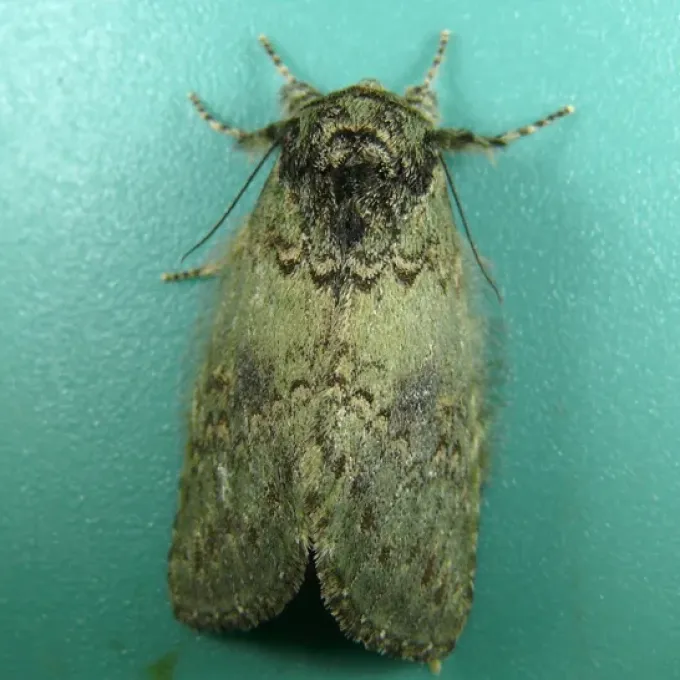
Heterocampa biundata, known as the wavy-lined heterocampa, is a moth species belonging to the Notodontidae family (prominent moths).
Adult moths are characterized by their cryptic coloration, which provides excellent camouflage against tree bark, making them difficult to spot during the day.
The larvae, or caterpillars, are known for their unique shapes and coloration, often blending in with the leaf veins of their host plants.
The insect undergoes a complete metamorphosis, progressing through egg, larval, pupal, and adult stages.
The species typically overwinters as a pupa, protected within the soil or the leaf litter near the base of the host tree.
What it damages
This pest is a primary defoliator, consuming the foliage of various deciduous tree species in forest and landscape settings.
Common host plants include maple, oak, beech, birch, and occasionally various fruit-bearing orchard trees.
Larvae feed on leaf tissues, often starting by skeletonizing the foliage and progressing to consuming entire leaf blades, leaving only the primary veins.
Severe infestations cause significant defoliation, which stresses the tree, reduces its vigor, and makes it susceptible to opportunistic diseases.
In mature forests or orchards, repeated defoliation events can lead to reduced timber growth or lower fruit yields over time.
When it appears
Adults emerge from their pupae during the warmer months, typically from late spring through mid-summer, to mate and lay eggs.
Eggs are usually deposited in small clusters on the underside of leaves, ensuring a steady food supply for the hatching larvae.
Larval activity reaches its peak in mid-summer when foliage is abundant and nutritional content is highest.
By autumn, fully grown larvae descend from the canopy to burrow into the soil, where they prepare for the winter pupation stage.
Depending on the geographic latitude and local climate, the species may complete one or two generations per year.
Signs of infestation
The most visible signs of an infestation are ragged or consumed leaf margins and the presence of frass (droppings) on the ground below the canopy.
Observing the canopy during summer months may reveal the caterpillars resting along the midribs of leaves, utilizing their natural camouflage.
Premature leaf drop and thinning of the tree canopy are common indicators that a significant population of caterpillars is present.
Localized skeletonization, where only the leaf skeleton remains, is a hallmark of early-to-mid instar larval feeding.
- Ragged leaf edges or missing foliage.
- Visible larvae hiding on the undersides of leaves.
- Accumulation of larval frass on foliage below.
Control measures
Integrated Pest Management (IPM) strategies are recommended to manage populations of Heterocampa biundata effectively.
Biological control using microbial insecticides like Bacillus thuringiensis (Bt) is highly effective against larvae and poses minimal risk to beneficial insects.
Chemical intervention with contact insecticides may be necessary in extreme cases where the health of the host trees is severely threatened.
Cultural practices, such as tilling the soil around tree bases in autumn, can disrupt the pupation process and reduce the following year's population.
Encouraging biodiversity by protecting natural predators, including insectivorous birds and parasitic wasps, provides long-term natural suppression.
Taxonomy
- Latin name
- Heterocampa biundata
- Order
- Lepidoptera (butterflies)
- Family
- Notodontidae
- EPPO code
- HETCBU
Discussion
No discussions yet — be the first.