
Heterocampa bilineata
Heterocampa bilineata
Description
How to identify
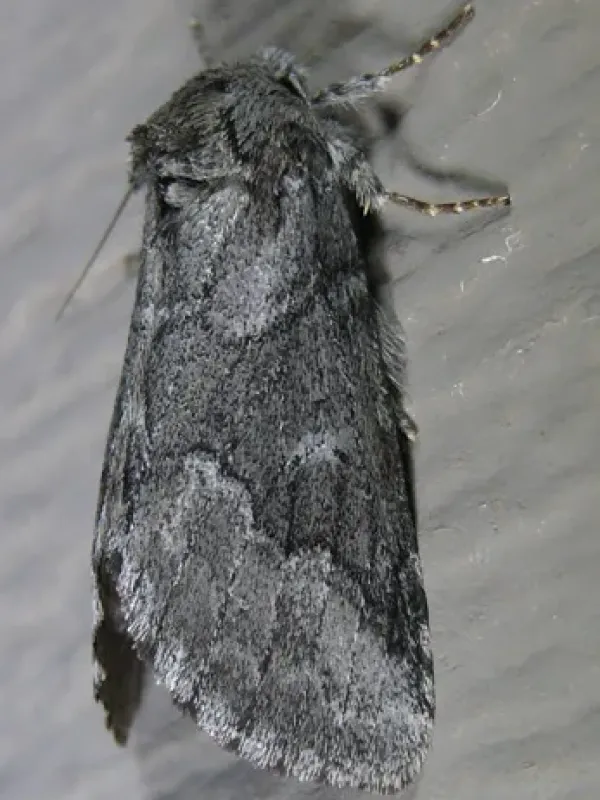
Heterocampa bilineata, commonly known as the lined heterocampa, belongs to the Notodontidae family within the order Lepidoptera. These nocturnal moths are characterized by their cryptic coloration, which helps them blend seamlessly with tree bark.
The larvae, or caterpillars, are distinguished by their unique morphology. They often possess ornate markings or distinct dorsal bumps, which serve as a primary defense mechanism against avian predators.
Pupation typically occurs in the soil or within the leaf litter beneath host trees, providing the insect with a stable environment during the cold winter months.
Adult moths emerge, mate, and deposit their eggs on the underside of host leaves, ensuring that hatching larvae have immediate access to a food source.
Identification of this species is most reliably achieved through larval stage examination, as the caterpillar's specific physical features are highly characteristic of this genus.
What it damages
The preferred host plants for Heterocampa bilineata include various deciduous trees, with a strong preference for members of the Fagaceae family, such as oaks, beeches, and hornbeams.
While mature trees can often withstand moderate feeding, younger trees and nursery stock are particularly susceptible to severe foliage loss, which can stunt their growth.
Feeding larvae skeletonize the leaves, consuming the leaf tissue between the veins, which significantly impairs the tree's ability to conduct photosynthesis.
Severe infestations can lead to complete defoliation of branches or entire tree stands, placing the vegetation under considerable physiological stress.
Repeated annual defoliation by these caterpillars may result in branch dieback, increased susceptibility to secondary infections, and potential tree mortality in weakened stands.
When it appears
The life cycle of the lined heterocampa generally follows one or two generations per year, depending largely on local temperatures and the duration of the growing season.
Adult moth flight and mating activities are concentrated in the summer months when environmental conditions favor the rapid dispersal and colonization of new host trees.
Larvae are most active from mid-to-late summer, during which time they grow rapidly, requiring substantial amounts of leaf tissue to reach their final instar.
As autumn approaches, the mature larvae descend from the canopy to burrow into the ground, where they transition into the pupal stage to overwinter.
The overwintering stage is highly resilient, ensuring the survival of the population and setting the stage for emergence in the following year.
Signs of infestation
The earliest signs of infestation include small, irregular holes or notched leaf margins, indicating the presence of young caterpillars in the upper canopy.
The accumulation of frass—small, dark pellets—on leaves or branches situated below the feeding sites is a reliable indicator of active larval presence.
Heavy feeding patterns result in skeletonized leaves, leaving behind only the main veins, which creates a sparse, thin appearance in the affected parts of the canopy.
Direct observation of the foliage, particularly on the lower branches, often reveals the colorful larvae, which are frequently visible during the daytime if they are not actively hiding.
In cases of large outbreaks, the audible sound of feeding can sometimes be detected in densely infested stands, signaling a significant level of pest activity.
Control measures
Biological control agents, such as formulations of Bacillus thuringiensis, are highly effective against early-instar larvae and are preferred for their environmental safety profile.
Physical removal of larvae or egg clusters can be practiced in small-scale landscapes, such as home gardens or small nurseries, to prevent localized damage.
Chemical applications should be reserved for severe outbreak scenarios and must be performed using insecticides approved for use in forest management and ornamental tree protection.
Promoting a healthy environment for natural predators, such as parasitic wasps, predatory bugs, and insectivorous birds, is crucial for long-term population regulation.
- Using light traps to monitor adult moth population trends.
- Implementing proper tree care to improve host vigor and resilience.
- Removing and destroying heavily infested plant material during the larval season.
Taxonomy
- Latin name
- Heterocampa bilineata
- Order
- Lepidoptera (butterflies)
- Family
- Notodontidae
- EPPO code
- HETCBL
Discussion
No discussions yet — be the first.