
Heterocampa
Heterocampa
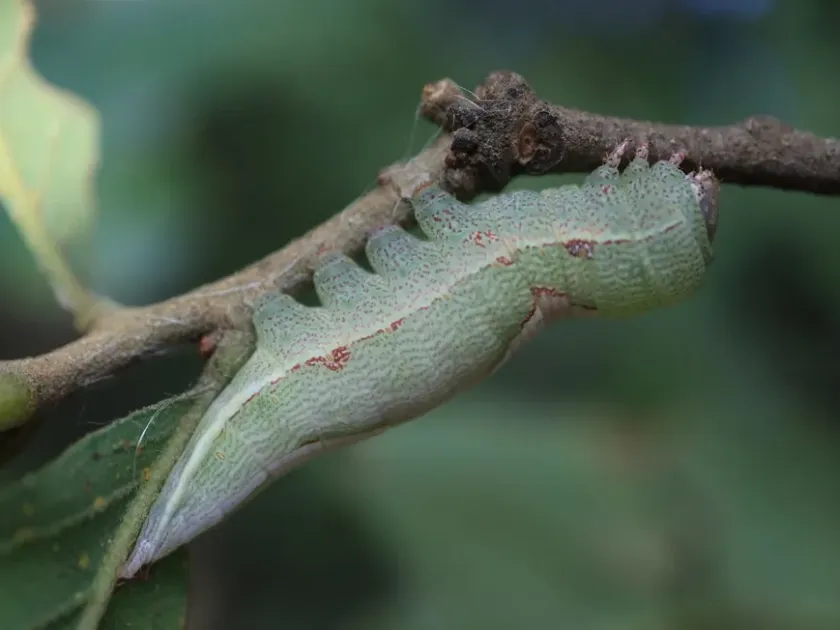
Description
How to identify
Heterocampa is a genus of moths belonging to the family Notodontidae (prominent moths). These insects are known for their effective camouflage, with adult moths blending seamlessly into tree bark.
The larvae, or caterpillars, of this genus are often visually distinct due to their strange shapes, fleshy protrusions, and cryptic coloration that mimics parts of the host plant.
Adult moths typically have mottled grey or brown wings, designed to mimic the texture and colour of tree bark during their daytime resting period.
The life cycle of the Heterocampa includes egg, larva, pupa, and adult stages. Most species overwinter as pupae, buried in the soil or within the leaf litter beneath the host tree.
These moths are widely distributed and play a role in forest ecosystems, but certain species can become significant pests when populations reach outbreak levels in gardens or orchards.
What it damages
Heterocampa species primarily feed on the foliage of various broad-leaved trees and shrubs, including oak, maple, linden, birch, and fruit trees.
In their early larval stages, the caterpillars practice skeletonization, consuming the tissue between veins, which creates a characteristic mesh-like appearance on the leaves.
As they reach their later instars, the caterpillars consume entire leaf blades, often leaving only the main veins and stems behind, leading to significant foliage loss.
Massive defoliation weakens the trees, reducing their ability to photosynthesize and making them susceptible to secondary stressors such as drought, diseases, or bark beetles.
For young saplings or ornamental trees, severe defoliation can stunt growth, reduce aesthetic value, and in extreme cases, lead to the death of the plant.
When it appears
Adult moths typically emerge in late spring or early summer, following the warming of the environment and soil temperatures.
The most active period for caterpillar feeding occurs throughout mid-summer, spanning from June to August, depending on the specific species and local climate.
Pupation generally takes place as summer transitions to autumn, at which point the mature larvae migrate down from the canopy to the ground level to pupate.
Most Heterocampa species complete one generation per year, though warmer climates may occasionally support partial or full second generations.
Effective monitoring should begin during the leaf-flush phase, as this is when the first eggs are typically laid on the undersides of the leaves.
Signs of infestation
The earliest signs of an infestation include small, irregular holes or "window-pane" effects on the leaves where caterpillars have begun their feeding.
The presence of dark, granular frass (excrement) falling from the canopy onto leaves below or the ground is a strong indicator of an active caterpillar population.
Large patches of stripped or "skeleted" leaves across the tree canopy indicate that the population density has reached a level requiring intervention.
Close inspection of branches may reveal the caterpillars themselves, which often rest in ways that make them resemble twigs or leaf irregularities.
Noticeable thinning of the tree crown during the growing season is a late-stage symptom of heavy infestation that requires immediate assessment.
Control measures
Manual removal of caterpillars is a feasible and eco-friendly control method for small, manageable trees or limited infestations in home gardens.
Biological insecticides, specifically those containing Bacillus thuringiensis, are highly effective against young larvae while posing minimal risk to beneficial insects.
Chemical control with registered insecticides may be necessary during severe outbreaks, ensuring all treatments are applied according to local safety regulations.
Promoting biodiversity by encouraging insectivorous birds and parasitic wasps helps maintain natural equilibrium and suppresses moth population growth.
Tilling the soil around the base of the trees during late autumn or early spring can disrupt the pupal stage, effectively reducing the number of moths emerging the following year.
Taxonomy
- Latin name
- Heterocampa
- Order
- Lepidoptera (butterflies)
- Family
- Notodontidae
- EPPO code
- HETCSP
Discussion
No discussions yet — be the first.