
Death's-head hawkmoth
Herse
Description
How to identify
The death's-head hawkmoth (Acherontia atropos) is a large moth species belonging to the family Sphingidae. It is widely known for the skull-like pattern on its thorax, which gives the insect its distinct name.
Adult moths are massive with a wingspan reaching up to 13 cm. They have a dark-colored body with a bright yellow abdomen and possess a short, robust proboscis.
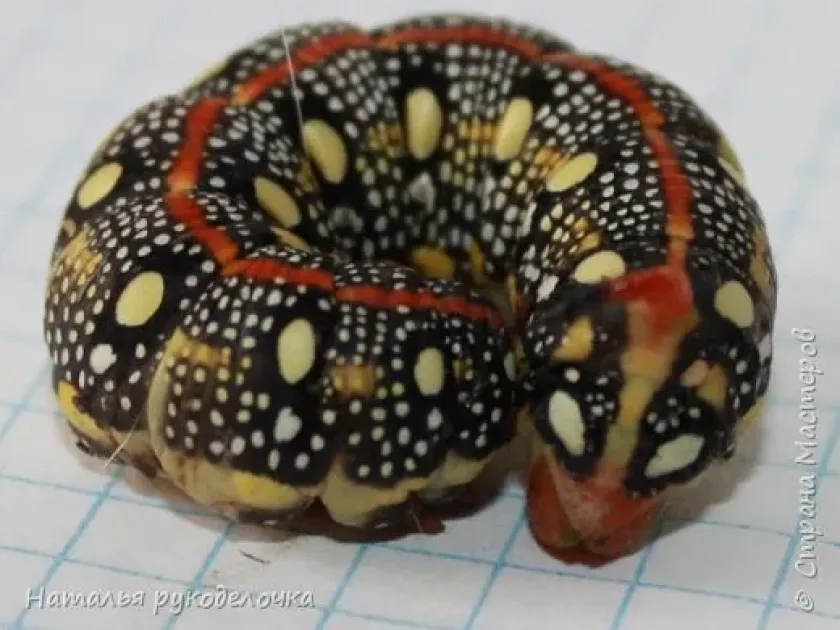
The larvae, or caterpillars, are extremely large, growing up to 15 cm in length. They display vivid coloration, ranging from bright green to yellow or brown, and feature a horn-like appendage at the rear.
A unique biological feature of this species is its ability to emit a high-pitched squeak when threatened, which serves as a defensive mechanism against predators.
The insect undergoes a complete metamorphosis, including egg, larval, pupal, and adult stages. In warmer climates, it can complete two generations per year.
What it damages
Caterpillars primarily feed on plants from the Solanaceae family. Their preferred food sources include potatoes, tomatoes, eggplants, and peppers, which are staple crops.
In addition to cultivated plants, they also consume various wild species of nightshades, such as deadly nightshade (Atropa belladonna) and jimsonweed (Datura stramonium).
The larvae are voracious feeders and can cause significant defoliation in a short period. A single large caterpillar can strip the leaves from an entire potato plant.
The loss of photosynthetic area severely impacts the plant's ability to develop tubers or fruits, often resulting in reduced yields and stunted crop development.
Significant infestations can weaken the plants, making them more susceptible to opportunistic pathogens and secondary infections, leading to early plant death.
When it appears
Adults typically emerge during the summer months. In northern regions, they are often seen as migrants, while in southern regions, they may overwinter as pupae in the soil.
Egg-laying usually occurs throughout the summer, with the peak of larval activity observed from late July through August when the caterpillars reach their maximum size.
The pupal stage occurs underground, where the insects burrow into the soil at depths of 15 to 20 cm. This environment provides protection during the winter or dry periods.
Field monitoring should be prioritized during the potato flowering stage, which coincides with the period when larvae are most active and visible.
Climatic factors play a crucial role in population dynamics; warmer springs often result in an earlier emergence of the first generation of adults.
Signs of infestation
The presence of large, cylindrical black frass (excrement) scattered beneath the plants is one of the most reliable indicators of a death's-head hawkmoth infestation.
Plants exhibiting missing foliage or skeletonized leaves, where only the primary veins remain, strongly suggest the presence of a large caterpillar feeder.
Due to their massive size, the caterpillars are easy to spot upon inspection. They are often found on the stems or undersides of the leaves of the affected crops.
In some cases, adult moths may be attracted to artificial lights at night near farms, which can serve as a warning sign that the population is present in the vicinity.
Patchy defoliation throughout a potato field usually indicates the spread of larvae and warrants immediate attention to prevent further damage.
Control measures
Hand-picking the caterpillars is the most effective and eco-friendly method of control for small-scale gardens or small farm plots, given their easy visibility.
If the infestation exceeds the economic threshold, biological insecticides are recommended to manage the larval population without causing significant environmental harm.
- Manual removal of caterpillars in early morning or evening hours.
- Application of bio-insecticides (e.g., Bacillus thuringiensis strains).
- Deep autumn tillage to destroy overwintering pupae in the soil.
- Removal of wild nightshade weeds that act as alternative host plants.
Maintaining proper crop rotation helps break the life cycle of the pest, making it more difficult for the insects to find suitable host plants each season.
Implementing spatial isolation between potato fields and non-crop nightshade patches effectively limits the initial colonization of the pest.
Taxonomy
- Latin name
- Herse
- Order
- Lepidoptera (butterflies)
- Family
- Sphingidae
- EPPO code
- HERSSP
Discussion
No discussions yet — be the first.