
Range caterpillar
Hemileuca oliviae
Description
How to identify
The range caterpillar (Hemileuca oliviae) is a member of the Saturniidae family, order Lepidoptera. It is primarily recognized as a significant pest in grassland ecosystems, particularly in the southwestern United States and Mexico.
The larvae, or caterpillars, are the destructive stage of this insect. They undergo several molts, increasing in size and appetite as they mature. Their bodies are covered with branched spines that can cause irritation to handlers.
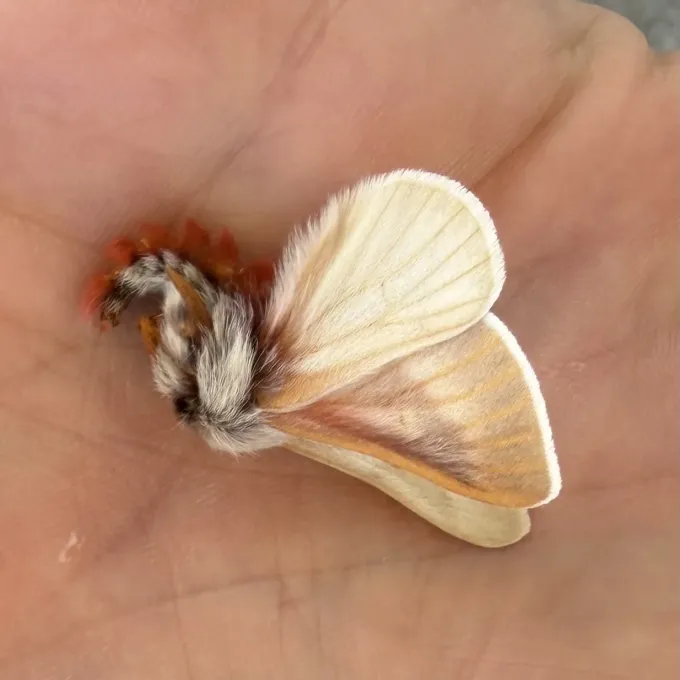
Adult moths have a wingspan of approximately 60–80 mm with a distinct brownish-black color. They are active in late summer and autumn, which is when mating and egg-laying typically occur.
The species is well-adapted to high-plains environments. Its ability to overwinter in the egg stage, attached to vegetation or debris, ensures its survival through harsh winter conditions.
Morphologically, Hemileuca oliviae can be identified by its characteristic wing patterns and the presence of specialized hairs on the pupae. Understanding its life cycle is essential for any pest management program.
What it damages
The primary hosts of the range caterpillar are native range grasses. During outbreaks, the larvae can consume massive amounts of forage, significantly reducing the carrying capacity of pastures for livestock.
While their preference is for native grasses, they can also cause economic damage to cultivated grain crops, including corn and wheat, if the fields are adjacent to heavily infested rangelands.
The damage is characterized by total defoliation of the plants. In severe cases, the larvae will eat not just the leaves but also the stems and sheath, leaving the area looking stripped and withered.
The economic impact involves not only the loss of forage but also the high costs associated with emergency control measures and, in some cases, the necessity of providing supplementary feed for livestock.
Long-term degradation of grasslands due to repeated infestations can lead to soil erosion and loss of biodiversity, as the vegetative cover is depleted by large populations of these caterpillars.
When it appears
Egg hatch usually occurs in the spring, coinciding with the beginning of the grass growing season. This ensures an immediate and abundant food source for the newly emerged larvae.
The larval stage lasts for several weeks through the late spring and early summer. During this time, they are gregarious, feeding in groups, which makes them highly visible and susceptible to early control measures.
Pupation takes place in late summer, typically within the soil or ground debris. This stage serves as a protective phase, allowing the insect to escape the hottest part of the summer.
Adult moths emerge for a short period in the autumn. This is the peak time for mating and egg deposition, which sets the foundation for the next year's population cycle.
Climatic factors, such as rainfall patterns during the previous autumn, are often linked to the severity of the following year's outbreak, helping researchers predict potential risks.
Signs of infestation
One of the earliest signs of a range caterpillar infestation is the presence of small, localized patches of eaten or stripped grass. As the caterpillars grow, these patches merge into larger, denuded areas.
Visible presence of larval colonies is a definitive sign. Observing the grasses in early summer, especially during the cooler morning hours, can reveal the feeding caterpillars clustered on the stalks.
The accumulation of frass (caterpillar excrement) on the ground is another diagnostic indicator of a high-density population. This debris can be quite extensive in areas of heavy infestation.
The evening flight of adult moths can be monitored using light traps. A sudden increase in moth counts at these traps indicates a potential for a severe infestation in the following season.
Plants that appear prematurely yellowed or dead, despite sufficient soil moisture, may indicate that the root crowns or stems are being severely damaged by the feeding activity of the larvae.
Control measures
Integrated Pest Management (IPM) is the most effective approach for controlling the range caterpillar. This involves monitoring population levels and using control measures only when necessary.
Biological control methods, such as the use of specific pathogens like Bacillus thuringiensis (Bt), are effective and environmentally friendly, as they target the larvae without harming beneficial pollinators.
Chemical control can be utilized for large-scale outbreaks, typically involving insecticide applications timed to target the larvae during their early, most vulnerable developmental stages.
- Conduct annual surveys to estimate egg density and potential larval populations.
- Use light traps to monitor adult moth activity and predict future outbreak zones.
- Encourage natural predators, such as birds and beneficial insects, in the ecosystem.
- Implement grazing management strategies to limit the impact on native rangelands.
Cultural practices, including proper grazing intensity management, can help maintain healthy grasslands that are more resilient to caterpillar damage, reducing the need for chemical intervention.
Taxonomy
- Latin name
- Hemileuca oliviae
- Order
- Lepidoptera (butterflies)
- Family
- Saturniidae
- EPPO code
- HMLCOL
Discussion
No discussions yet — be the first.