
Hemianax
Hemianax
Description
How to identify
The genus Hemianax belongs to the order Odonata and the family Aeshnidae. These insects are commonly known as darning-needle dragonflies or large hawkers.
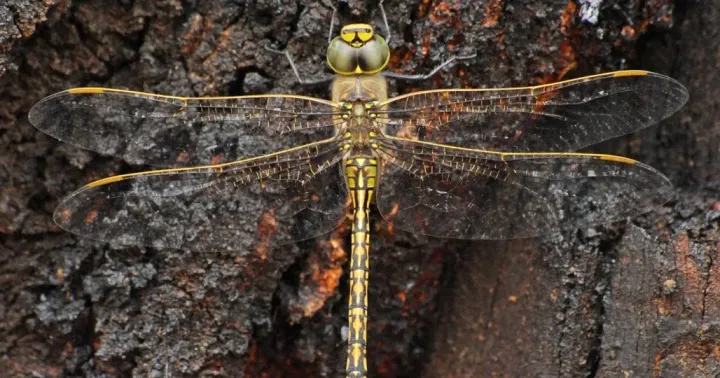
Adults possess a robust and elongated body, featuring large multifaceted eyes that provide exceptional vision for high-speed hunting in aerial environments.
Their wings are transparent, long, and characterized by a complex network of veins, allowing for precise flight patterns and rapid mid-air maneuvers.
The coloration of these dragonflies typically includes various shades of green, brown, and yellow, serving as effective camouflage in vegetation.
Their immature stages, known as naiads, are entirely aquatic predators that live in water bodies, feeding on various small aquatic organisms.
What it damages
It is critical to understand that Hemianax species are not agricultural pests. They do not feed on any parts of cultivated crops or garden plants.
Instead, they are considered highly beneficial predators within an agroecosystem, playing a role in natural population control of other insects.
They prey on a variety of smaller flying insects, including mosquitoes and other nuisance pests, which can be harmful to farm laborers or livestock.
The presence of these predators in or near fields provides a natural, chemical-free way to reduce the density of certain insect populations.
There are no recorded instances of crop damage caused by this genus, making them completely harmless to agricultural productivity.
When it appears
The adult activity of Hemianax typically occurs during the warmer months, spanning from late spring to early autumn, depending on local climate.
Proximity to water sources such as ponds, canals, or marshes is essential, as these serve as the primary breeding grounds for their offspring.
They are most active during bright, sunny hours when they patrol their territories and hunt for prey in flight.
The development cycle of their larvae is temperature-dependent and can vary significantly, often requiring stable aquatic environments to thrive.
Being highly mobile insects, they are capable of migrating over long distances to find favorable habitats with adequate food and water resources.
Signs of infestation
The presence of Hemianax is identified by the visual sighting of large, strong-flying dragonflies patrolling the fields or water edges.
Since they do not consume plant tissue, there will be no signs of feeding, such as leaf holes, lesions, or wilting on any agricultural crops.
They do not produce frass, nests, or any other waste products that are typical markers of harmful pest infestations in crops.
An abundance of these insects is a positive indicator, suggesting a healthy biodiversity and a functioning ecosystem in the nearby environment.
Observations of these dragonflies essentially act as a bio-indicator for a clean environment free from excessive and indiscriminate pesticide use.
Control measures
No control measures are necessary for Hemianax, as they are not pests; rather, they are beneficial predatory insects that should be conserved.
The application of broad-spectrum insecticides should be strictly avoided in areas where these dragonflies are active to prevent killing natural predators.
Agronomists and farmers are encouraged to maintain the natural water bodies adjacent to fields to support the reproductive life cycle of these insects.
Integrating these predators into a sustainable pest management strategy is highly effective for maintaining balance in an agroecosystem.
As they are not a threat, there are no approved chemical or biological protocols for managing their populations in an agricultural context.
Taxonomy
- Latin name
- Hemianax
- Family
- Aeshnidae
- EPPO code
- HANXSP
Discussion
No discussions yet — be the first.