
Hawker dragonfly
Aeshna
Description
How to identify
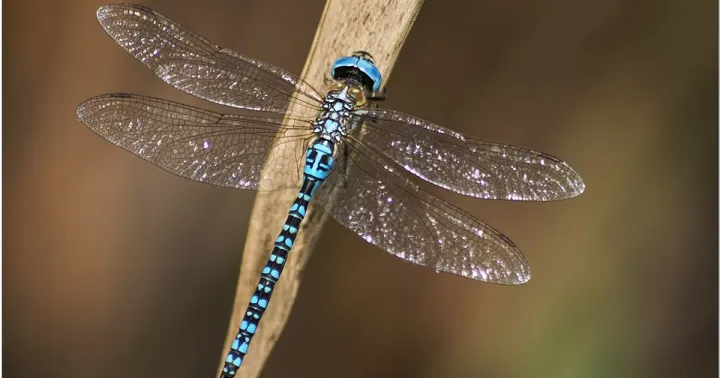
Dragonflies of the genus Aeshna, commonly known as hawkers, are large insects with a wingspan reaching up to 11 centimeters. Their bodies are often vividly colored, featuring shades of blue, green, or yellow to aid in protection.
The head possesses large compound eyes that touch at the top, a diagnostic trait for this genus. Their transparent wings, with a dense network of veins, provide exceptional agility and speed during flight.
The larvae, known as naiads, are aquatic and possess a specialized labium called a mask. This apparatus allows them to strike at prey with incredible speed in underwater environments.
Their life cycle involves incomplete metamorphosis, including egg, nymph, and adult stages. This stability allows them to thrive in various aquatic habitats over several years.
Identification at the species level usually requires close examination of wing venation and thoracic patterns, which are essential for precise entomological classification.
What it damages
It is crucial to emphasize that Aeshna dragonflies are not plant pests. They are highly beneficial predatory insects that play a vital role in natural pest control within agricultural ecosystems.
Adult hawkers actively hunt flying insects, such as flies, mosquitoes, and small beetles, which may otherwise cause damage to crops or act as disease vectors in the field.
Larvae living in ponds and irrigation canals consume mosquito larvae and other small aquatic organisms, effectively reducing the population of pests in water reservoirs.
These insects do not cause any harm to cultivated plants. They lack the mouthparts necessary to feed on plant tissue, making them completely safe for all types of crops and gardens.
The presence of these dragonflies on a farm is a positive indicator of a healthy environment and a balanced ecosystem that relies on natural predators rather than heavy chemical inputs.
When it appears
The active period for adult hawkers typically spans from mid-summer to early autumn, usually between July and September. This is when they are most active in hunting near water bodies.
Eggs are generally laid into aquatic vegetation or bottom sediments, where they undergo a dormant phase, waiting for favorable conditions to hatch.
The nymphal stage is long, often lasting one or more years, ensuring that a stable predator population remains present in the local ecosystem year-round.
As autumn approaches, the life cycle of adults concludes, while the next generation prepares for emergence in the following seasons.
Temperature plays a major role in the speed of their development, with warmer seasons often resulting in higher visibility and activity of these insects.
Signs of infestation
Their presence can be identified by their swift, darting flight patterns over fields and along the edges of irrigation ditches or farm ponds.
The complete absence of typical pest damage, such as chewed leaves or bored stems, is the best indicator that the insects in your field are predatory allies.
Finding exuviae (cast-off skins) of nymphs on reeds and aquatic plants confirms that the dragonflies have successfully completed their life cycle in the local water source.
A noticeable decrease in the population of flying nuisance insects around the farm is a positive sign of active dragonfly hunting.
Their frequent presence is often associated with clean, oxygenated water sources, indicating a lack of severe chemical contamination in the surrounding area.
Control measures
No control measures are necessary for these insects; rather, they should be protected and encouraged as natural allies in Integrated Pest Management (IPM).
The best practice is to avoid unnecessary use of broad-spectrum insecticides, which can drastically reduce the dragonfly population.
Maintaining clean, undisturbed ponds and irrigation ditches provides the essential habitat needed for their larvae to develop successfully.
Preserving natural vegetation along the edges of water bodies is essential to provide hunting grounds and resting places for adult dragonflies.
- Minimize broad-spectrum pesticide use.
- Protect natural ponds and water sources.
- Maintain buffer zones near water.
- Avoid chemical drift into aquatic habitats.
Taxonomy
- Latin name
- Aeshna
- Family
- Aeshnidae
- EPPO code
- AESCSP
Discussion
No discussions yet — be the first.