
Anax
Anax
Description
How to identify
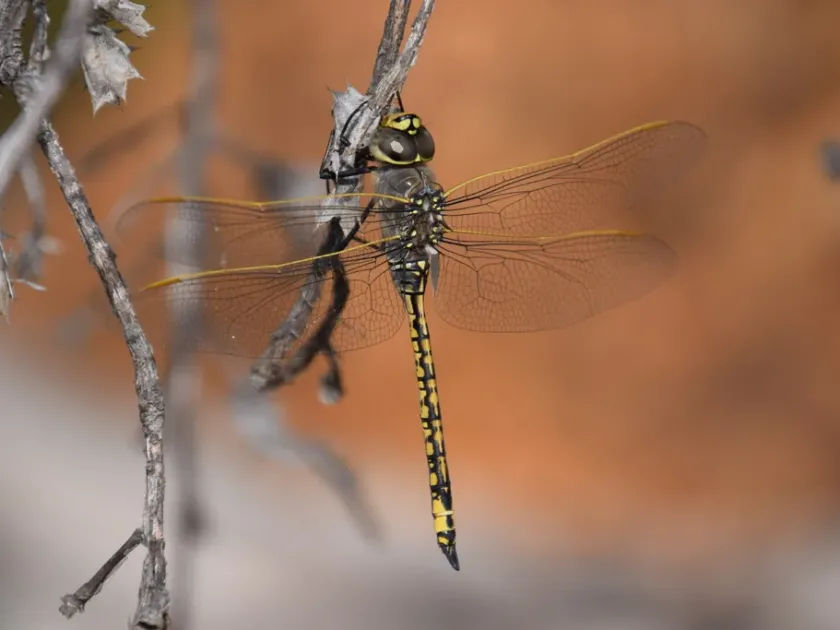
The Anax genus, commonly known as emperor dragonflies, belongs to the Aeshnidae family. These insects are among the largest and fastest flyers within the Odonata order, often exhibiting a wingspan reaching 10–12 cm with a robust, muscular build.
The adult coloration typically ranges from bright green to vibrant blue, often accented with dark patterns on the thorax and abdomen. A defining feature is their massive head, dominated by large compound eyes that cover most of the frontal area.
In flight, Anax dragonflies display remarkable agility, capable of hovering and executing sudden, precise strikes at prey. Their wings are transparent with a complex network of veins, providing the high rigidity and durability required for active, high-speed movement.
Sexual dimorphism is often pronounced, particularly in the intensity of abdominal coloration. In many species, males display vibrant spots on the abdomen, which serve a critical function in territorial and courtship displays during the breeding season.
The larval stage, known as nymphs, inhabits freshwater environments and serves as an apex aquatic predator. They possess a sturdy body equipped with a specialized retractable labium (mask) that allows them to capture prey with lightning speed.
What it damages
It is critical to note that Anax dragonflies are not plant pests; they are obligate predators. Their diet consists exclusively of other insects, including mosquitoes, flies, and small beetles, positioning them as highly beneficial entomophages.
Within an agricultural context, Anax dragonflies do not damage plant tissues, nor do they feed on sap or deposit eggs inside crops. Their presence near fields or water bodies is entirely neutral or beneficial, as they actively regulate populations of harmful dipterans.
Mistakenly categorizing these dragonflies as pests stems from their intimidating size and appearance. In reality, their presence serves as an indicator of a healthy ecosystem and the lack of severe chemical contamination in local water bodies.
Their nymphs, while active in ponds, do not pose a threat to agricultural crops, limiting their hunting activities to aquatic microfauna. Occasionally, they may compete with fry in commercial fish farming, which is the only context where they might be considered problematic.
Consequently, the Anax dragonfly is a positive component of the biocenosis, contributing to the natural reduction of insect populations that plague both humans and livestock in agricultural landscapes.
When it appears
The active phase for adult Anax dragonflies typically occurs during the warmer months, primarily from June through August. During this period, they are highly active, feeding intensively and seeking mates for reproduction.
The larval stage is significantly more prolonged, often spanning one to three years. Throughout this development, the nymph lives underwater, undergoing multiple molts before emerging onto land to undergo metamorphosis.
The emergence of the adult (imago) from the water occurs in early summer when air and water temperatures are optimal. Upon emerging from the exuvia (old skin), the dragonfly requires several hours to expand its wings and harden its exoskeleton.
The breeding season is characterized by territorial behavior, where males guard sections of the shoreline, driving away competitors. During this time, one can frequently observe large numbers of dragonflies patrolling above calm water.
By autumn, the adult population declines rapidly as the life cycle completes following the deposition of eggs into the stems of aquatic plants.
Signs of infestation
A primary indicator of an Anax population is the constant flight of large dragonflies along the edge of water bodies or over humid garden areas. Their distinct patrol-like flight pattern is easily distinguishable from smaller species.
During the evening hours or in sunny weather, they frequently sweep through the territory, actively hunting small insects in the air. This serves as a natural pest management tool on residential plots.
The presence of shed skins (exuviae) on reeds, rushes, or other shoreline vegetation is a clear sign that the water body is suitable for the development of these dragonflies.
Within the water itself, active nymphs can be found hiding in the substrate or among aquatic vegetation. They are remarkably well-camouflaged, matching the color of silt or sand to avoid detection.
Unlike true pests, Anax dragonflies leave no signs of punctures, necrosis, discoloration, or deformities on leaves and fruits. The absence of such damage is the primary indicator that only beneficial entomophages are present.
Control measures
Because Anax dragonflies are beneficial predators that cause no harm to agricultural crops, specific measures for their eradication or population control are neither required nor recommended.
Agronomists emphasize the importance of preserving these insect populations, as they function as natural regulators of harmful insect density. Their presence contributes significantly to the ecological balance of any agricultural plot.
If the presence of large dragonflies is deemed undesirable in recreational areas, simply limiting the number of open water bodies or maintaining a clean shoreline will naturally minimize the sites available for egg deposition.
The use of broad-spectrum insecticides inevitably leads to the death of these beneficial dragonflies, which, in the long term, often triggers an outbreak of the pests that these dragonflies were previously controlling.
The optimal strategy for dealing with this species is to avoid excessive chemical pesticide use in favor of biological methods for garden and orchard protection.
Taxonomy
- Latin name
- Anax
- Family
- Aeshnidae
- EPPO code
- ANXXSP
Discussion
No discussions yet — be the first.